How to Stop a Puppy From Biting Your Hands When Playing
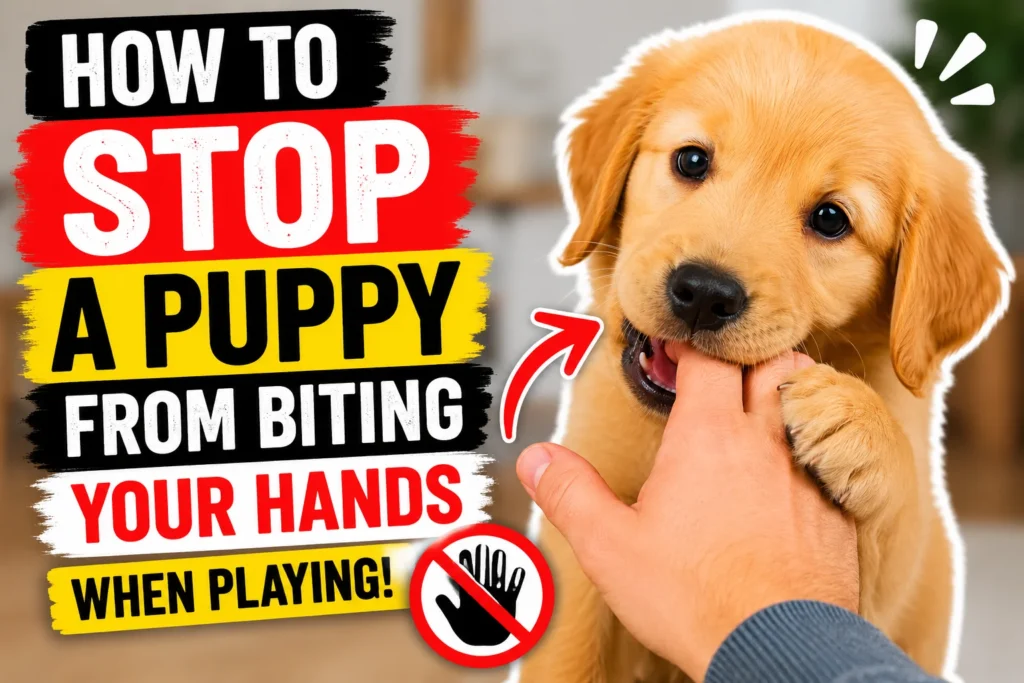
How to Stop a Puppy From Biting Your Hands When Playing, is the number one cry we hear in veterinary clinics. While it hurts, puppy biting is completely normal. It is how they explore the world, relieve teething pain, and learn “bite inhibition.” Bringing a fluffy new puppy home is magical until those razor-sharp baby teeth latch onto your fingers.
However, leaving this behavior unchecked turns a cute nip into a dangerous adult habit. As both a veterinarian and a canine behavior specialist, I will show you exactly how to stop a puppy from biting your hands when playing using science backed methods that preserve trust and fun.
Stop a Puppy From Biting Your Hands When Playing (It’s Not Aggression)
Before fixing the behavior, understand the “why.” Puppies do not bite out of malice. The top three reasons are:
- Teething Pain (12–24 weeks): Their gums ache. Your soft hand feels like a cold, squishy chew toy.
- Overstimulation: Like a tired toddler, an overtired puppy gets “zoomies” and loses impulse control.
- Lack of Bite Inhibition: They were just removed from their littermates, who taught them that a hard “Yelp!” means play stops.
Crucial Note: True aggression in puppies under 6 months is extremely rare. Unless your puppy growls, stiffens, and stares before lunging, this is play biting.
Also Check: Why is My Cat Shaking Her Head Repeatedly?
Step 1: Master the “Yelp and Freeze” Technique (Bite Inhibition Training)
Mother dogs and littermates teach manners by yelping and stopping play. You will mimic that.
- The Action: When your puppy bites your hand, let out a high-pitched, loud “Yelp!” (like a dog squeal).
- The Freeze: Immediately go limp. Do not pull your hand away (that triggers chase instinct). Stop moving entirely.
- The Ignore: Turn your face away or stand up for 10–15 seconds. No eye contact, no talking.
Why it works: Your puppy expects you to keep playing. The sudden silence and stillness confuse them. Within 2–3 repetitions, they learn: “Soft mouth = play continues. Hard bite = fun stops.”
Step 2: The “Reverse Time-Out” (The Most Underrated Hack)
If yelping makes your puppy bite harder (some herding breeds get more excited), switch tactics.
- The moment teeth touch your skin, say a calm “Oops.”
- Immediately walk away and step behind a baby gate or closed door for 30 seconds.
- Return and resume playing. Repeat every single bite.
This is not punishment; it is a logical consequence. Puppies are social geniuses. They hate losing your company more than anything.
Step 3: Redirect to Appropriate Chew Toys
You cannot simply say “No.” You must say “Not this, but this.”
- Keep a toy on you at all times. A soft rope, a rubber teether (chilled in the fridge numbs gums), or a plush toy.
- The Swap: The second your puppy looks at your hands, shove the toy into their mouth before they bite.
- Praise the toy: “Good boy! Chew the rope!” Make the toy come alive wiggle it across the floor.
Pro tip: Avoid old socks or shoes as redirection toys. Puppies cannot tell the difference between a “play shoe” and your $200 leather loafers.
Step 4: Enforce Nap Time (The 18-Hour Rule)
Are you seeing a pattern? Your puppy is sweet in the morning but turns into a land shark at 8 PM. That is overtired biting.
Puppies need 18–20 hours of sleep daily. Most new owners only give 12–14. An overtired puppy loses all impulse control.
- Schedule: For every 1 hour awake, enforce 2 hours of crate or pen rest.
- Warning signs of tired biting: Glazed eyes, frantic zoomies, biting harder than usual, refusing treats.
Step 5: Teach “Gentle” and “Kiss”
You can train a positive replacement behavior. Dogs cannot bite and lick at the same time.
- Smear peanut butter on the back of your hand.
- Present your hand. The puppy will lick. Say “Kiss” or “Gentle.”
- Reward with a treat. Repeat 20 times.
- Now, present a dry hand. If they lick, jackpot reward. If they bite, withdraw hand.
Within a week, many puppies learn to lick first when they see an approaching hand.
What NEVER to Do
These “old school” methods cause fear, aggression, or broken trust:
| Mistake | Why It’s Harmful |
|---|---|
| Holding the muzzle shut | Increases fear of hands; leads to defensive biting |
| Hitting or tapping the nose | Causes hand-shyness; damages bond |
| Rubbing their nose in accidents | Not related to biting; induces confusion/fear |
| Loud scolding or “Alpha rolls” | Breaks trust; puppy learns to bite without warning |
The Timeline: When Will It Stop?
- By 10–12 weeks: With consistent yelping, bite pressure reduces by 60%.
- By 4–5 months: Teething ends; most mouthing stops.
- By 6–8 months: Adult teeth are in; biting for play should be zero.
If your puppy is over 6 months and still biting hands hard enough to bruise, seek a certified applied animal behaviorist. This may be frustration-based or anxiety biting.
Real-Life Play Session Script
Here is exactly how a safe play session looks:
You sit on floor with rope toy. Puppy grabs toy, then drops it and lunges for your hand. You yelp “OW!” Stand up, cross arms, look at ceiling for 10 seconds. Puppy sits confused. You sit back down. Offer toy again. Puppy bites toy. You say “Yes!” and tug gently. Puppy releases toy and licks your hand. You give a treat. Play continues.
This Is a Phase (But Don’t Ignore It)
The 1 reason dogs are surrendered to shelters between 8–18 months is unchecked play biting that turned into rough mouthing. You have a small window between 8–16 weeks to teach bite inhibition. Use it.
You are not being mean by stopping play. You are being a good parent. A puppy that learns hands are for petting, not puncturing, gets to go more places, meet more people, and live a longer, happier life.
Frequently Asked Questions (FAQs)
Is it normal for my puppy to bite my hands aggressively during play?
Yes, most “aggressive” puppy biting is overstimulated play. True aggression includes growling, stiff body, and hard staring. If you see those, video the behavior and show your vet.
How long does it take to stop a puppy from biting hands?
With daily training, most owners see a 70% reduction in 2 weeks. Full bite inhibition takes until 5–6 months of age.
What if my puppy bites harder when I yelp?
Some herding breeds (Border Collies, Aussies) and terriers get excited by squeaky sounds. Use the Reverse Time-Out (silently leave the room) instead.
Do bitter apple sprays work on hands?
They work on furniture, but spraying your hands teaches your puppy that hands taste bad not ideal for bonding. Use redirection instead.
My puppy only bites me, not my spouse. Why?
Puppies bite the person who is most exciting or who has allowed it longest. Your spouse may be boring (good) or gave up reacting. You need to unify training methods.
Can teething cause worse biting?
Absolutely. From 12–24 weeks, teething pain intensifies mouthing. Offer frozen carrots, chilled wet washcloths, or puppy-safe teething rings for relief.
Should I use a spray bottle for puppy biting?
No. Spray bottles create fear of water and you. They do not teach what to do instead of biting. Positive redirection is faster and safer.
What age do puppies grow out of play biting?
Most puppies naturally decrease mouthing by 5–6 months when adult teeth erupt. However, without training, they may still mouth hands when excited as adults.
How do I stop biting when my kids are playing with the puppy?
Never leave young children unsupervised with a puppy. Teach kids to “Be a tree” (stand still, no screaming, arms crossed) if bitten. Puppies chase runners but ignore trees.
When should I worry about puppy biting?
Worry if your puppy is over 6 months, bites and does not let go, leaves puncture wounds, or bites strangers unprovoked. Book a behavior consult immediately.