How to Train a Parrot to Sit on Your Finger?
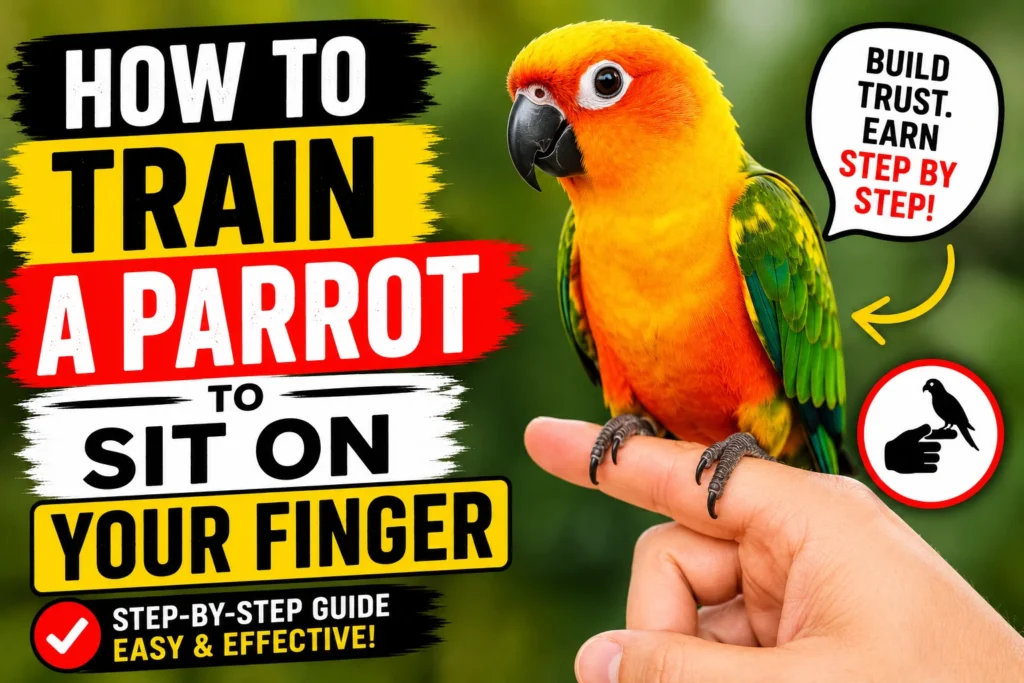
Train a Parrot to Sit on Your Finger, Teaching a parrot to step onto your finger is not just a cute trick it is the foundation of trust, handling, and bonding. Whether you have a Budgie, Cockatiel, African Grey, or Macaw, the process requires patience, positive reinforcement, and respect for the bird’s body language.
Why “Step-Up” Training Matters for Your Parrot’s Health
From a medical standpoint, a parrot that willingly steps onto your hand is easier to examine, transport, and medicate if illness occurs. Birds that fear hands often develop chronic stress, feather plucking, and a suppressed immune system. Mastering the “finger perch” reduces anxiety and promotes emotional well-being.
When to Start Training (And When to Stop)
Best time to start After your parrot has settled into its new home for at least 2 weeks. A stressed bird will not learn.
Signs your parrot is ready:
- Eating calmly in your presence
- Not flapping wildly when you approach the cage
- Taking treats from your hand through the bars
Stop immediately if you see:
- Hissing or lunging (fear, not aggression)
- Rapid breathing or tail bobbing (stress signals)
- Fluffed feathers and closed eyes (illness – see a vet first)
Veterinary note: Never train a sick, molting, or sleep-deprived bird. Exhaustion mimics stubbornness.
Equipment You Will Need
- High-value treats: Small pieces of safflower seeds, millet, or tiny fruit bits (avoid avocado, chocolate, caffeine)
- Target stick (optional but helpful for shy birds)
- Quiet room with no ceiling fans, open windows, or predators (cats/dogs)
- Perch or T-stand (if your bird bites hard)
Also Check: Signs Your Dog Has Fleas and How to Treat It
Step-by-Step Protocol For Train a Parrot to Sit on Your Finger
Step 1: Build Hand Association (3–7 days)
Place your hand on the outside of the cage for 5 minutes, several times daily. Do not move toward the bird. Let the parrot learn that your hand = no danger. Pair this with a soft phrase like “Good step.”
Step 2: Introduce the “Finger Ladder” Inside the Cage
Open the door. Place one finger just below the parrot’s belly (not touching). Hold a treat slightly above the perch level. When the parrot leans forward to take the treat, gently press your finger against its lower chest. Most birds will step up instinctively to regain balance.
Do not: Push the chest upward (this causes falls) or grab feet (this breaks trust).
Step 3: Add the Verbal Cue
Say “Step up” clearly just before your finger touches the chest. Repeat this sequence 3–5 times per session, 2 sessions daily. Each successful step-up earns a treat within 3 seconds (bird memory is short).
Step 4: Shape the Behavior
Once the parrot steps up reliably inside the cage, practice outside on a playstand. Then gradually increase duration (from 2 seconds to 30 seconds) before rewarding. Eventually, phase out treats for praise and head scratches (if your bird enjoys touch).
Step 5: Generalize the Cue
Practice in different rooms, with different family members (one at a time), and with your left and right hands. A well-trained parrot should step up even when slightly startled.
Common Mistakes That Ruin Progress
| Mistake | Consequence | Fix |
|---|---|---|
| Training when tired | Biting out of frustration | Limit sessions to 5 minutes |
| Using the same treat daily | Loss of motivation | Rotate 3–4 treat types |
| Moving your hand away when bitten | Bird learns biting = escape | Stay still; ignore the bite |
| Forcing a step-up from above | Triggers predator fear | Always offer finger from below chest level |
What If Your Parrot Bites Hard?
First, rule out medical causes a sudden change in temperament may indicate pain (arthritis, egg binding, beak malocclusion). If health is clear, switch to a handheld perch (wooden dowel). Train step-up onto the perch first, then transition to your finger wrapped in a thin cotton glove, then bare finger.
How Long Does Training Take?
- Tame parrots: 1–3 days
- Rescue or fearful birds: 2–6 weeks
- Hand-fed babies: A few hours (but wait until weaned for emotional stability)
Never compare your bird to online videos. Older, previously mishandled parrots may take months and that is perfectly normal.
Safety Warnings (Must-Read for First-Time Owners)
- Never train near an open door or window A sudden fright = lost bird.
- Wash hands before and after to prevent spreading bacteria (parrots carry Chlamydia psittaci; humans carry staph).
- Do not wear dangling jewelry or loose sleeves Birds get tangled or bite shiny objects.
- If your parrot flies off Do not chase. Calmly offer the step-up finger from a low perch.
Final Veterinary Advice
A parrot that refuses to step up after 4 weeks of consistent training needs a wellness exam. Common hidden issues: zinc toxicity (from cage bars), chronic kidney disease (makes perching painful), or psittacine beak and feather disease (causes weakness).
Otherwise, enjoy the journey. The first time your parrot willingly hops onto your finger is unforgettable a silent handshake that says, “I trust you.”
Frequently Asked Questions (FAQs)
Can I train an older parrot to step up?
Yes. Adult parrots learn just as well as babies, but they require more trust-building. Start with target training (touching a stick with their beak) before finger training.
My parrot steps up but immediately jumps off. Why?
You are likely moving your hand too much. Keep your hand still as a “stationary perch.” Also, reward after 1 second, then slowly increase duration.
What treats work best for picky eaters?
Try crushed pine nuts, dried coconut flakes, or a single sunflower seed (limited due to fatty liver risk). Warm cooked quinoa or plain popcorn (no salt) often works for stubborn birds.
Should I clip my parrot’s wings before training?
Never clip for training convenience. Flighted birds feel more confident. If you must clip for safety, have an avian vet do it never DIY.
How do I stop my parrot from biting my fingernails during step-up?
Offer your flat hand (palm up) instead of a pointed finger. Many birds mistake nails for seeds. Redirect to a toy immediately.
My parrot screams when I open the cage. What now?
Back up two steps. Spend 3 days just talking softly with the cage door closed. Then offer treats through the bars. Do not attempt step-up until screaming stops.
Can two parrots learn step-up at the same time?
Train separately in different rooms. Parrots learn by mimicking, but they also get jealous. Separate sessions prevent competition biting.
How do I transition from a perch to my finger?
Hold the perch in one hand and your finger next to it (touching). Lure your parrot with a treat so it steps from perch to finger. Remove the perch gradually.
Is it okay to train right after a bath?
No. Wet birds are cold, stressed, and clumsy. Wait until fully dry (2–3 hours in room temperature).
When should I see a vet about training problems?
If your parrot was previously finger-trained and suddenly refuses, or if you see weight loss, fluffed posture, or sitting on the cage floor see a vet within 24 hours.