How to Tell if Your Pet is Dehydrated 2026
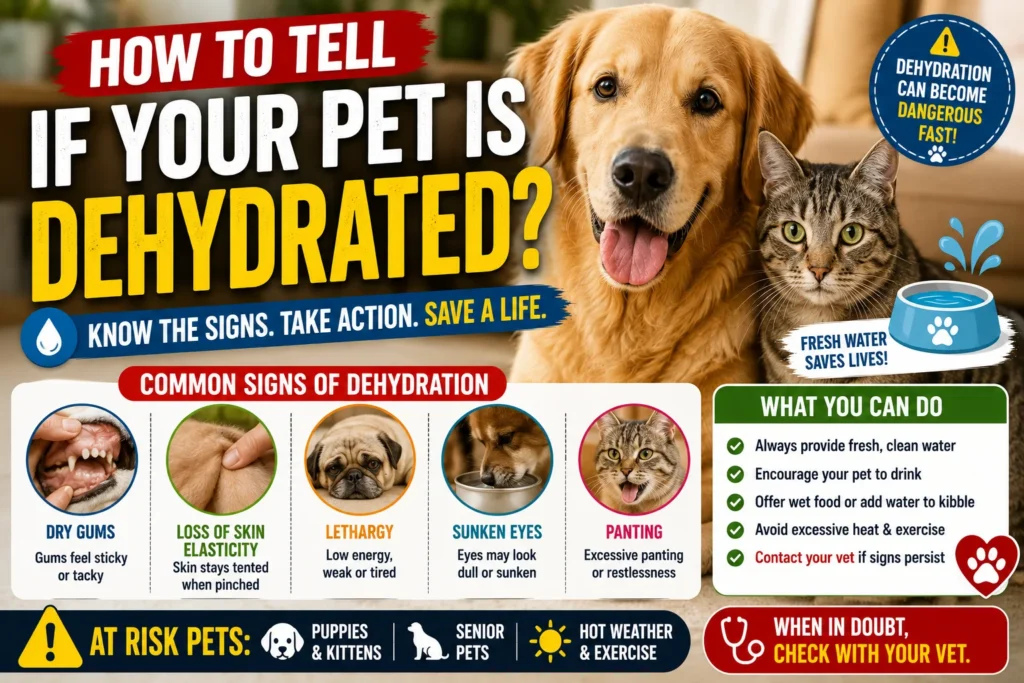
How to Tell if Your Pet is Dehydrated The single most common and concerning concern I deal with as a vet is dehydration. While your mind might jump to that hot summer month, your pet’s fluid needs may drop year-round due to age, underlying illness or even just not consuming enough H2O. Left unattended, severe dehydration can turn fatal – resulting in organ failure. We’re going to guide you on how to definitively – detect if your pet is dehydrated and what to do (and when to flee!)
Understanding Dehydration More Than Just Thirst
Dehydration can set in when a pet loses more water from their body than they are ingesting, causing an imbalance in the water electrolyte ratio that helps your pet’s body function normally.
Dogs and cats can survive for several days without eating food, but prolonged lack of access to fresh, clean drinking water could even be life threatening for them, in as little as one to three days. While dogs losing fluid from urinating, defecting and panting typically cope with that loss readily, dehydration can quickly escalate to critical levels in cases of vomiting or extreme diarrhea or panting.
The Ultimate “Skin Tent” Test Checking Skin Elasticity
This is the most commonly used and the most effective of all tests if performed properly. Here is how the test should be done: Gently squeeze your pet’s shoulder skin (“scruff” or a place in between the shoulder blades) up and off the bones just like pinching a tent- and let it snap back down.
What should be seen: A healthy pet’s skin should snap quickly back into place (within 1 to 1.5 sec).
The alarming sign: A slack in skin returned after 2 to 4 secs or… If the skin “tents” up the air remains after the attempt.
Remember: In case your pet is old and/or skinny its natural skin lost collagen and fat cells so skin is more prone to “tent” this should not always be considered as dehydration but it’s also a flag to consider sometimes be tricky in older dogs and cats. It is a great tool, but it shouldn’t be your only diagnostic method.
The Gums and Capillary Refill Time (CRT) Test
The inside of a pet’s mouth can tell a veterinarian volumes of information. The gums are an efficient and easy indicator of hydration and circulation:
Moisture: With a clean finger, run your finger over the upper part of your pet’s gums, above the teeth. A normal gum should feel wet and slippery with saliva. Sticky, tacky or dry gums, on the other hand, is a reliable indication of dehydration:
Color: Gums normally have a “bubblegum” color pink. White, brick-red, or pallid gums indicates shock and possible dehydration and is cause for immediate concern:
Capillary refill time (CRT): Lightly press on the gums (at this point you will be blanching the gums to white), and time how long it takes for the color to return. Normal capillary refill time is one to two seconds. Prolonged CRT indicates slow circulation and is again suggestive of dehydration and hypotension:
The “Sunken Eye” Check
Note what his eyes look like from the side, then from face-on. The sign warning you: In a dehydrated pet, they’re may be less shine. In severe cases, you may also notice that the eyeballs seem to recede in their sockets – like they are sinking inward.
A dehydrated pet’s eyeballs may look watery – glassy is how people often describe it.
The third eyelid Incats, in particular, a fleshy membrane, usually hidden in the corner of the eye, called the third eyelid, will protrude out, which signals that something is drastically wrong.
Behavioral and Physical Clues at Home
First place dehydration signs are seen?
When changes in the daily behavior or habits your pet. An example as I’ve always repeated to pet parents as an expert:Trust your gut intuition when things feel a little off.
If you’ve noticed anything different your pet’s day, listen to your inner feeling.
You know them best.
• • Lethargy and Weakness: Have yournormally sprightly dog or vivacious cat been lethargic, sleep all day, unwilling to get out of bed, or lack the energy to go for a walk? Without sufficient hydration, your pets body depletes energy resources, causing the obvious signs of depression and weakness.
• Loss Of Appetite: Once symptoms such as dehydration are observed, another one is a loss of appetite – dehydrating the pet further.
• Changes in Urine and Behavior: Always monitor the litter or backyard as if it indicates health issues. A dehydrating pet produces urine slowly and in less than volume. When they do void, the urine will be very concentrated and a very dark yellow. They may also strain to produce very little.
The Panting and Drool Check (Especially for Dogs)
• Panting (dogs lose a lot of water from panting). Panting after play time, as well, would be expected. Differentiating the signal: If your dog is in a nice, cool room panting like crazy while lounging around, or panting a lot for what it’s not exerting itself… your dog is losing moisture quicker than the rate at which it is rehydrating.
• Thick, ropey saliva.
When your dog is producing saliva that looks stringy or is falling in ropes out of your dog’s mouth… that’s a sign of more serious dehydration, and the body is desperately keeping every drop of water within reach of its essential systems.
Specific Concerns for Cats The “Skin Scruff” and More
Thirst: Cats are notoriously poor drinkers. Coming from the desert, they are just not wired to be thirsty, particularly if fed dry kibble, and dehydration can be an issue.
The Scruff Test: Skin tent test is a reasonable test in cats, and is at its most obvious after 7-10% loss of body fluid.
Constipation: If your cat strains in the box without productive elimination, or has hard, dry stool, this is dehydration-related.
Hiding: Ill cats like to hide; if your typically outgoing cat has taken to hiding under the bed, and shows any of the physical signs described above, they are quite dehydrated.
How to Test for Dehydration at Home
It is awesome how good the options before the are at making you sort of triaging – sorting out what the next steps to investigation or treatmentare for each. However if you’re only suspicious your little pet is in any way dehydrated, there is a simple handy check list that you can run through. Pinch the Skin Do you find the skin bounces back to normal promptly?
Or does it take a moment or so to spring back in to position?
Feel the Gums Are the gums nice and wet and slick like normally it will feel?
Or do they feel kind of sticky and dry?
Urine The urine is also a big help when you are looking if you animal has enough water. When it is normal for you dog he urinates a yellow coloured and it has to be very pale yellow or more clear yellow. When the urine has to be a darker yellow then the animal is a bit dehydrated.
What can you do: look what is normal behaviour when you pet is dehydrated.
You can let her or him drink a lot of water.
How many drinks did your pet drink today?
When you drink nothing you will look at the urine to see how good or notgood is that it’s something like that when your dog drink nothing and your cat drinks enough this is again very useful. It can help you to discover that the dog is dehydrating.
Animals normally drink a bit more
Immediate Actions What to Do at Home
If your animal has minor dehydration signs (mildly slow skin tent, dark urine, tacky gums) but is still alert, and you are going to the vet at some point you can attempt some home measures:
Fresh water: Seemingly obvious, but the bowl must be clean and full.
Ice cubes: Offer ice cubes for the animal to lick. The slower rate at which water would be released will likely intrigue a cat and cause them to drink without guzzling and then vomit what they do drink.
Change to wet food: If you’re feeding dry food, switch your animal to a wet food which already contains a high amount of water and allow it for an interim period.
Low sodium broth: You can offer chicken or beef broth without salt, but be sure it is free from onion and garlic, as animals should not eat these. The savory taste will likely make them thirsty.
When to Rush to the Emergency Vet
Dehydration is not a disease, rather, is a symptom, If your cat exhibits any of the below then by all means skip self medication and skip straight to the vet Vowing inability to hold water down Diarrheic large fluid output or blood in stools.
Staggering falling over, inability to keep his feet straight under him Pale to white gums this points towards being in shock, large hemorrhage respiratory problems unable to breathe without difficulty Sunken eyeballs, a dry mouth and ‘skin pinch test’ returns to slowly means about 7 to 10 % fluid loss… moderate to severe dehydration. At the hospital, we would perform bloodwork to have blood results. This will give us information regarding kidney values, electrolyte balances and the level of dehydration.
For mild dehydration we would administered fluid by Subcutaneous Fluids ( injecting a small amount under the skin absorbed in 24 hours) For severe we will Administered fluids through IV lines.
This acts fastest to give back the deficit and the fluids miss out the digestive system.
For more Info : How to Stop a Dog’s Nail from Bleeding Fast 2026?
10 Frequently Asked Questions (FAQs)
How do I test my dog for dehydration at home?
The quickest way is the “skin tent” test (pinching the scruff to see if it snaps back) and checking their gums. Gums should be wet and pink; if they are sticky, pale, or dry, your dog is dehydrated.
Can a cat be dehydrated and still drink water?
Yes. Cats can be dehydrated even while drinking, especially if they have underlying conditions like kidney disease or diabetes that cause excessive water loss. Additionally, cats on dry food diets are chronically under-hydrated.
What does a dehydrated dog’s poop look like?
Dehydrated dogs tend to have hard, dry, and pebble like stools. They may also strain to defecate due to constipation, which is a direct result of the colon absorbing too much water from the feces.
Is wet food better for dehydration than dry food?
Absolutely. Wet (canned) food contains up to 70 to 80% moisture, while dry kibble only contains about 10%. Switching to wet food, or adding warm water to kibble, is one of the best ways to increase your pet’s daily fluid intake.
What happens if I lift my dog’s scruff and it doesn’t go down?
If the skin stays tented or is very slow to return to normal, this is a clear sign of moderate to severe dehydration. You should contact your veterinarian immediately, as the fluid loss likely exceeds 7% of their body weight.
How can I tell if my pet is dehydrated through their urine?
Monitor the color. Dehydrated urine is dark yellow, orange, or amber and has a strong odor. The pet will also urinate less frequently and in smaller amounts than usual.
What are the early signs of dehydration in senior pets?
Senior pets are more prone to dehydration. Early signs include subtle lethargy, decreased appetite, constipation, and “tenting” skin that is slow to return due to natural loss of skin elasticity. Regular vet check-ups with blood work are crucial for seniors.
Can stress cause dehydration in pets?
While stress itself doesn’t cause water loss, it can cause stress-induced diarrhea or vomiting, which leads to rapid fluid loss. Also, stressed pets (especially cats in new environments) often refuse to eat or drink, leading to secondary dehydration.
What liquids can I give my dehydrated pet besides water?
Safe options include unflavored Pedialyte (for electrolyte balance), unsalted chicken or beef broth, or diluted tuna juice (the water from a can of tuna in spring water, not oil). Always ensure these are free from onion, garlic, and excessive sodium.
How is dehydration treated at the vet?
Treatment depends on severity. For mild cases, vets give Subcutaneous (Sub Q) fluids injected under the skin. For severe cases (especially if vomiting prevents oral intake), the pet is hospitalized and given Intravenous (IV) fluids directly into the veins to rapidly restore hydration and organ function.