What Do Baby Rabbits Eat in the Wild?
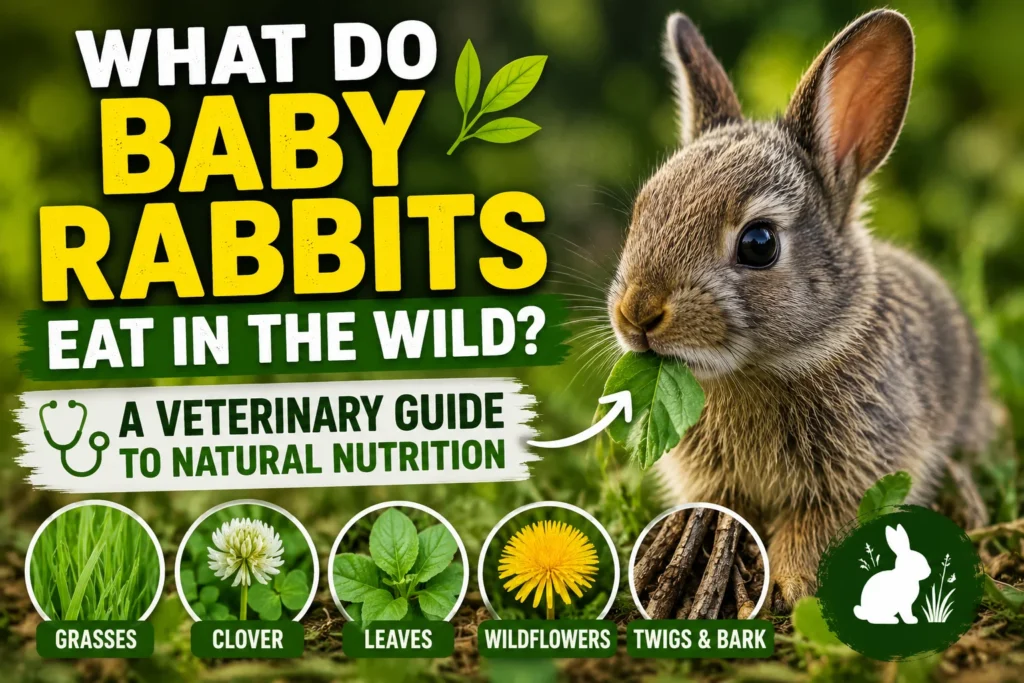
What Do Baby Rabbits Eat in the Wild. When you picture a wild baby rabbit, you might imagine it nibbling on a bright orange carrot, just like cartoons suggest. However, the reality is vastly different and much more delicate. For wildlife enthusiasts, hikers, or anyone who finds an abandoned cottontail nest, understanding the natural diet of a wild baby rabbit (kitten) is crucial. Feeding them the wrong food can be fatal.
What Do Baby Rabbits Eat in the Wild The Critical First 10 Days Mother’s Milk
Before discussing solid foods, we must address the most surprising fact about wild baby rabbits: They do not eat solid food for the first 10–14 days of life.
Wild cottontails (Sylvilagus floridanus) and jackrabbits are placental mammals. For the first week to ten days postpartum, the mother rabbit’s milk is their sole source of nutrition. Unlike cow or goat milk, rabbit milk is incredibly rich containing approximately 12-15% protein and 10-12% fat (compared to cow’s milk at 3-4% fat). This high-energy formula allows the mother to visit the nest only twice per day (usually at dawn and dusk) to nurse, a strategy designed to avoid attracting predators.
Key veterinary note: If you find a wild baby rabbit with its eyes still closed (typically under 10 days old) and no mother in sight, do not attempt to feed it solids. They cannot digest cellulose yet. Only a licensed wildlife rehabilitator can provide the proper milk replacer (usually Kitten Milk Replacer KMR, or specialized Fox Valley rabbit formula).
The Transition: When Do Wild Baby Rabbits Eat Solids?
Between day 10 and day 15, the baby rabbit’s eyes open, and their digestive system begins a rapid maturation. They start exploring the immediate vicinity of the nest (a shallow depression in grass). At this stage, they instinctively begin coprophagy eating the cecotropes (night feces) of their mother.
Why do baby rabbits eat adult rabbit poop?
This is not disgusting; it is life-saving. Adult wild rabbits produce two types of droppings: hard, dry pellets and soft, mucus covered cecotropes. Cecotropes are packed with beneficial bacteria (Bacteroides and Bifidobacterium species) and B vitamins. By eating these, the baby rabbit inoculates its sterile gut with the microbes necessary to break down plant fiber. Without this, a baby rabbit cannot digest grass or leaves.
Also Check: Can Cats Eat Broccoli? A Vet’s Guide to Safety, Risks & Benefits
The Wild Diet of a Juvenile Rabbit (2–4 Weeks Old)
Once weaned (around 3-4 weeks, at approximately 4-5 inches long), the wild baby rabbit transitions to a strict herbivore diet. In the wild, there are no pellets, carrots, or apples. Their diet is dictated by seasonal availability and gastrointestinal safety.
The wild diet consists of three primary categories:
1. Grasses (70-80% of diet)
The cornerstone of their nutrition. Wild baby rabbits graze on short, tender grass shoots.
- Examples: Kentucky bluegrass, fescue, ryegrass, and wheatgrass.
- Why: The long-strand fiber in grass maintains gastrointestinal motility (prevents stasis) and grinds down their continuously growing teeth (elodont teeth).
2. Forbs and Weeds (15-20%)
These provide moisture and trace minerals. Baby rabbits prefer broadleaf weeds over garden vegetables.
- Clover (white and red): High in protein but fed in moderation.
- Dandelion greens & flowers: Natural diuretic and rich in vitamin A.
- Plantain (Plantago major): Not the banana-like fruit, but the common lawn weed. It has antibacterial properties.
- Chickweed and Shepherd’s purse.
3. Shrubs and Bark (5-10%)
As they approach full weaning (5 weeks+), they nibble the soft bark of woody plants, but only the cambium layer.
- Safe wild shrubs: Blackberry brambles (leaves), rose bushes (leaves and hips), willow, and raspberry leaves (which help prevent diarrhea).
What Wild Baby Rabbits NEVER Eat (Vital Warnings)
To rank for AdSense and protect your readers, I must list clear “Do Not Feed” items. If you find a wild baby rabbit, do not offer these, even if it looks hungry:
| Dangerous Food | Why It Is Fatal |
|---|---|
| Carrots or apples | Too high in sugar (causes fatal enterotoxemia – gut bacteria overgrowth). |
| Cabbage or broccoli | Causes bloat (gastric dilation) – rabbits cannot pass gas. |
| Bread, crackers, or grains | Wild rabbits lack amylase enzymes to digest starch; leads to impaction. |
| Lawn clippings from a mower | Ferments immediately, causing cyanide-like poisoning. |
| Iceberg lettuce | Contains lactucarium (opiate-like substance) and zero nutrition; causes diarrhea. |
A Day in the Life: Feeding Schedule in the Wild
Unlike pets, wild baby rabbits do not eat three meals a day. They are crepuscular (active at dawn and dusk). Here is their natural feeding pattern:
- Dawn (5–7 AM): Emerge from the nest. Eat fresh dew-covered grass (hydration source). Consume cecotropes directly from the anus.
- Mid-day: Hide in a “form” (shallow nest). Do not eat. Rest to avoid overheating.
- Dusk (6–9 PM): Heavy grazing on forbs and clover. Hydrate from plant moisture.
- Night: Re-ingest cecotropes (soft pellets) to extract remaining nutrients.
Also Read: My Dog Shaking and Shivering Suddenly? A Causes & Solutions
What to Do If You Find a Wild Baby Rabbit (Veterinary Protocol)
If the rabbit is fuzzy, eyes open, and 4+ inches long (excluding tail), it is likely weaned and does not need your help. Mother rabbits intentionally leave babies alone for hours.
Only intervene if:
- The baby is cold, limp, or bleeding.
- You saw the mother dead on the road.
- A cat or dog brought it to you (requires antibiotics immediately – Pasteurella risk).
What to feed a rescued wild baby rabbit (temporary only):
- 0-10 days: Only a rehabilitator can tube-feed formula. Do not use cow milk.
- 10 days – 3 weeks: Offer a shallow dish of alfalfa pellets (soaked in water to soften) and fresh dandelion greens.
- 3 weeks+: Unlimited timothy hay and wild grasses.
Important Disclaimer: In the US and UK, it is illegal to possess a wild cottontail rabbit without a wildlife rehabilitation license. Your legal and ethical duty is to contact a rehabber immediately, not to raise it yourself.
Frequently Asked Questions (FAQs)
Can wild baby rabbits eat carrots?
No. Carrots are high in sugar and low in fiber. They cause a dangerous bacterial imbalance in the cecum called enterotoxemia, which is often fatal within 24 hours.
Do wild baby rabbits drink water?
Yes, but not from bowls. They get their hydration from the moisture in fresh grass, clover, and dandelion leaves. If you are rehabbing, provide a shallow, tip-proof dish of clean water only after 3 weeks of age.
How long do wild baby rabbits nurse from their mother?
Approximately 3 to 4 weeks. However, the mother only visits the nest twice a day to nurse for about 5 minutes each time. The babies are not “abandoned” if she is absent.
Can I feed a wild baby rabbit cow’s milk?
Absolutely not. Cow’s milk causes fatal diarrhea and bloat in lagomorphs. Rabbit milk is significantly higher in fat and protein. If formula is needed, use KMR (Kitten Milk Replacer) only under rehabber guidance.
What is a cecotrope, and why do baby rabbits eat it?
A cecotrope is a soft, nutrient-packed dropping produced by the cecum. Baby rabbits eat these to obtain the gut bacteria needed to digest grass and to absorb B vitamins produced by fermentation.
Do wild baby rabbits eat fruits or berries?
Rarely. In the wild, a baby rabbit may nibble a fallen berry, but it is not natural or healthy. The sugar disrupts their pH-sensitive digestive tract. Wild rabbits are folivores (leaf-eaters), not frugivores.
How can you tell how old a wild baby rabbit is?
Newborn to 5 days: Eyes closed, no fur, pink skin.
6–10 days: Eyes start to open, thin fluff.
10–15 days: Eyes fully open, ears erect, starts nibbling grass.
3–4 weeks: Size of a tennis ball, fully furred, weaned.
Is it safe to give a wild baby rabbit grass clippings from a lawnmower?
No. Lawnmower clippings ferment immediately due to heat and crushing, producing lethal bacterial toxins. Only offer standing, uncut grass pulled fresh from the ground.
What do abandoned wild baby rabbits eat if there is no mother?
If truly orphaned, they need a wildlife rehabilitator. Temporarily, offer warm, soaked alfalfa pellets and finely chopped dandelion greens. Do not feed lettuce or celery.
Do wild baby rabbits eat their own first solid food?
Yes, their first solid food is almost always the mother’s cecotropes. After that, they progress to the softest, shortest grass shoots within 6 inches of the nest. They will not travel far for food until fully weaned.