How to Get Rid of Cat Hairballs Naturally?
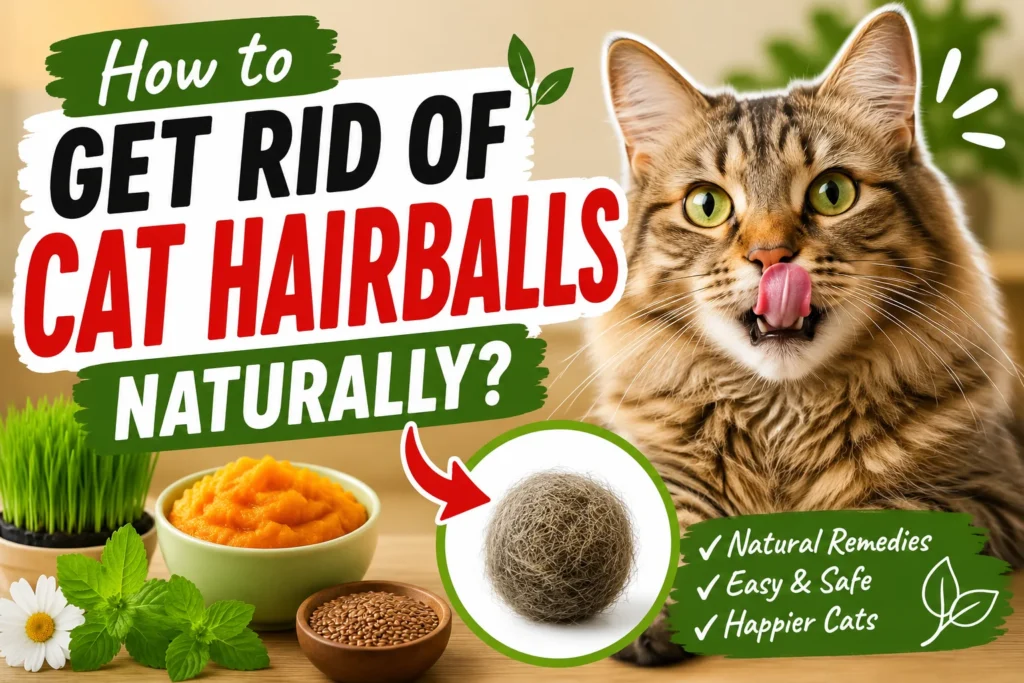
How to Get Rid of Cat Hairballs Naturally?.Hack! Hack! Hack! Followed by the unfortunate surprise of finding a wet mess on your carpet. Even though occasional vomiting is fine, it indicates that your feline’s digestive tract needs some assistance.
As a veterinarian, I come across concerned cat owners every day, who ask me this: “What can be done about cat hairballs without petroleum laxatives?”
The good news? You can manage and even prevent most hairballs using simple or natural methods. This manual will help you understand the science and the alternative ways of keeping your cat healthy.
Why do cats have hairballs?
Cats gives about 50% of their active time grooming themselves. Their barbed tongues catch dead hair, which is swallowed. Most passes through the stool.However, when a cat has lots of hair in its stomach, it makes a large ball of hair, commonly known as hairball.
Signs to look out for:
- Lethargy/vomiting without making a hairball
- Constipation/bloating
- Appetite loss within 24 hours
Note: Passage of hairballs frequently may occur as a result of issues like inflammatory bowel disease, allergies and stress-related grooming.
10 Natural Ways How to Get Rid of Cat Hairballs Naturally
1. Increase Fibre Intake With Pumpkin
Pumpkin is one of the best ways to eliminate hairballs because it is rich in soluble fibre, which will assist in hair passing.
How to do it: Just add 1 teaspoon to 1 tablespoon of pumpkin to your kitty’s wet food.
Why does it work: Fibres coat hair to prevent it from forming hairballs.
2. Add Egg Yolk Lecithin
Lecithin found in egg yolk acts as an emulsifier, thus helps to soften hair balls.
How to do it: Give ½ of cooked egg yolk twice per week.
Warning: Do not give raw eggs due to the risk of biotin deficiency.
3. Slippery Elm Bark Powder
This herb coats the digestive tract with mucilage allowing hair to slide out naturally.
- How to use: Mix ¼ teaspoon with water into a syrup and add to food. Use no more than 3 days consecutively.
- Vet tip: Do not give within 2 hours of medications as it can reduce absorption.
Also Check: How to Litter Train a Kitten in Less Than a Week?
4. Daily Brushing
You cannot out-supplement poor grooming habits.
- Best brushes: A stainless steel comb for short hair a slicker brush for long hair.
- Frequency: Long haired cats need daily brushing and Short haired need 3-4 times a week.
- Natural bonus: Collect loose fur and place it outside for birds to use as nesting material nature’s recycling.
5. Cat Grass
Indoor cats lack access to natural roughage. Cat grass triggers vomiting in a controlled, gentle way.
- How to offer: Grow a small pot. Let your cat nibble 2-3 times a week.
- Do not use: Ornamental plants or lawn grass treated with pesticides.
6. Coconut Oil
Do not use: Ornamental or insecticide sprayed plants and lawn.
- Coconut Oil
The medium-chain triglycerides in coconut oil can help lower static in cat’s fur.
How to use: Melt it and pour on food, or allow your cat to lick it from your hand.
- Dosage: ¼ teaspoon for small cats , ½ teaspoon for larger cats. Start slow to avoid diarrhea.
- Application: Melt and drizzle over food or let your cat lick off your finger.
7. Hydration
Dehydrated cats have slower gut motility. Hair sits longer and forms balls.
- Natural tricks: Use a ceramic water fountain. Add water to canned food. Offer diluted tuna juice.
8. A High-Moisture, Low Grain Diet
Dry kibble absorbs fluid in the stomach making hairballs drier and harder to pass. Switch to:
- Canned or raw food 78% moisture vs 10% in kibble.
- Avoid unnecessary fillers like corn and soy which don’t help hair transit.
9. Olive Oil
A tiny amount of extra virgin olive oil can help an existing hairball pass.
- Dosage: 3-4 drops once weekly. Never daily pancreatitis risk is real.
- Best use: When you hear hacking but nothing comes out.
10. Reduce Stress Grooming
Anxious cats over-groom. Identify triggers: new pets, loud noises, or dirty litter boxes.
- Natural calmers: Feliway diffusers, chamomile tea or scheduled play sessions.
What NOT to Use
| Myth | Why It’s Harmful |
|---|---|
| Butter | High fat causes pancreatitis or dairy leads to diarrhea. |
| Petroleum jelly | Technically not natural, it coats intestines and blocks nutrient absorption with long-term use. |
| Human hairball remedies | Contain xylitol or mineral oil. |
Sample Weekly Natural Hairball Protocol
| Day | Action |
|---|---|
| Monday | Brushing + 1 tsp pumpkin with breakfast |
| Wednesday | Brushing + ½ cooked egg yolk |
| Friday | Brushing + ¼ tsp slippery elm syrup |
| Saturday | Cat grass access |
| Sunday | Brushing + hydration check |
Monitor your cat’s litter box. You should see hair in the stool within 5–7 days.
When Natural Isn’t Enough: Vet Interventions
Even with perfect natural care, some cats need medical help. Your vet may recommend:
- Laxatone for short term use only.
- Prescription hydrolyzed diet if food allergies cause over grooming.
- Antihistamines if itching leads to hair pulling.
Frequently Asked Questions (FAQs)
How often is normal for a cat to have hairballs?
Once every 1 to 2 weeks for long-haired cats, once a month or less for short-haired breeds. More than 2 per month is excessive.
Can hairballs be completely eliminated?
Not entirely grooming is natural. But you can reduce them by 90% with daily brushing and proper fiber.
Is pumpkin or egg yolk better for hairballs?
Pumpkin works for moving hair through the gut. Egg yolk breaks down the hairball’s structure. Use both for best results.
My cat won’t eat pumpkin. Anything else?
Give your cat steamed zucchini mash, unsweetened applesauce or a commercial digestive aid with psyllium husk.
Is it harmful to senior cats to suffer from hairballs?
Yes, because older cats have reduced gut motility. A stuck hairball can cause an obstruction requiring surgery. Act early.
Can I give my cat coconut oil every day?
No. Daily use may cause loose stools or weight gain. Stick to 3 times per week maximum.
Does shaving my cat prevent hairballs?
It reduces loose hair but doesn’t stop grooming. Shaving is stressful for most cats. Brush instead.
How do I know if it’s a hairball or a real illness?
A hairball is cylindrical and matted with saliva. Vomit from illness is liquid, yellow bile or has undigested food. If you’re unsure, film it and show your vet.
Can kittens get hairballs?
Rarely. Kittens under 6 months groom less and shed their baby coat. If a kitten is hacking, see a vet it could be a respiratory infection.
What’s the fastest natural remedy for an active hairball?
Slippery elm syrup given via syringe into the cheek pouch. Follow with 1 tsp of plain canned sardine water.
Final Vet
It is important to understand that getting rid of cat hairballs naturally does not happen overnight – it takes persistence. The key here is simple: What the cat ingests + What the cat sheds through brushing = No hairballs on the floor.