Is Black Soldier Fly Larva Protein Safe for Dogs with Severe Allergies 2026?
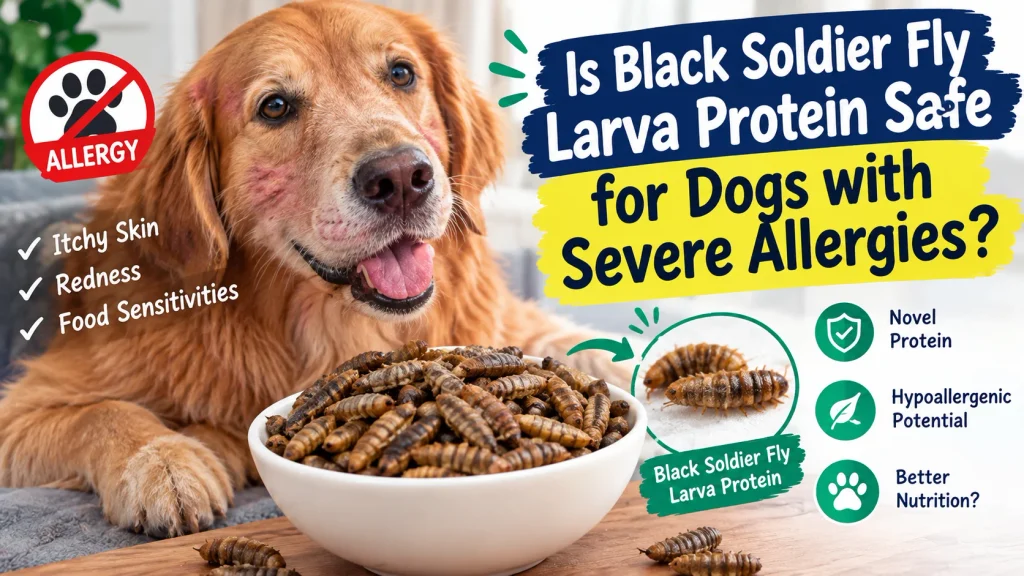
Is Black Soldier Fly Larva Protein Safe for Dogs with Severe Allergies?. Limited veterinary evidence indicates BSF larva protein may be safe for use in dogs with food allergy, because it is a novel source of proteins in which allergic dogs have had minimal exposure. A 2025 clinical trial reported no adverse effects in dogs with adverse food reaction diagnoses, while a 2024 case report showed that a BSF diet effectively managed the dog’s clinical signs.
Understanding Food Allergies in Dogs
The immune system of dogs becomes allergic to any foods and treats that have any protein sources that seem like “foreign objects” to them. Dog food allergens that tend to be common are beef, chicken, dairy, wheat, and lambs – sources that have been a part of commercial dog food for many years. As soon as a dog gets an allergy to a food, that usually can be successfully treated by eliminating dog foods with a novel protein or a hydrolyzed protein diet.
A novel protein can be any form of protein the dog has never encountered, so their immune system has never been “programmed” to react to it. That’s where the black soldier fly larvae come into the picture. Since they’re an insect protein, they are inherently non-communicable to mammals, grains, and birds which would traditionally prompt allergic reactions in dogs.
What Research Says About BSF Larva Protein Safety
Clinical Trial Evidence
The strongest data were from a 2025 publication in Veterinary Sciences, which tested BSF larvae as a protein replacement in dogs suffering from adverse food reactions (AFRs). Sixteen dogs–eight controls and eight with atopic skin disease were fed a BSF-based diet for four weeks.
Key findings:
- There were no significant gastrointestinal adverse effects in any dog.
- Stool consistency was unchanged throughout the study.
- No change in the pruritic (itch) score remained constant from baseline (2.0) to week 2 (2.3) to week 4 (2.4).
- Hematology and blood chemistry were consistent with normal values, indicative of no systemic toxicity
- All dogs maintained stable body weight
The researchers concluded that BSF larvae were “well tolerated by AFR-affected and control dogs, with no adverse clinical outcomes”.
Case Report Evidence
Another report from 2024 detailed a 5-year-old beagle with a verified food hypersensitivity that was suffering from GI signs. The dog was placed on a diet where BSF larva meal was the sole protein source in place of poultry byproduct meal.
Results:
- The dog presented no gastrointestinal alterations and a good stool score after a 12-day adaptation period.
- A challenge test with the original poultry-based diet triggered symptom recurrence
- Reintroducing the BSF diet reversed symptoms within two days
This case demonstrated not only tolerance but active symptom control when BSF protein replaced the allergenic protein source.
Allergenicity Assessment
The European Food Safety Authority (EFSA) has conducted allergenicity assessments of BSF proteins as part of novel food evaluations. While this work focuses on human consumption, the methodologies for assessing protein allergenicity are relevant. BSF proteins have not shown cross-reactivity with common mammalian allergens in these assessments.
Is Black Soldier Fly Larva Protein Safe for Dogs with Severe Allergies?
True Novel Protein Status
“Novel” proteins such as venison, duck, or kangaroo have been fed to most commercial breeds of dogs in the form of treats, scraps, or inadvertent cross-contamination. Most dogs’ immune systems have already been exposed and sensitized to these proteins. BSF larvae should not be familiar to any dog’s immune system.
Sustainable and Nutritionally Complete
The crude protein content of the BSF larvae made them a complete protein with a desirable amino acid profile. BSF meal was used as the primary protein source in a commercially viable canned dog food formulation (2025 study), which proved that BSF larvae contained all the necessary amino acids for a balanced diet and no supplementation with allergenic proteins was required.
Gastrointestinal Tolerance
Most of the studies showed no gastrointestinal side effects, which is very important in dogs with food allergies since a majority of those dogs also have other GI issues.
Important Considerations and Limitations
Short-Term Evidence Only
The longest published study followed dogs for just 4 weeks. Although promising, long term safety data (6-12 months or more) is still not available. Some side effects could potentially arise when fed over an extended period.
Individual Variation
Food allergies are highly individual. A protein safe for one allergic dog may not be safe for another. BSF protein should be introduced as part of a structured elimination diet trial under veterinary supervision, typically lasting 8–12 weeks for dermatological symptoms.
Cross-Reactivity Concerns
While no cross-reactivity has been reported between BSF proteins and common allergens, dogs with severe shellfish allergies (crustaceans) theoretically might react to insect proteins due to shared tropomyosin proteins. This risk remains unquantified in veterinary medicine.
Quality and Sourcing
Dog foods made from BSF are not all of the same quality. Some may contain other ingredients that could cause allergies. Use foods with simple ingredients and transparent information about where they come from.
Practical Recommendations
If your dog has very strong food allergies:
- First, talk to your vet. BSF is an ingredient you shouldn’t try and “wing,” so make sure you’re going into it with the guidance of an expert.
- Choose a BSF food with minimal ingredients. The fewer ingredients, the better.
- If possible, avoid formulas that contain other protein sources or common allergens such as wheat and dairy.
- Conduct a proper elimination trial. Feed the BSF diet exclusively for 8–12 weeks (for skin symptoms) with no treats, table scraps, or flavored medications.
- Monitor closely. Track stool quality, itching, skin condition, and energy levels. Report any changes to your vet.
- Consider hydrolyzed alternatives if BSF fails. If your dog doesn’t improve on BSF, hydrolyzed protein diets remain the gold standard for severe allergies.
The Bottom Line
The current veterinary evidence indicates that black soldier fly larva protein is likely safe for most dogs with severe food allergies. It functions as a true novel protein with no documented cross-reactivity to common canine allergens, and clinical studies have shown good tolerance without adverse effects.
However, the evidence base is still emerging. BSF protein is a promising option particularly for dogs that have failed other novel protein trials but it is not yet a first-line recommendation backed by decades of research. For dogs with severe allergies, BSF-based diets should be used under veterinary guidance as part of a structured dietary trial.
Also Check: The Complete Guide: How Much Wet Food Should a Spayed Indoor Cat Eat Per Day 2026?
Frequently Asked Questions (FAQs)
Can black soldier fly larvae trigger allergies in dogs?
While any protein can theoretically trigger an immune response, no allergic reactions to BSF larvae have been reported in dogs with pre-existing food allergies. A 2025 study specifically monitored allergic dogs fed BSF-based diets and found no exacerbation of symptoms.
Is BSF protein better than hydrolyzed protein for allergic dogs?
Hydrolyzed diets remain the veterinary gold standard because the proteins are broken down into fragments too small to trigger immune reactions. BSF protein is not hydrolyzed it works by being novel. For dogs with severe allergies that have failed multiple diets, hydrolyzed protein may still be the safer first choice. BSF is a promising alternative when hydrolyzed diets are unavailable or unsuccessful.
How long should I feed a BSF-based diet before expecting improvement?
For dogs with skin symptoms, an elimination trial should last 8–12 weeks. For gastrointestinal symptoms, 2–4 weeks may be sufficient to see improvement. If no improvement occurs within this timeframe, the diet is unlikely to be the solution.
Are there any dogs that should NOT eat BSF protein?
Dogs with known shellfish or crustacean allergies may theoretically be at risk due to shared proteins, though this has not been documented. Dogs with pancreatitis or fat intolerance should have BSF products evaluated for fat content. Always consult your vet before changing diets.
What should I look for in a BSF-based dog food?
Choose products with:
BSF larvae listed as the primary protein source
Limited other ingredients to minimize allergy triggers
Complete and balanced nutritional adequacy statements
Clear sourcing and manufacturing information
Can I feed BSF larvae as a treat instead of a complete diet?
BSF larvae can be fed as treats, but for allergy diagnosis, all non-diet foods must be eliminated during an elimination trial. Even small amounts of other proteins can trigger reactions. If using BSF treats, ensure they contain only BSF protein with no additives or other protein sources.
How does BSF protein compare nutritionally to chicken or beef?
BSF larvae provide a complete amino acid profile and are comparable to conventional protein sources in digestibility. The 2025 study confirmed that dogs maintained stable body weight and normal blood parameters on a BSF-based diet, indicating adequate nutrition.
Can BSF protein help with environmental allergies too?
No. BSF protein addresses food allergies specifically by providing a novel protein source. Environmental allergies (atopic dermatitis) involve different immune pathways and require separate management. However, some dogs have both food and environmental allergies, and controlling the food component can reduce overall allergic burden.
Where can I buy BSF-based dog food?
BSF-based pet foods are increasingly available from specialty pet retailers and online. Brands are emerging in Europe, North America, and Asia. Look for products specifically formulated for elimination diets or limited ingredient diets. Your veterinarian may be able to recommend specific brands that meet therapeutic standards.