How to Help a Cat with Arthritis Climb Stairs?
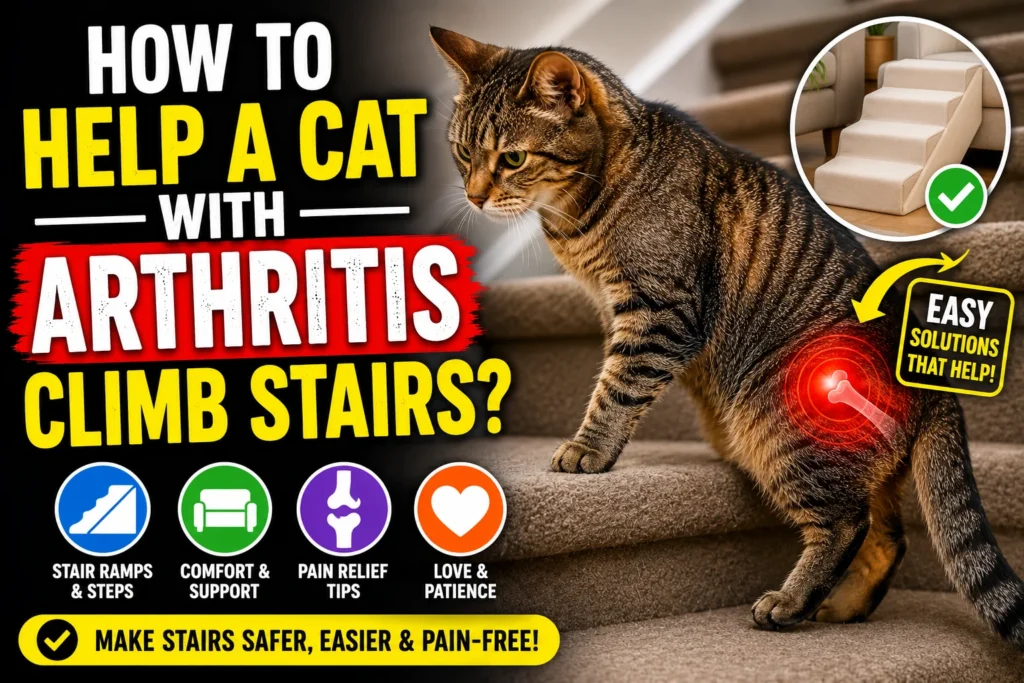
How to Help a Cat with Arthritis Climb Stairs? There’s nothing more upsetting than watching a formerly lithe and athletic feline friend who, after so many years of being a supreme jumping artist, now finds themselves frozen at the bottom of your staircase.
The bright side is that there are countless innovative, affordable solutions that can ease the physical and emotional discomfort of living with an arthritic cat and allow them to regain their freedom and confidence in your home. In fact, you may be surprised to learn the prevalence of this condition; estimates vary widely but it is often accepted that anywhere between 80% and 90+% of all senior cats have some degree of arthritis, and in cats over age 12 the figures climb very rapidly.
Arthritis involves wear and tear on the joint; cartilage that usually surrounds the bone wears down, causing a direct interface of bone against bone, accompanied by pain and inflammation in the affected joints, and that means once familiar steps will quickly become an impossibly difficult challenge.
I’m a licensed vet and will cover how you can turn your multi-story house into a “single story” experience for your senior furry companion based on a comprehensive and effective step-by-step plan to ensure maximum mobility and joy.
How to Help a Cat with Arthritis Climb Stairs?
Understanding the Challenge: Why Stairs Are a Problem for Arthritic Cats?
Arthritis aka Osteoarthritis: is the wear and tear of cartilage in the joints and a leading cause of lameness in cats (particularly elderly and obese), presenting with pain, stiffness and stiffness in their shoulders, hips, spines and legs. To your cat, every step up the stairs is like jumping a hundred steps while landing awkwardly, causing a great deal of pain and stress on the affected joints, leading them to lose their confidence, avoid their steps altogether, or isolate themselves completely from the spaces they love to rest. Or from you.
The Gold Standard: A Two-Pronged Approach
Fixing Cat Hip Pain: A two-pronged approach is what’s necessary here, with veterinary interventions targeting the condition while changing the environment of the cat for comfort right away. It’s important to note that fixing the environment helps your cat avoid performing painful actions, however, it does not alleviate any pain your cat may be feeling.
Step 1: Veterinary Care is Non-Negotiable
Now’s most important steps. Ensure that before attempting anything from your vet is to consult.
Use pain meds: There are many cat-friendly, effective medications for pain management that will ease your cat’s suffering and make a huge difference in his quality of life. Ask your veterinarian for a treatment prescription.
Have your cat reach a healthier weight.
Excess weight puts a great deal of strain on your cat’s joints. Your veterinarian can devise a food-based diet to promote weight loss. Consider joint supplements. Vets often recommend that you consider supplements such as glucosamine, chondroitin or omega 3 fatty acids.
Also Check: How To Tell If A Dog Is Crying From Pain?
How to Modify Your Home for Stairs and Accessibility?
Now, with medical care in hand, use these practical tips for a home that is a pain-free haven for your feline friend.
1. The “One-Floor Rule”: Reducing Dependency on Stairs
1. Confine their essentials to one floor. Confine as much as possible of your cat’s essential resources, such as water, food, litter box, and sleeping areas to a single floor of the house. This way, they have less reason to ascend to an upper story and back down in a day.
What to move:
Food and water: You’ll need to keep these on the ground floor, and make sure they’re easily accessible in multiple places. Litter trays Keep a low-sided litter tray on the ground floor. High-lidded boxes and cat flaps can be awkward and unpleasant for a cat suffering from arthritis.
Comfy beds: A well-cushioned bed that is in a warm and safe spot can help him rest comfortably.
Scratching posts and toys: Ensure that these are also on the ground floor, so they’re easily available, and he’s less likely to search far for them.
2. Build a “Stairway to Heaven” with Cat Ladders and Ramps
Although the “one-floor rule” is still the best option. Yet you cannot stop you pet to reach for you to come on top level of floor and there is where you need to set up safe route.
Commercial Pet Stairs or Ramps. Trusty set of pet stairs (or even a slight ramp) will do you great service. Ensure that the ramp/ stairs Have a non slip surface of steps and ramp Your new stair climbing steps (for the cat) Should be of such nature to take their trust to ascend. Let your kitty’s paws get the chance to grip on the carpet, Sisal and or rubber on top surface and thus regain their morale; that the kitty can learn not only on to move upward in easy steps, not to get any scratches at body while doing so.
The Stair-Stepping Strategy. For example, when getting on an ottoman or a tall bed, you’ll want to use your cat “stepping blocks,” placing low items of furniture in the path: First, place a stool or ottoman, then a sturdy, small coffee table to the side, so the cat makes 3 little hops instead of one massive leap, landing directly on the ottoman then the table then the furniture item above.
3. Eliminate Slipping Hazards
Muscle pain and shattered cat confidence can be the result of even small falls.
Non Slip Flooring Install non slip runners or mats or rugs on any slick surfaces wood/ tile or laminating floors both bottom and top of your stairs. Consider adding carpet treads to wood floors if required even with rarely using them.
4. Provide a “Soft Landing”
Jumping down becomes less accurate for arthritic cats. Cushion these potential landing spots with soft, folded blankets, thick cushions or orthopedic pet pads to offer impact-free descents.
5. The Warmth Factor
As people get older, like humans, the cold can make joints more stiff, sore and tender.
Warm beds: Make sure you put their bed where it’s warm, quiet and can not be reached by a draft. An orthopedic bed can really help your senior cat remain comfortable as an extra cushion for their painful bones. You may find our blog post about putting a warm, heated bed for your cat informative for more tips.
Additional Tips for a Happy, Mobile Cat
Elevate Their Bowls: The neck/spine arthritis in your kitty makes putting their head down to eat painful. Elevating their bowls on to a stand will make mealtime easier. Feeders are available at your local vet.
Provide Safe and Slow Activity: Obviously, avoid those painful exercises such as climbing stairs or running.
This should just be light-play. Intersperse brief sessions of interacting playtime with such as with a Wand Toy so that they are encouraged to get some much-needed exercise without needing to make great demands of them, i.e. Running/jumping etc. Introduce changes gradually: Cats do not like changes of any kind, be it stairs to their desired resting spot on furniture, be it a new feeding system; any change takes time for them to get adjusted. Do not, though. Push your beloved cat, but entice them by placing food/treats onto the stairs or ramps as a way to get them adjusted to your changes of layout!
Conclusion
Alleviating Arthritic Cat discomfort comes with careful consideration. By incorporating elements of care, habitat design, and intelligent modification, you have the capability to create a profoundly better world for your arthritic companion feline. Even if they don’t vault to high furniture, they can still meander the space, be near to you, and lead a long, enjoyable and non painful life.
Frequently Asked Questions (FAQs)
Can my arthritic cat still go up and down stairs?
Generally, stair usage should be kept to a minimum. The recommended solution is the “one-floor rule”, which means everything your cat uses (food, water, litter, bed) should be on one floor to avoid the necessity of navigating stairs. If stairs need to be used then a slow journey up and down may be form of exercise, but shouldn’t be required.
What is the best type of stairs or ramp for my arthritic cat?
Low wide steps and a smooth gentle slope (non slip) are best. Cat stairs that are stable, sturdy and feature carpeting on the treads are highly desirable to reduce slipping, up or down.
How can I encourage my senior cat to use a ramp or the cat stairs?
Cats can often be suspicious of new items in the home, so it can help to have the new ramp or stairs in a familiar place in the house. Place treats or your cat’s favorite food at intervals up and on the top level of the ramp/stairs, then gently encourage. Ensure you do not force your cat to use the ramp/stairs patience is key.
Can cats get rid of arthritis?
Unfortunately, the answer to this question is “no.” Arthritis in cats is an inflammatory and degenerate disease, meaning that the damage to joints is permanent and irreversible, however it can be treated, so your arthritic cat can live a very comfortable and happy life with medication and some home adjustments.
My cat is only eight years old, is he too young for arthritis?
Absolutely not. In fact, whilst the rate of prevalence in cats does increase with age, studies have shown that approximately 95% of cats over the age of eight years suffer from arthritis and it also occurs much earlier in life.
What should I do if there is not room to place a cat stair or ramp on my staircase?
In these situations, the best solution is to ‘set up base camp’ on one level of your home with the food, water, litter and bed all at ground level.
Should i put my cat on a diet to help ease its arthritis?
Indeed, often diet is extremely important as overweight cats suffer far more due to excess weight adding additional stress and pain to their joints. Speak to your vet and establish a plan for your cat’s weight.
Are there other home signs that my cat has arthritis and requires intervention?
Yes, there are other common home signs, including stiffness, trouble jumping or going down a set of stairs or up the stairs, sleeping more, reduced activity level, increased irritation when stroked, litter box problems.
What is the best bed for a cat with arthritis or joint problems?
An orthopedic bed with cushioning and support, a bed with a pressure relief, and a comfortable bed for getting in and out, all for a dog with arthritic or joint condition.
Does cold make a cat’s arthritis worst?
Yes. Cats will tend to suffer more in the winter, as they find that cold stiffens the blood vessels, thus making their joints more sore as well as more stiff and also they may spend more time and go to bed in a cozy warm place next to a heating window or radiator, where there is no bother.