Signs of Hyperthyroidism in Older Cats
Signs of Hyperthyroidism in Older Cats, If you have a cat that is 10 years or older, you need to read this. As a practicing veterinarian, one of the most common misdiagnoses I see is owners confusing the symptoms of hyperthyroidism in older cats with “just getting old.”
We often hear “She’s just slowing down because she’s a senior.” Or the opposite: “He eats like a horse but stays skinny lucky cat!”
In reality, neither of these are “normal aging.” They are classic red flags of a thyroid storm.
Here is the truth, Hyperthyroidism is the most common glandular disorder in aging felines. The good news? If caught early, it is highly treatable. If ignored, it leads to heart failure, blindness, and kidney failure.
Let’s break down the clinical symptoms every pet parent needs to know.
What Is Feline Hyperthyroidism?
Located in your cat’s neck, the thyroid gland acts like a gas pedal for the body. When a benign tumor (adenoma) forms, the gland produces too much thyroxine (T4). This pushes your cat’s metabolism into “overdrive.”
The body starts burning fuel at a dangerous rate. Without intervention, the heart, kidneys, and liver simply wear out.
10 Key Symptoms For Signs of Hyperthyroidism in Older Cats
Do not dismiss these behaviors. If your senior cat shows three or more of these signs, request a T4 blood test immediately.
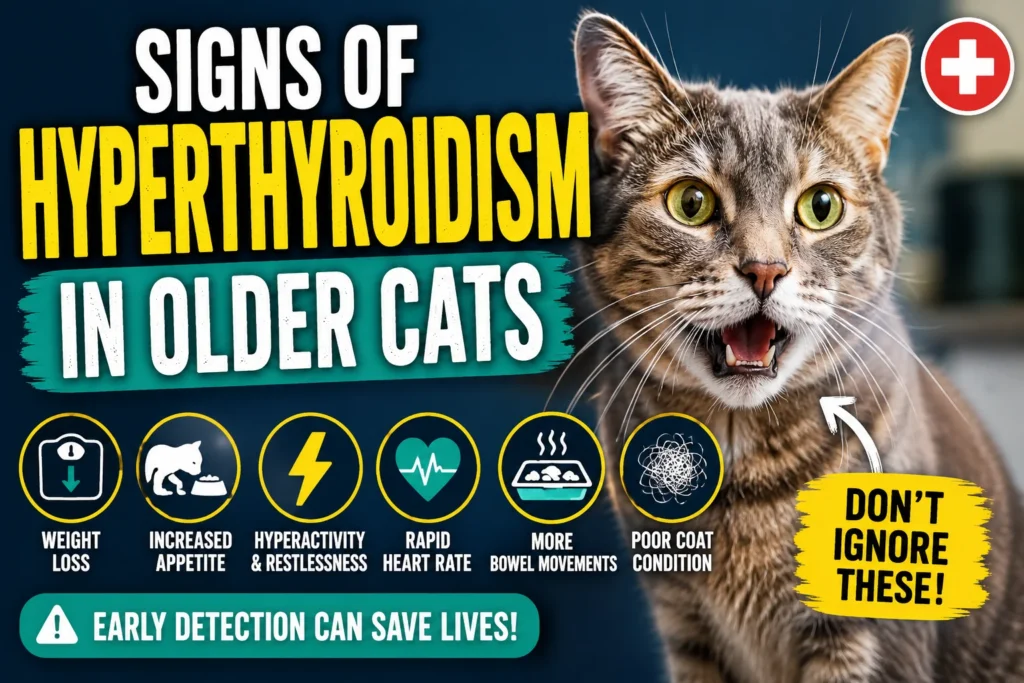
1. Ravenous Appetite with Weight Loss (The 1 Red Flag)
This is the paradox of hyperthyroidism. Your cat acts starving yowling at the bowl, stealing food, licking the plate clean. Yet, you can feel their spine and ribs. The metabolism is so fast that the body cannot absorb nutrients.
2. Unquenchable Thirst (Polydipsia)
Are you refilling the water bowl twice a day? Is your cat drinking from the toilet or sink? Excess thyroid hormone damages the kidneys’ ability to concentrate urine, leading to massive water loss.
3. Vocalization at Night
Senior cats often yowl due to confusion or pain, but with hyperthyroidism, the yowling is frantic and loud. The cat feels anxious, hot, and “wired.” They are trying to tell you something is wrong.
4. Hyperactivity vs. Lethargy (The Two Phases)
In early stages, the cat races around the house, sleeps less, and seems “neurotic.” However, as the heart weakens from the strain, the cat suddenly crashes into severe lethargy. Watch for the switch from “zoomies” to hiding under the bed.
5. Poor Coat Quality
A healthy cat grooms meticulously. A hyperthyroid cat often stops grooming because they feel unwell. The coat becomes matted, greasy, or “staring” (fur sticks up). You may also see excessive shedding or bald patches.
6. Vomiting and Diarrhea
While some vomiting is normal in cats, hyperthyroid vomiting is persistent (1-2 times weekly). The gut moves too fast to form solid stool, leading to chronic, soft, rancid smelling diarrhea.
7. Racing Heart Rate (Tachycardia)
You don’t need a stethoscope to catch this one. Place your hand on the left side of your cat’s chest while they sleep. A normal cat has 140-220 beats per minute. A hyperthyroid cat often exceeds 280bpm and feels like a “hummingbird.” This leads to a life threatening condition called thyrotoxic cardiomyopathy.
8. Heat Seeking or Avoiding
Because their internal furnace is on high, many hyperthyroid cats seek out cold surfaces (bathtubs, tile floors, air conditioner vents). Conversely, if the cat has lost significant muscle mass, they may shiver and seek heat because they lack insulation.
9. Unusually Aggressive Behavior
A normally docile cat may hiss, swat, or bite when picked up. The excess hormone makes them irritable and anxious. This aggression often resolves within weeks of treatment.
10. Panting or Open-Mouthed Breathing
Cats do not pant like dogs unless stressed or sick. If your senior cat breathes with an open mouth after minimal play, it is a sign of respiratory distress or high blood pressure caused by the thyroid condition. This is an emergency.
Also Check: Signs Your Cat Is Stressed Out After Moving to a New House
The “Masked” Danger Concurrent Kidney Disease
Here is the veterinary catch-22. Hyperthyroidism increases blood flow to the kidneys, artificially making them look healthy on blood work. When we treat the thyroid, blood flow drops, and hidden kidney failure appears.
Do not stop treatment if this happens. A skilled vet will balance both diseases using medication and diet.
How is it Diagnosed & Treated?
- Diagnosis: A simple blood test checking Total T4 levels. In early cases, a “Free T4 by Equilibrium Dialysis” or a “T3 Suppression Test” may be needed.
- Treatment Options:
- Methimazole (Medication): Daily pills or transdermal gel (rubbed on the ear). Lifelong management, but not a cure.
- Radioactive Iodine (I-131): The gold standard. A single injection cures 95% of cats. Expensive but requires no daily pills.
- Surgery (Thyroidectomy): Risky if the cat is old or has heart disease.
- Prescription Diet (Hill’s y/d): Blocks iodine. Effective, but the cat cannot eat any other food.
The Bottom Line
Do not assume weight loss is “good” for an old cat. Do not assume a big appetite is “healthy.” Early detection of hyperthyroidism adds 2 to 5 years of quality life.
If your cat is over 10 years old, schedule a senior wellness panel today. A $100 blood test today saves a $3,000 emergency room bill tomorrow.
Frequently Asked Questions (FAQs)
At what age is hyperthyroidism most common in cats?
Ninety-five percent of cases occur in cats aged 8 years and older, with the highest incidence between 12 and 13 years of age. It is rare in cats under 6.
Can hyperthyroidism kill a cat?
Yes, if untreated. The most common cause of death is thyrotoxic cardiomyopathy (heart failure), followed by severe hypertension leading to sudden blindness (retinal detachment) or kidney failure.
Why is my cat eating more but losing weight?
The overactive thyroid gland speeds up metabolism to a dangerous rate. Your cat burns calories faster than they can digest them. Think of it like a car engine stuck at 8,000 RPMs it burns all the fuel immediately.
My cat is not skinny. Can they still have hyperthyroidism?
Yes. This is called “Apathetic Hyperthyroidism” (about 10% of cases). These cats show the opposite symptoms: lethargy, depression, loss of appetite, and weakness. They are usually older, sicker cats where the disease has exhausted the body.
Does the prescription diet really work?
Hill’s y/d diet works by severely restricting iodine. Studies show T4 levels normalize within 3 weeks. However: The cat cannot eat treats, fish, or other cat food. Even a few pieces of tuna will break the diet and raise thyroid levels again.
What is the cheapest treatment option?
Methimazole (generic Tapazole) is the cheapest upfront ($20–$40/month). However, it requires twice-daily dosing, regular blood work (every 3–6 months), and carries risks of vomiting, facial scratching, and liver damage.
How long can a cat live with untreated hyperthyroidism?
Typically 6 to 24 months from diagnosis. Without treatment, most cats die from heart failure or severe weight loss (cachexia). Quality of life declines rapidly in the final 3 months.
Is Radioactive Iodine treatment painful?
No. The cat receives a single injection under the skin (like a vaccine). They stay in the hospital for 1-2 weeks until their radiation levels are safe for humans. There are no side effects, and no anesthesia is required for the injection.
My cat hides after I give the thyroid pill. What do I do?
Ask your vet for transdermal methimazole. It is a gel that you rub on the inside tip of the ear. The absorption is slightly slower but just as effective for 90% of cats. No pilling required.
Can hyperthyroidism cause kidney failure?
Ironically, treating hyperthyroidism often reveals existing kidney failure, but it does not cause it. The high thyroid hormone artificially boosts kidney function. Once the thyroid is normalized, the true kidney status shows up on blood work. This requires a delicate balance of management.