Signs of Hyperesthesia Syndrome In Domestic Cats
Signs of Hyperesthesia Syndrome In Domestic Cats. You might have found yourself witnessing the following scenario: One moment, you have a calm, napping cat, the next, your fluffy companion is wriggling, contorting his body, contorting his skin, and even twitching the tail all around with wide, dilated pupils.
This looks so concerning! It’s possible your furry friend is just going through one of those bizarre cat moments, and it could also be a medical problem, as known as Feline Hyperesthesia Syndrome (FHS).
Sometimes referred to to as “twitchy cat disease” or “rolling skin syndrome.” As veterinarian, owners that come to me about the symptoms related to this issue tend to be really worried, and as a pet owner too, I know how confused and concerned you must be! This guide is here to help you understand this mystery issue and the management approaches to make your cat more comfortable in life.
Signs of Hyperesthesia Syndrome In Domestic Cats
What is Feline Hyperesthesia Syndrome?
The term “hyperesthesia” literally means “too much feeling” . FHS is a complex and poorly understood condition characterized by episodes of bizarre behavior that suggest a cat is experiencing extreme sensitivity, pain, or even hallucinations . It’s not a single disease with one clear cause, but rather a syndrome a collection of signs that may stem from different underlying issues, including neurological, behavioral, or dermatological problems .
A 2025 study found that a remarkable 73% of healthy cats display at least one behavioral sign commonly associated with FHS at home, highlighting how common some of these behaviors are in isolation . And here’s another example for why vet diagnosis really does matter: FHS is never identified just by one behavior alone; rather, it’s the cluster and intensity of signs that usually makes a veterinarian diagnose it.
The Primary Signs of Hyperesthesia in Cats
FHS episodes can range from mild to severe. Often, episodes are discrete and may only last seconds to a few minutes long, before the cat’s personality resumes.
Here are the most common signs to watch for:
1. The Classic Sign: Rippling Skin
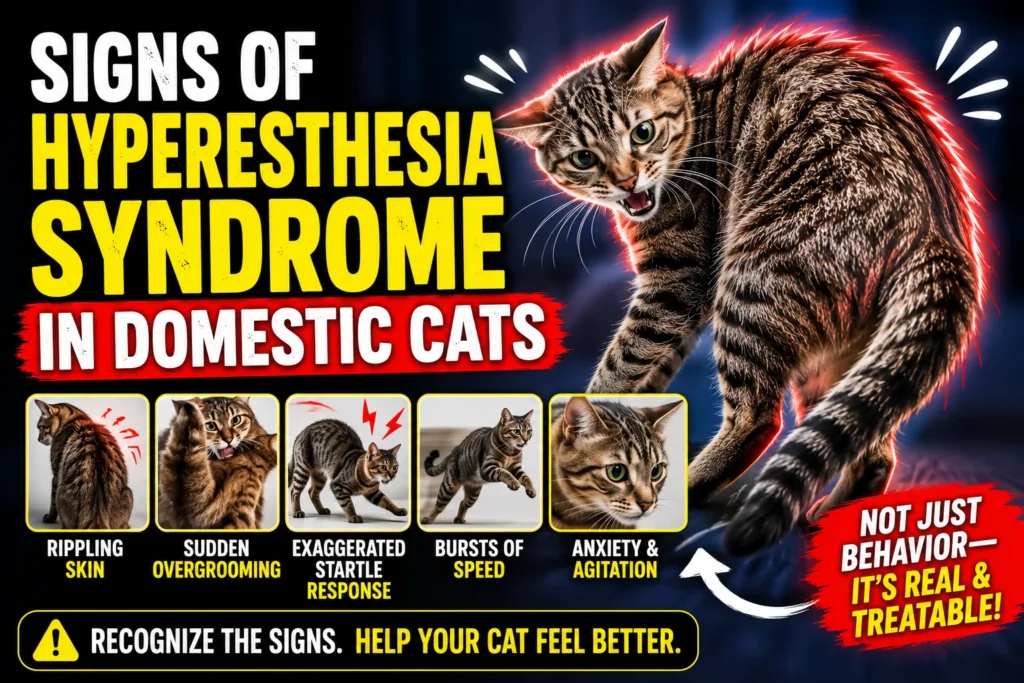
The most characteristic sign is a visible rippling or rolling of the skin over the cat’s back, particularly in the lumbar (lower back) area . This is caused by spasms of the cutaneous trunci muscle, which lies just under the skin . You might see this twitching occur spontaneously or in response to light touch .
2. Obsessive Behaviors and Self-Mutilation
These Feline Health Show cats begin concentrating obsessively on the parts of their body This manifests as:
- Excessive grooming (overgrooming): Licking or biting at their tail, flanks, paws, or anal area to the point of causing hair loss (barbering) or skin lesions .
- Self-mutilation: In severe cases, this can escalate to causing significant wounds, particularly to the tail . Tail mutilation is a serious sign of FHS .
3. Dramatic Behavioral Episodes
Many cats will display sudden, extreme agitation during an episode.
- Frantic Running and Jumping: They may tear around the house as if trying to escape something .
- Distressing Vocalization: You might hear unusual yowling, howling, or screaming, which is often a sign of distress rather than aggression .
- Tail Chasing: Some will compulsively attack and chase his own tail.
4. Changes in Temperament and Arousal
- Aggression: A usually docile cat may become suddenly aggressive when touched near the back or tail, or may display redirected aggression towards its owner or other pets . Owners should be cautious as touching a cat during an episode can lead to injury .
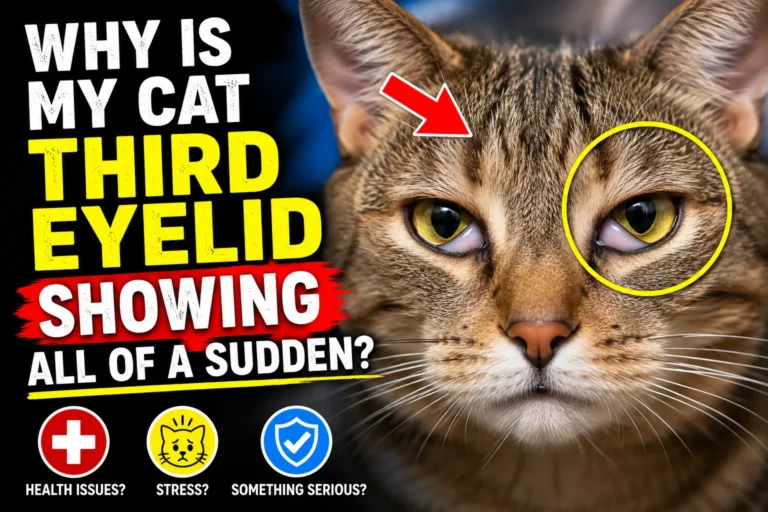
- Dilated Pupils: Large, dark, and rounded pupils (mydriasis) are a common sign of heightened arousal or distress during an episode .
- Increased Affection: In some cases, cats may become uncharacteristically affectionate before or after an episode .
Also Check: Home Remedies For Dog Eye Discharge And Crust
What Causes Feline Hyperesthesia?
The cause of FHS is as yet unknown, but it is possible that there is more than one cause. This has led to several leading theories:
- Maladaptive Pain Disorder: Many veterinary neurologists consider FHS primarily a pain disorder. The theory is that an initial injury or painful event sensitizes the nerves, creating a chronic pain state long after the original issue has healed . A light touch that shouldn’t be painful is instead perceived as severe discomfort.
- Compulsive Disorder: Some experts view FHS as a type of obsessive-compulsive disorder (OCD) . A cat feeling “conflicted” might perform a displacement behavior like grooming to relieve stress, which then becomes a compulsive habit .
- Stress and Environmental Triggers: Stress is a major contributing factor. Studies have shown that environmental changes, such as the introduction of a new family member, can trigger the onset of FHS. Your dog’s bored and can’t get enough stimulation of the outdoors can be a real detriment too.
- Seizure-like Activity: In some cases, the episodes may have a neurological basis similar to a seizure disorder .
Breeds and Age Predisposition
While FHS can affect any cat, it is most commonly diagnosed in young cats, typically between one and five years old . Certain breeds are overrepresented, particularly Oriental breeds like:
- Siamese
- Burmese
- Abyssinian
- Persian
A 2016 study reviewing 13 cases of suspected FHS found a median age of 1 year at presentation, reinforcing that it’s often a condition of young adulthood .
How is Feline Hyperesthesia Syndrome Diagnosed?
Diagnosing FHS is a process of elimination. There is no single test for it. Your cat’s vet is trying to eliminate other causes of the problem
The Differential Diagnosis: Ruling Out Other Causes
Several conditions can mimic FHS:
- Skin Conditions (Dermatological): Flea allergies, food allergies, skin infections, or mites can cause intense itching and overgrooming .
- Pain (Orthopedic): Arthritis, tail injuries, or back pain can cause a cat to react aggressively or obsessively to a painful area .
- Neurological Issues: Seizures or nerve damage (like a neuroma) can produce similar episodes .
- Gastrointestinal or Urinary Problems: Conditions like inflammatory bowel disease or urinary tract infections can cause discomfort that a cat might try to “groom away” .
The Diagnostic Process
At first your veterinarian will do an extensive history and physical exam – paying close attention to when these episodes happen and what they look like. Then your vet will probably suggest skin scrapings for parasites or mange blood work and urinalysis to assess for any underlying illness allergy testing and/or a food trial to check for hypersensitivities.
- X-rays or Advanced Imaging (MRI/CT): These are often recommended to rule out spinal disease or other structural problems .
In many cases, if these tests all come back normal, a presumptive diagnosis of FHS is made .Especially if your cat’s clinical signs and history suggest the diagnosis of the feline facial paralysis syndrome.
Effective Treatment and Management Strategies
Since there is no cure for FHS, the goal of treatment is to manage the symptoms, reduce the frequency of episodes, and improve your cat’s quality of life . A multimodal approach combining medical and environmental interventions is often the most successful.
1. Environmental Modification and Enrichment
Reducing stress is a cornerstone of FHS management .
- Creating a calm atmosphere: Provide a constant routine with regards to play, food. We advise the administration of diffusers cat pheromones (Feliway).
- Enrich the cat’s life: many opportunities for play and intellectual simulation.
- Use puzzle feeders, hunting toys, and scratching posts .
- Provide a “Safe Zone” for each cat-especially for multi-cat houses-so that they feel they have their own space for their food and water as well as a place to retreat. If you notice your pet’s ears flatten or that the cat’s tail starts thumping from your petting on its back, then avoid that zone for your kitty.
2. Veterinary Treatment and Medications
The plan from a veterinarian will vary with the individual symptoms shown by the cat.
- Anti-Itch Therapy: If flea control and/or allergies are responsible, your first step will be very rigid flea control with added in an itchy medication (like steroids) or anti-itch cream/spray. If itching is involved then steroids will be your first attempt at managing this. Anti-itch medication will likely be in the form of a topical medication or an oral pill.
- Pain Management: Given that an adaptation theory for pain management is believed to be one theory that influences FHS, then medications like Gabapentin are commonly utilized. It’s prescribed to help control the symptoms of nerve pain and is a frequently employed method for treatment. In one retrospective review, 5 out of 7 feline subjects reached full remission with gaba pentinen as part of their treatment regimen.
- Psycho-Active Medications: If obsessive-compulsive behavior or anxiety seem to play a significant role then your vet could recommend the use of a drug such as fluoxetine or clomipramine to alter the behavior.
- Seizure medications: If the episode appears to simulate a seizure it could also be in your cat’s best interest to consider medications like phenobarbital.
- Antibiotics: These are used if self-mutilation has led to secondary skin infections .
A Note on Prognosis
Feline Hyperesthesia Syndrome will not cause your cat’s death and will not impair her vital organs . Most cats can live fairly normal, happy lives once they are being treated properly with a range of therapies. You must work carefully with your vet- and maybe a board-certified vet behaviourist, or vet neurologist, and yourself – to work out a plan that works for the particular cat. A second vet or a specialist might be needed if you are getting nowhere with your problem.
Frequently Asked Questions (FAQs)
Rolling Skin Disease What Is “Rolling Skin Disease” in cats?
Rolling skin disease is a more popular name for Feline Hyperesthesia Syndrome or FHS. This refers to the manner the skin of a cat’s back appears to roll or ripple during the event when the underlying muscles spasm.
What’s the best drug for Feline hyperesthesia syndrome?
No, there is no single, ‘best’ med- it’s based upon the particular cat. Gabapentin is very popular as well as efficient since it works with nerve pain, while fluoxetine (anxiety medications) or phenobarbital (seizure medications) can also be applied in the case these signs are the major cause.
Can stress cause hyperesthesia in cats?
Absolutely. Stress is a major contributing factor. Significant environmental changes like moving, a new pet, or the birth of a child can trigger the onset of FHS episodes . Boredom and a lack of environmental enrichment can also worsen the condition .
Is there any medication I can give my cat with FHS?
There is not one particular “best” medication because each individual cat is different. Gabapentin is one of the most effective commonly prescribed because it helps nerve pain. Some other medications may include fluoxetine (for anxiety) and phenobarbital (for seizures) if these are a dominant characteristic.
Can FHS be cured?
There is no current cure for FHS; however, the condition can be managed effectively through medication, behavior modification, and the use of special collars to prevent self-injury. The aim is to minimize pain and distress, prevent physical self-mutilation and ensure that your feline companion enjoys a high quality of life.
How do I handle my cat during an episode of FHS?
Never touch or restraint your cat while he/she is having an FHS attack, because these cats may lash out by scratching or biting. Keep yourself safe by keeping your feline in the room where he/she is. Stay as calm as possible during an attack. This will ensure no further aggravation occurs in the room where he/she is staying while he/she recovers from the attack. We have some ideas that will allow your cat or your veterinarian to formulate a plan together that would manage the attacks.
Is tail mutilation considered part of FHS?
Yes, in very rare occasions tail mutilation is considered to be one sign of FHS, so a trip to the vet should be arranged immediately. Tail injuries must be cleaned in order to prevent infection and depending on how bad the damage is, your cat might need amputation of the diseased tail in severe situations.
At what age will my cat develop FHS?
Usually cats who suffers from FHS are typically young. At what age should your feline be expected to experience an episode of feline hyperesthesia syndrome FHS, between 1-5 years old is a fairly common range.