Is Peanut Butter Safe for All Dog Breeds?
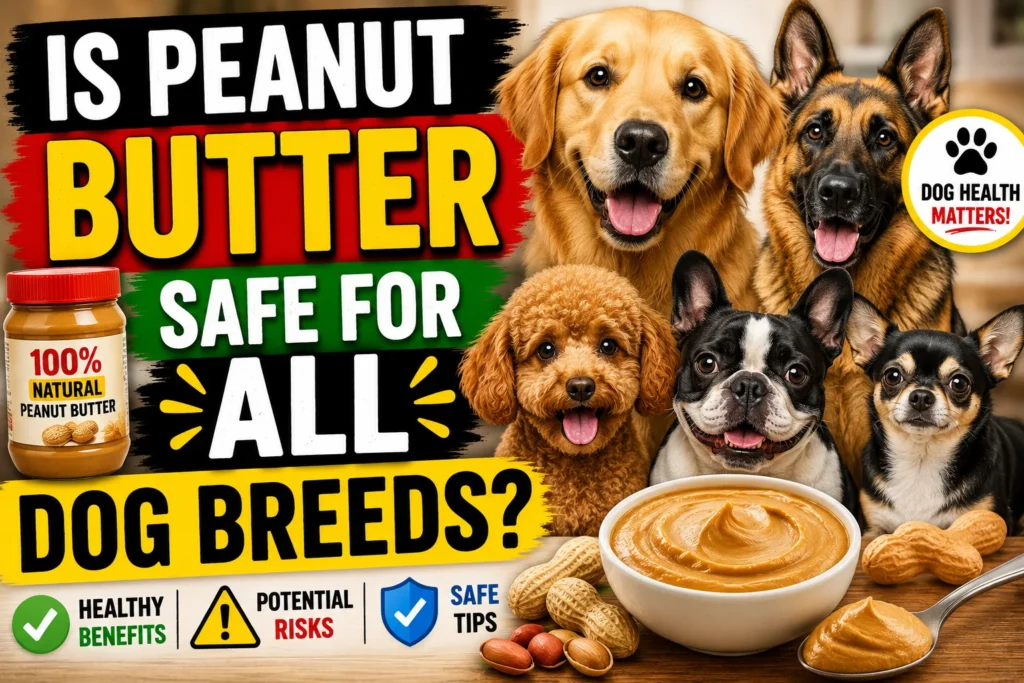
Is Peanut Butter Safe for All Dog Breeds? But here is the hard truth: No, peanut butter is not safe for every single dog breed. Few things spark as much joy in a dog’s eyes as a peanut butter-filled Kong toy. As a veterinarian, I have used peanut butter for decades to hide pills, calm anxious pups during thunderstorms, and reward good behavior. It is sticky, delicious, and packed with healthy fats and protein.
Before you pop open that jar, you need to understand the specific genetic, anatomical, and dietary risks associated with different breeds. In this ultimate guide, I will walk you through which dogs should never touch the stuff and how to serve it safely.
The Ingredient Watch: The “Xylitol” Massacre
The single greatest threat to all breeds (no matter the size) is Xylitol. This sugar alcohol, common in “low-sugar” or “dental” peanut butters, causes a massive insulin spike in dogs. In under an hour, a dog’s blood sugar can crash to zero, leading to seizures and liver failure.
The Vet’s Rule: If the jar says “Sugar-Free,” “Reduced Calorie,” or “Natural Sweetener,” do not buy it. All breeds are universally unsafe here.
Also Check: Why Is My Dog Drinking Too Much Water Suddenly?
Breed-Specific Risks: It’s Not Just the Peanut Butter
Even with a safe, xylitol-free jar, specific physiological traits make peanut butter dangerous for certain breeds.
1. Brachycephalic Breeds (Flat-Faced Dogs)
Breeds at risk: Bulldogs, Pugs, Boston Terriers, Boxers, Shih Tzus.
Why it’s dangerous: These dogs have elongated soft palates and narrow tracheas. Peanut butter is thick and sticky. Flat-faced dogs cannot create the same negative pressure to swallow as long-snouted dogs.
- The Risk: Choking and aspiration pneumonia. If a bulldog gets a glob stuck in their throat, they panic, inhale, and suck the peanut butter directly into their lungs.
2. Toy and Teacup Breeds
Breeds at risk: Chihuahuas, Yorkshire Terriers, Pomeranians, Maltese.
Why it’s dangerous: The caloric density of peanut butter is astronomical for a 4-pound body. Two teaspoons of peanut butter constitute nearly 20% of a Chihuahua’s daily caloric intake.
- The Risk: Pancreatitis. These tiny breeds are genetically predisposed to pancreatic inflammation. High-fat treats trigger vomiting, severe abdominal pain, and dehydration.
3. Giant Breeds with Bloat Risk
Breeds at risk: Great Danes, German Shepherds, Standard Poodles, Dobermans.
Why it’s dangerous: These breeds are prone to Gastric Dilatation-Volvulus (GDV) or “Bloat.” Feeding a sticky, dense food right before or after exercise (like licking a Kong after a walk) can trap air in the stomach.
- The Risk: Stomach torsion. This is a life-or-death emergency requiring surgery within 60 minutes.
The Fat Content Paradox: Pancreatitis Across All Breeds
While not breed-specific, Miniature Schnauzers, Dachshunds, and Cocker Spaniels have a genetic mutation affecting lipid metabolism. Unlike a Labrador who can metabolize fat efficiently, these breeds store fat as triglycerides in their blood.
For these dogs, even “natural” peanut butter is too high in fat. Chronic feeding leads to recurring pancreatitis, resulting in diabetes and chronic kidney disease.
Peanut Butter Safe for All Dog (For the Breeds That Can Have It)
If you do not own a brachycephalic, teacup, or pancreatitis-prone breed, peanut butter is an excellent tool. But you must follow the Veterinary Serving Protocol:
- The Finger Sweep: Never give a spoonful. Spread a thin, paper-thin layer inside a toy or on a lick mat. This prevents glob choking.
- The 2-Second Rule: The serving size should be no larger than the tip of your thumb (about 1/2 teaspoon for small dogs, 1 tablespoon for giant breeds).
- The 3-Ingredient Rule: Only buy peanut butter containing “Peanuts” and “Salt.” That’s it. No palm oil, no sugar, no xylitol.
Real Ingredients to Look For (And Avoid)
| Safe for Most Breeds | Toxic for ALL Breeds | Dangerous for Flat-Faced |
|---|---|---|
| Peanuts | Xylitol (Birch sugar) | Large, hard chunks of nuts |
| Sea salt | Macadamia nuts | High viscosity (thick paste) |
| Peanut oil | Moldy peanuts (Aflatoxins) | Warm, runny liquid (choking) |
Is it safe for all breeds?
No. Peanut butter is safe for most healthy, normal-snouted adult dogs. However, it is strictly contraindicated (do not use) for Pugs, Bulldogs, Chihuahuas, Miniature Schnauzers, and any dog with a history of pancreatitis.
Frequently Asked Questions (FAQs)
Can puppies eat peanut butter?
Yes, but wait until they are weaned (over 8 weeks). Use an even smaller amount (a dab on the tip of your finger) to avoid digestive upset.
Is crunchy or smooth peanut butter safer for dogs?
Smooth is safer. Crunchy pieces pose a choking hazard for small breeds and can fracture teeth in senior dogs. If you use crunchy, grind it into a fine powder first.
My dog is a Pug. Can I use powdered peanut butter?
Yes, this is the only safe option for flat-faced breeds. Reconstitute “PB2” powder with water until it is a watery paste, or sprinkle the dry powder on food. It eliminates the choking risk.
How do I know if my dog has Xylitol poisoning?
Symptoms appear within 10–60 minutes: vomiting, lethargy, loss of coordination (walking drunk), tremors, and dark red gums. Go to the emergency vet immediately.
Is organic peanut butter better for dogs?
Generally, yes. Organic brands are less likely to contain hydrogenated oils (trans fats) or Xylitol. Always double check the label anyway.
Can dogs be allergic to peanuts?
Yes. While rare (most allergies are to chicken or beef), symptoms include itchy paws, ear infections, hives, or anaphylactic shock. Stop feeding immediately if you see scratching.
What is a good alternative for high-risk breeds?
Use plain Greek yogurt (if lactose tolerant), mashed banana, or canned pumpkin. These have the same sticky texture for Kong toys but lower fat and thinner consistency.
Is homemade peanut butter safer?
Yes, absolutely. Blend roasted, unsalted peanuts in a food processor until smooth. No additives. Just be aware it separates like natural oil stir before use.
How many calories are in a tablespoon for a dog?
Approximately 96 calories. For a 20-pound dog (daily intake ~450 calories), one tablespoon is 20% of their diet. Adjust dinner portions accordingly to prevent obesity.
Can senior dogs with kidney disease have peanut butter?
No. Peanut butter contains moderate phosphorus and sodium. Senior dogs with kidney issues cannot filter phosphorus, leading to worsening renal failure. Ask your vet for renal-safe paste treats instead.