How To Transition An Old Cat To A Senior Diet Safely?
How To Transition An Old Cat To A Senior Diet Safely? As your kitty gets into their twilight years, their diet needs to change with their needs. Do you notice that your formerly energetic kitty is doing more sleeping and more slowing down the way we sometimes notice? Or perhaps, have they recently gained or lost weight. As the human’s aging bodies changes, thus do the feline, their once perfect adult fuel simply won’t suffice in keeping a more elderly ‘engine’ roaring. Make sure the transition to an older kitty diet comes about slowly and cautiously.
How To Transition An Old Cat To A Senior Diet Safely?
Why Your Senior Cat’s Diet Needs to Change?
Aging causes some changes that affect how your body needs nutrition. There is no ‘one size fits all’ diet plan for older felines, seeing as aging impacts felines in numerous different ways. High-quality older diets, Nevertheless, are geared towards typical age-related conditions.
The Biological Reasons for a Diet Shift
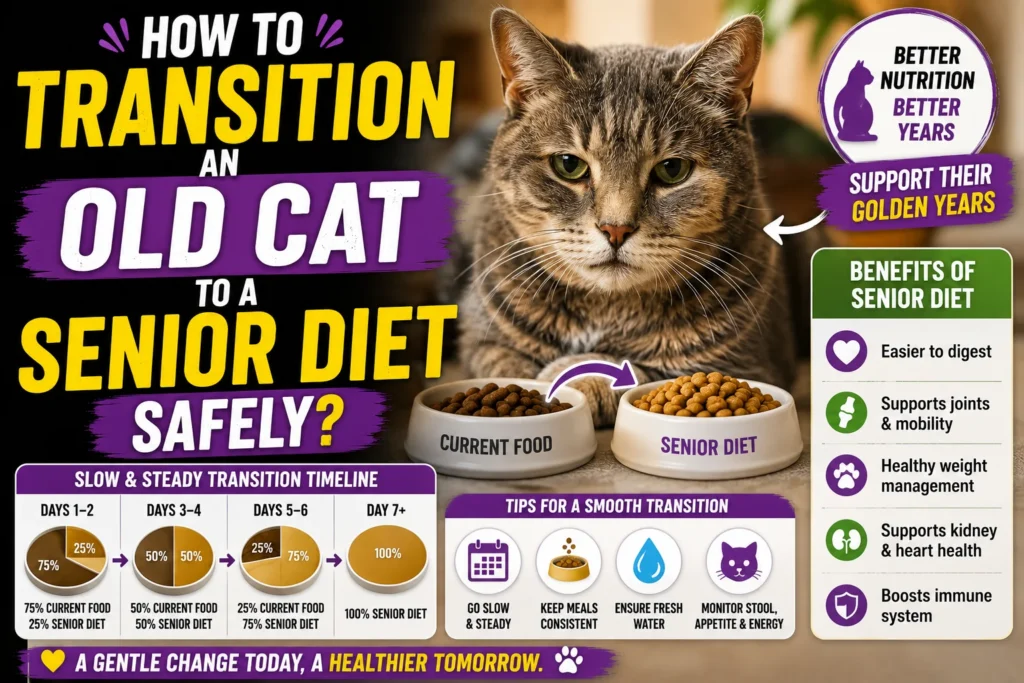
- Aging, metabolism, and body composition: As the years add up, feline metabolism can decelerate and your kitty may become more prone to being sedentary, increasing the chances of weight gain . Due to the normal aging process, they also will start losing some lean muscle mass Senior diets often feature high-quality, highly digestible protein to help counteract this muscle loss and maintain a healthy body condition .
- Supporting kidney health and function: Kidney function is one of the most important factors for senior cats to address, as diets rich in phosphorus will stress aging kidneys and increase their chances of experiencing kidney disease. This makes selecting a food with phosphorus levels that are controlled a key concern.
- Aids digestion, supports the immune system: The digestive systems in older cats tend to be not as active as when they were younger, therefore many senior diets include easily digested ingredients, along with prebiotics and/or probiotics to aid gut health. Additional beneficial ingredients typically found include antioxidants such as vitamins C and E, as well as Omega-3 fatty acids which benefit overall immunity, coat condition and help support aching joints that suffer with arthritis.
- Changes to Appetite: With aging, cats may lose their senses of smell and taste, have tooth decay or missing teeth and find it difficult to eat. Senior foods are often formulated to be more aromatic and palatable with smaller, softer kibble or are available in appealing wet food textures .
When Is It Time to Switch?
The timeline for transitioning to a senior diet isn’t an exact science, as it varies by breed and health. Some veterinarians consider cats “senior” around age 7, while others use 10 or 11 as the benchmark . The best approach is to start the conversation with your vet when your cat is around 7-8 years old. A thorough check-up, including blood work, can reveal subtle changes in organ function that aren’t yet visible and help you determine the perfect time to make the switch .
“Since no single nutritional profile will work for every aging cat, it needs to be tailored to your individual senior cat based on his health status, lab work and activity level.” – Paola Cuevas, DVM
A Vet-Approved, Step-by-Step Transition Plan
The 1 rule when switching food (for any cat, and especially an older cat) is to do so slowly. If you abruptly change foods you’re almost guaranteed to cause vomiting or diarrhea for which your cat could develop an “aversion to food”. Going slowly over a period of 7-10 days is the key.
The Golden Rule: Transition, Don’t Swap
Here is a simple, safe transition schedule you can follow with your veterinarian’s guidance:
- Days 1-2: Mix 25% of the new senior food with 75% of their current adult food .
- Days 3-4: Mix 50% of the new senior food with 50% of the old food .
- Days 5-6: Mix 75% of the new senior food with 25% of the old food .
- Day 7: You can now offer 100% of the new senior food .
Also Check: How To Crate Train A Puppy Who Cries All Night?
Important Transition Tips
Have patience : if your cat is a finicky cat, the whole process will take a bit longer than a week, especially if the new kibble has another shape or consistency , and there’s no rush to the thing.
Consult your cat’s stomach : If you encounter digestive issues, simply return to the step prior to switching. If problems continue to occur, always call your veterinarian to consult their health and digestive status . Note that this advice is not applicable to cats with a existing chronic health problem, such as cats with a problem of diabetes , for example. In the last situation, changing eating can actually be very harmful for cats and therefore must absolutely be carried out with your veterinarian , and with his direct medical support.
Transition from canned to dry food : If you also need to switch from the wet food texture to the dry food consistency, also plan a 7 day minimal switch . Be extra diligent to make sure your cat is well hydrated to not end up with constipation when transitioning to dry food .
Beyond the Bowl: Other Considerations for Your Senior Cat
Transitioning the food is just one part of the puzzle. Here are other ways to make mealtime more enjoyable for your older cat:
- Serve Food at Room Temperature: Warming wet food slightly enhances its aroma, making it more tempting for a cat with a dulled sense of smell . (Never serve it hot!).
- Opt for a Shallow Bowl: Some cats dislike their whiskers touching the sides of a deep bowl. A shallow plate or saucer can be more comfortable .
- Serve Smaller Meals Multiple Times: As they age, many cats don’t want a lot to eat at once, so multiple meals of less food can be easier on the digestion .
- Ensure Always Availability of Clean Water: Senior cats become more dehydrated easier and can have more issues with their kidneys. It’s necessary that they always have a fresh source of water readily accessible, and a fountain water fountain can be a good purchase .
It’s possible to transition safely with expert help. Transitioning care in these instances is one of the best things that you could do for your favorite cat to ensure they are healthy and happy during their senior years. If they are ready, please reach out to your cat veterinarian.
Frequently Asked Questions (FAQs)
At what exact age is a cat considered a “senior”?
This is not one-size-fits-all. Most vets consider cats senior between the ages of 7 and 10, while others use 10 or 11 as the benchmark . Health status and breed are more important factors than age alone, so a veterinary checkup is the best way to determine the right time to switch diets .
What makes senior cat food different from adult cat food?
Senior diets are formulated with higher-quality protein to maintain muscle mass, fewer calories for a slower metabolism, and controlled phosphorus levels to protect aging kidneys . They also often have added antioxidants, omega-3s, and joint-supporting nutrients like glucosamine .
How long does the transition to a senior diet usually take?
Introduce new food gradually over 7-10 days (it really is best to ease your cat’s digestive system into it gradually! If you do this gradually your cat is much more likely to love the new food and not have a sensitive tummy ) – introduce by putting a higher percentage of new food over the old food each day for this duration.
What if my senior cat refuses to eat the new food?
First, ensure you are transitioning slowly. If they still refuse, try warming the wet food to room temperature to enhance its smell. You can also try a different flavor or texture, but always consult your vet if the refusal continues or if your cat loses their appetite, as it could indicate a health issue .
Can I just switch my cat’s food overnight?
No. A sudden switch can lead to vomiting, diarrhea, and a lasting food aversion . The gradual transition method is critical to your senior cat’s comfort and safety, with the important exception of cats with medical conditions like diabetes, who must only switch under veterinary supervision.
Is wet food or dry food better for a senior cat?
Both have benefits. Wet food is excellent for hydration, which is crucial for kidney health, and is often more palatable for picky eaters . Dry food is more convenient and can be left out for grazing . Your vet can help you decide which is best, or a combination of both.
Should I reduce my senior cat’s calorie intake?
Activity levels and metabolism typically decrease with age, so senior cats often require fewer calories. However, this is highly individual. It’s essential to follow the feeding guide on the new food and adjust as needed, but always consult your veterinarian for personalized advice, especially if your cat is losing or gaining weight .
Do senior cats with no health problems still need special food?
Yes. Even healthy seniors can benefit from a diet formulated to support the gradual changes associated with aging. These diets can help them maintain a healthy weight, preserve muscle mass, and provide extra immune and joint support to help them live a longer, healthier life .
Is a raw diet OK for a senior cat?
Maybe. But not without extremely careful vet supervision! Senior cats with other illnesses (such as chronic kidney disease, for instance) can be extremely susceptible to the damage a poorly constructed raw diet can do-especially one that’s too high in phosphorus. Always, always run it by your vet when you have one who’s experienced in cat nutrition to consult.
What do I do if my cat develops GI issues during the transition?
If your cat vomit or diarrhea happens, revert back to a ratio of old food and new food that they didn’t react to. When their system stabilizes, move forward the process of transitioning gradually. If they vomiting or diarrhea happens over a 24 hour period or they show signs of serious illness, put an immediate stop to your efforts to transition and call your veterinarian .