
Can Hamsters Eat Apples Without Skin?
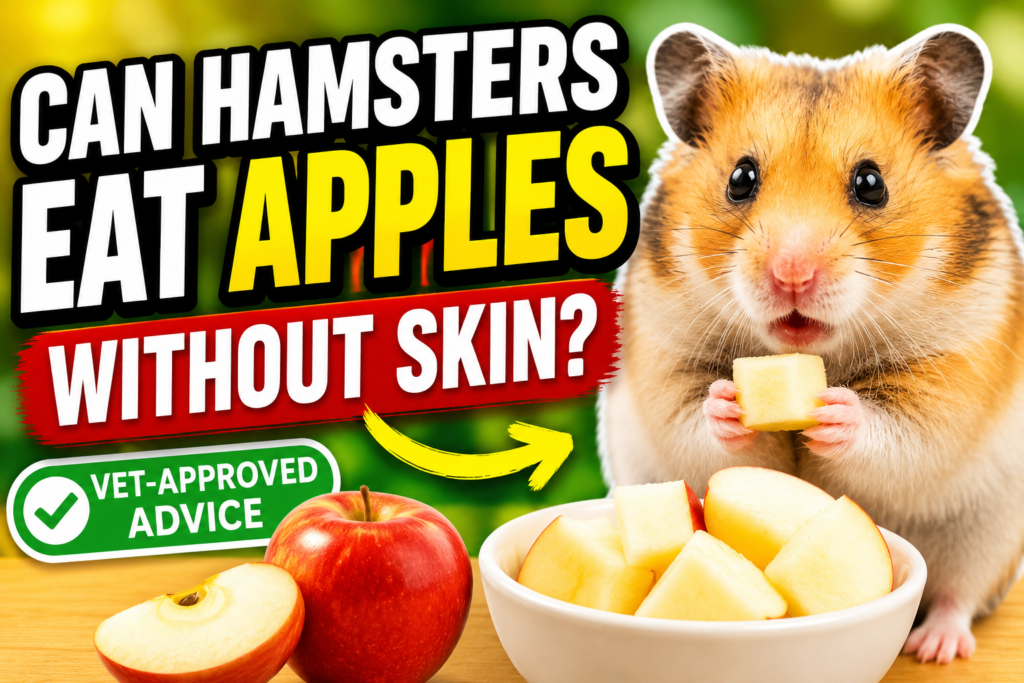
Can Hamsters Eat Apples Without Skin? The short answer is yes. In fact, from a medical standpoint, feeding de-skinned apples is significantly safer than feeding them with the peel. However, there are strict rules regarding portion size, preparation, and which species of hamster can enjoy this treat.
As a veterinarian, one of the most common questions I hear from concerned pet parents is about fruit safety. Apples are a staple in most refrigerators, and it feels natural to want to share a crunchy treat with your tiny, furry friend. Let’s break down the veterinary science behind feeding skinless apples to your dwarf, Syrian, or Roborovski hamster.
Why “Skinless” is the Golden Rule
Many new owners assume that the peel contains the most vitamins. While that is true for humans, hamsters are not small humans. Here is why veterinarians insist on removing the skin:
- Wax and Pesticides: Even after washing, commercial apple skins often retain wax coatings and pesticide residue. A hamster’s tiny renal (kidney) system cannot process these chemicals, leading to toxicity over time.
- Digestive Blockage: Apple skin is fibrous and tough. For a Syrian hamster, this might pass through; for a dwarf hamster, those fibers can ball up in the intestinal tract, causing a potentially fatal impaction.
- Choking Hazard: The skin is slippery and chewy. Hamsters have cheek pouches that extend to their hips. A large piece of skin can lodge in the pouch, rot, or cause a choking reflex.
Expert Verdict: Always peel the apple. The flesh offers plenty of sweetness and hydration without the risks associated with the skin.
Also Check: My Dog Shaking and Shivering Suddenly? A Causes & Solutions
The Nutritional Benefits (Without the Peel)
Once the skin is removed, the flesh of the apple becomes a healthy, low-calorie snack. Here is why a small piece is good for your hamster:
- Hydration: Apples are 85% water, which is excellent for hamsters who primarily eat dry seed mixes.
- Fiber: The soft flesh provides soluble fiber, aiding in digestion without causing blockages.
- Vitamins: They contain trace amounts of Vitamin C (hamsters cannot produce their own) and Vitamin A for eye health.
The Hidden Danger: Cheek Pouch Impaction
As a vet, I treat “sticky cheek pouch” syndrome regularly. When feeding skinless apples, you must dice the flesh into rice-sized pieces.
Hamsters store food in their cheek pouches to bring back to their nest. Apple flesh is sticky and sugary. If you give a large wedge, the sugar will glue the apple mush to the lining of the pouch. This can lead to:
- Bad breath (halitosis)
- Abscesses
- Inflammation (pouchitis)
Safe preparation: Peel the apple -> Remove the core (seeds are toxic) -> Dice the white flesh into 2mm x 2mm cubes.
Species Matter: Portion Control Guide
Not all hamsters metabolize sugar the same way. Dwarf hamsters are prone to diabetes, while Syrians handle sugar slightly better.
| Species | Maximum Portion (Skinless) | Frequency |
|---|---|---|
| Syrian Hamster | 1 teaspoon (diced) | Once per week |
| Roborovski Hamster | 1/2 teaspoon (diced) | Once every 10 days |
| Campbell’s Dwarf | 2 small cubes | Once every 2 weeks (risk of diabetes) |
| Winter White Dwarf | 2 small cubes | Once every 2 weeks (risk of diabetes) |
| Chinese Hamster | 1/2 teaspoon | Once per week |
The Seed and Core Warning (Veterinary Emergency)
While discussing skinless apples, I must emphasize: Never feed the core or seeds.
Apple seeds contain amygdalin, which releases cyanide into the bloodstream when chewed. While one seed won’t kill a human, a single seed can be lethal to a 30-gram dwarf hamster. Always discard the core 1cm away from the center.
Signs Your Hamster Ate Too Much Apple
Because you are feeding skinless, peeled apple, the biggest risk is not the skin it’s the sugar. Signs of overfeeding include:
- Wet Tail: Severe diarrhea (life-threatening in hamsters).
- Lethargy: Sleeping all day, not running on the wheel.
- Sticky droppings: Poop stuck to the rear end.
If you see these signs, remove all fruit from the cage immediately and switch to hay and dry pellets for 24 hours. If diarrhea persists for more than 12 hours, see an exotic vet.
How to Introduce Skinless Apple for the First Time
- The “Tiny Taster” Test: Offer one rice-sized piece of peeled apple.
- Wait 12 Hours: Check the cage for soft stools.
- Proceed Slowly: If stools are solid, you may offer the full portion size listed above next time.
Final Verdict: To Peel or Not to Peel?
Peel it. Always. The nutritional loss is negligible compared to the safety gained. A happy hamster is one that eats a varied diet without risking chemical exposure or choking.
Frequently Asked Questions (FAQs)
Can hamsters eat apples without skin every day?
No. Apples are high in natural sugar (fructose). Daily feeding leads to obesity, diabetes (especially in dwarf breeds), and dental decay. Treat apples as a weekly dessert, not a staple.
Is apple skin toxic to hamsters?
Not directly toxic, but mechanically dangerous. The skin is coated in wax and pesticides that are hard for their liver to filter. It also poses a higher choking risk than the soft flesh.
Can baby hamsters eat skinless apples?
No. Baby hamsters (pups under 4 weeks old) have extremely sensitive stomachs. They should only consume mother’s milk and softened lab blocks. Wait until they are fully weaned (approx. 6-8 weeks) before introducing any fruit.
Which apple variety is safest for hamsters?
Red Delicious or Gala. These tend to be sweeter and softer. Avoid Granny Smith (too acidic, can cause mouth sores) or any tart variety. Always ensure the variety is organic if possible, even if you peel it.
Can hamsters eat dried apple slices?
No. Dried apples concentrate the sugar (up to 70% sugar by weight) and become chewy, sticky hazards. Fresh, peeled, raw apple is the only safe texture for their cheek pouches.
Can hamsters eat apples without skin but with the core?
Absolutely not. The core contains the seeds (cyanide risk). Even the fibrous material around the core is too tough to digest. Only the outer flesh is safe.
My hamster buried the apple. Is that okay?
Yes, but time-limited. Hamsters hoard food. However, peeled apple flesh rots within 12-24 hours. You must find the stash and remove it within 12 hours to prevent mold growth and bacterial diarrhea (wet tail).
Can diabetic dwarf hamsters eat skinless apples?
Very sparingly. If your dwarf hamster has diagnosed diabetes, avoid apples entirely. Stick to low-sugar veggies like cucumber, broccoli, or cauliflower. If you must give apple, offer a piece the size of a single grain of rice once a month.
Do I need to cook the apple before feeding?
No. Raw, fresh, peeled apple is best. Cooking (boiling or baking) destroys the minimal vitamin content and turns the sugars into sticky candy that will adhere to their teeth and pouches.
Can hamsters eat apple sauce without skin?
No. Commercial applesauce contains added sugar, citric acid, and preservatives. Even “unsweetened” varieties are too concentrated. Homemade puree is sticky and causes pouch infections. Stick to solid, diced cubes.