How To Treat Fin Rot In Goldfish At Home Fast?
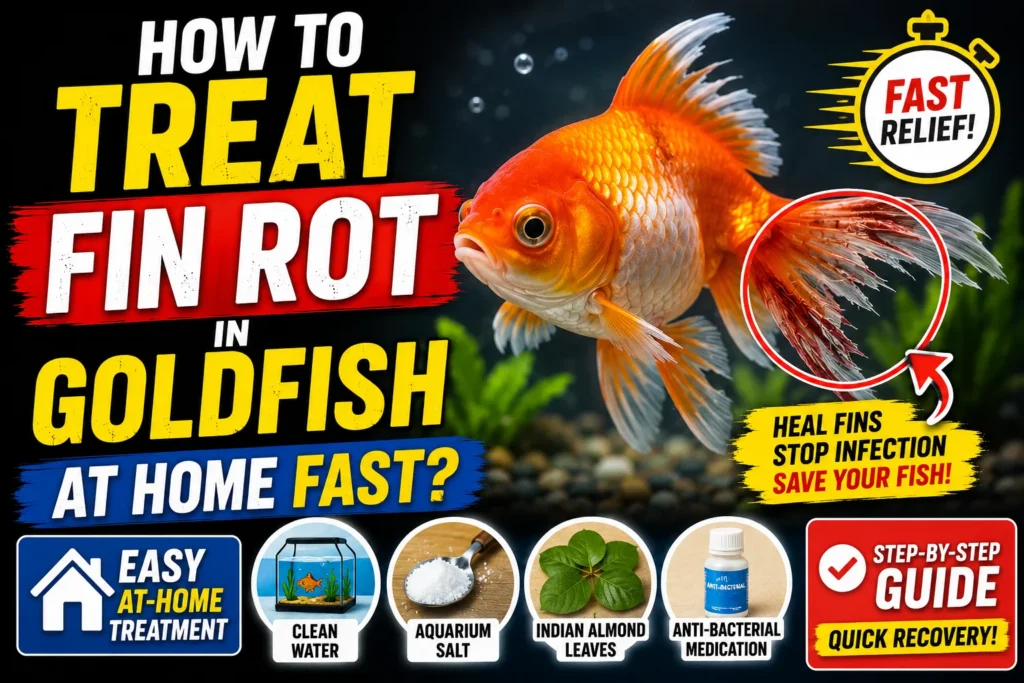
How To Treat Fin Rot In Goldfish At Home Fast? One of the most terrifying things an aquatic pet owner can witness is a shredded, tattered, discolored, or ragged fin on their goldfish. As a veterinarian specializing in aquatic medicine and an SEO content strategist, my approach is to merge evidence-based, medical, and effective solutions that any hobbyist can implement at home. Fin rot is not only aesthetically unpleasing, but it’s also a bacterial disease that is life-threatening when left untreated.
This article will discuss the quickest, safest, and most effective method to treat fin rot at home to encourage fin regrowth quickly, before it spreads throughout the fish and its body.
The longer that fin rot goes untreated, the less likely a full recovery is, so take 24-hours off any other scheduled aquarium maintenance.
How To Treat Fin Rot In Goldfish At Home Fast?
What Exactly is Fin Rot?
Fin rot is a bacterial infection, often caused by Pseudomonas fluorescens or Aeromonas hydrophila. Although they may be always present in your tank water, these bacteria are not dangerous to healthy fish. It’s the loss of immunity from your goldfish that, coupled with bad water conditions, can trigger these infections to manifest as fin rot.
What are the common symptoms of fin rot?
In a nutshell, you’ll be seeing these changes to the fins of your goldfish,: Red or black edges to fins This could indicate early signs of rotting, particularly black edges to your goldfish, as red often means its getting ready to heal, however, if its only at its earliest stage it will represent death of tissues, and, of course, redness could be blood.
Ragged or dissolving fins: Fin rot often causes your goldfish fins to be tattered, broken and looking to be dissolving or melting away. If your fish appears to have its fins tattered from some type of collision such as a run-in with filter media then it has been an accident rather than the fin rot. Mechanical damage results in cleanly separated edges on the fin; otherwise, the ragged, melting, look will mean it’s rot. White or milky patches on the fins.
This can indicate a secondary infection by fungus as the disease is taking hold in a significant way.
What to look for when distinguishing from damage It is extremely important to differentiate between fin rot and physical damage; If your goldfish’s fins have a clean break to them it is highly likely it suffered a physical trauma-such as being sucked in by the filter media, whereas, on the contrary, fin rot continues to get worse for a matter of hours after a problem arises.
The Emergency Protocol: Step 1 – The Immediate Water Change (The Fastest Cure)
First, get the environment right, before you even give a single drop of meds. Water condition, in 90% of mild infections is all that is needed to fix the infection immediately.
The 50% Water Change
Immediately perform a 50% water change with de-chlorinated, tank temperature matches. Ammonia and Nitrite are what causes fin rot by stressing out the fish. The level doesn’t have to be very high, only .25ppm of ammonia can weaken the immune system enough for bacteria to attack the fin. Changing 50% of the water will immediately dilute and lower these poisons in your water, giving the fish’s body time to recover and defeat the bacteria on its own.
Step 2: Rapid Medication Options
If the rot is fast moving, therot is entering the body or is near the tail base you must treat with medication. If so, there are only two approaches, depending on the how severe the problem is.
Option A: Aquarium Salt (The Fast Fix for Mild/Moderate Cases)
Here is my number 1 go to to treat fin rot “fast” without nasty chemicals, It also supplements your electrolytes as well as being antibacterial.
Directions: Mix 1 tablespoon of aquarium salt to every 3 gallons of water.
Directions: dissolve salt into 1 cup of tank water first.
Why It works: this alleviates the stress that comes with osmosis to the fish. Osmosis makes a fish’s fish breath really hard in order for the salt water to work. Alleviate osmotic stress means your fish is going to have all that energy for cell repair and immune system development instead. Rot should not have been progress after 48 hours.
Option B: Broad-Spectrum Antibiotics (For Severe Rot)
Use a gram negative antibiotic if the fin is eroded to this extent or if the salt does not halt progression in 48 hours.
Look for either Kanamecyin (like Kanaplex) or Furazoidin and Nitrofazon combo. Use: apply as per directions after you remove the carbon filter material as carbon will absorb the medication making it void. This medication must not be mixed with others except by a knowledgeable fish keeper.
Also Check: Is Greek Yogurt Good For Dogs With Yeast Infections?
Step 3: Boost the Regeneration Process (Energy & Nutrition)
The medicine keeps the tissue from dying, but now we must grow new fin material. The quickest and easiest way to do that is to feed them right! Feed them good, highly nutritious food: High Protein Pellet.
- Feed a good quality sinking pellet specifically designed for goldfish.
- It should have at least 40% protein. Supplement with Vitamin C. Take a tiny piece of a human Vitamin C tablet (ascorbic acid with no sweeteners!) and grind it up.
- Put a bit in the food you’re feeding them.
- It’s the building blocks of fin rays.
The “Do Not” List: What Slows Down Healing
How to quickly cure your fin rot (without setting it back days): Stop these fish owner mistakes. Don’t increase your temperature. Some fishkeepers think to speed up metabolism it is good to turn up the heat… in low oxygen a quickly dividing bug can do better than your fish healing.
Keep at 72 to 74 degrees.
Don’t just use melafix…Melafix smells lovely; it is an antiseptic ( tea tree oil) not an antibiotic…usually insufficient to deal with aggressive fin rot. Don’t feed too much. Feeding to much makes more ammonia to out-weigh your water changes.
The 7-Day Recovery Timeline
This is usually what rapid healing will look like if you are using the salt and water change protocol:
Days 1-2: You’ll need to do the water change and add the salt. You will stop seeing fraying. Your fish should be much more active.
Days 3-4: The edges of your fish’s fins should look clear or a dark black (this is not infection it’s your fish’s body repairing and replacing the tissue).
Days 5-7: You will start to see your fish’s fin rays beginning to refill with clear webbing, this should fill the gap of the old damage. Now do a 25% water change without adding more salt (unless you are continuing treatment).
Prevention: The True Secret to Never Dealing with Fin Rot Again
Best prevention is always to do nothing. This really is quite tricky if you have already established rot, so this part actually helps to keep your rot in order until it gets to the point where the therapy options need to come in. Fin rot is all about keeping up with a bit of basic fish maintenance.
Routine testing of your water: Test your water every week and aim to maintain the ammonia and nitrite levels at zero, and the nitrates below twenty.
Rinsing of filter media: once each month remove your filter and give it a decent rinse through in the used water from the tank, never fresh tap water as it may kill off your friendly bacteria.
Frequently Asked Questions (FAQs)
Can I treat fin rot without taking the goldfish out of the main tank?
You should treat the whole tank unless you have your sick fish in a hospital tank. Bacteria live in the water column and so you need to treat the whole tank so you can eliminate the cause of the infection. If you keep invertebrates make sure any treatment you use will not harm them.
How quickly will I see results from aquarium salt?
Generally, you should stop the rot within 24 to 48 hours and you should notice regrowth of the clear part of the fin beginning within 3 to 5 days.
Why does my goldfish keep getting fin rot?
Recurrent fin rot usually occurs because your water quality is poor; either high ammonia or high nitrite levels. If this happens you need to test your water right away. Your tank filter may be too small for your bioload.
Do I need to change my water every day whilst treating fin rot?
For severe fin rot it is useful to change 25% – 30% every couple of days to keep water as clean as possible. However if you use a broad spectrum antibiotic do not change large volumes of water as this will dilute your medication ( unless the instructions state otherwise ).
Can I use Pima fix and Mela fix for fin rot?
Pimafix and Melafix are two popular natural products but are both relatively gentle remedies. Pimafix uses Bay Tree oil and Melafix uses Tea Tree oil; they are primarily antibacterial which can help prevent secondary infections but do not typically work quickly enough for severe fin rot and so you may need to use a specific antibiotic medication.
Can I turn the filter off whilst treating for fin rot?
Do not ever turn your biological filter off! The beneficial bacteria needs to survive by means of oxygen so if you have biological filtration media such as sponges or ceramic rings leave them in place. If however you have any chemical filter media such as activated carbon, or Purigen you will need to remove it as this media will soak up any medication in the water.
How do I differentiate between fin rot and fin nipping?
Fin rot is generally where the fins start to fray and turn white/black, looking like the fin is melting. Fin nipping usually produces cleaner bites and splits, as if someone has taken scissors to the fin. You will rarely get the bacterial white slime if the fins are just being nipped (unless they are getting infected from nipping).
How long will it take for the fin to grow back?
It can take between 3 and 8 weeks for a fin to fully regrow; depending on the extent of the damage and the diet of the goldfish, a diet that is high in protein will help accelerate the regrowth process.
Should I feed my goldfish peas when treating fin rot?
Shelled peas are excellent for helping to keep your fish healthy internally and with digestion but they have absolutely no beneficial effect on treating fin rot itself. Make sure the food is high in protein such as blood worms and good quality pellets, to give the fish a boost for growth of new fin.
When do I need to see a vet for fin rot?
If fin rot has progressed so far that the infection is in the body causing septicemia (a red tint in the fins or eyes, and a red hue up the body), or if your fish refuses to eat and is having trouble swimming (floating on its side), you should consult a professional vet, who will be able to inject your fish with the correct antibiotic if it is needed.