Why Does My Dog Keep Licking His Paws Raw?
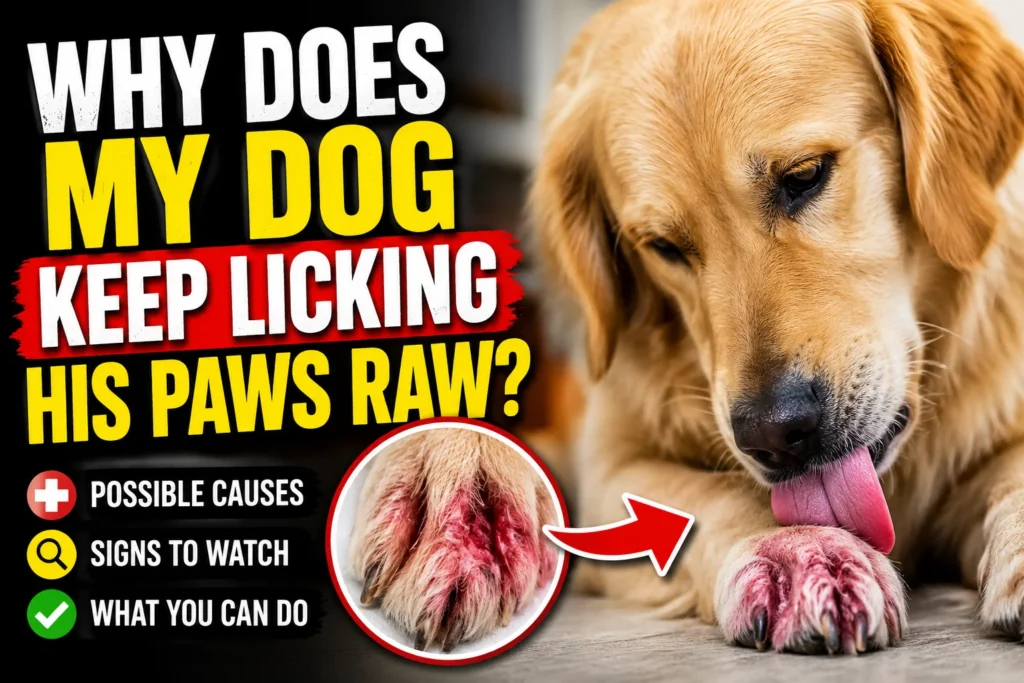
Why Does My Dog Keep Licking His Paws Raw? is one of the most searched and frustrating questions for pet parents. If you have found yourself lying on the living room floor, gently holding your dog’s paw, only to see red, inflamed, and wet skin between the toes, you are not alone. It starts subtly. A little lick, lick, lick while you watch TV. Then it becomes a slurping sound at 2 AM. Suddenly, those adorable paws look more like raw chicken wings than fluffy feet.
As a veterinarian, I see this daily. As a writer, I know you need a solution that works. Let’s stop the cycle of itching and chewing for good.
The “Raw” Truth When Licking Becomes an Addiction
First, a hard truth Dogs lick their paws for a reason. But once they start licking raw, the habit often becomes an acral lick dermatitis (a skin infection caused by repetitive licking). The licking releases endorphins (feel-good hormones). So, even if the original trigger is gone, the dog keeps licking because it feels good.
You cannot just put a cone on and walk away. You must treat the cause.
The Top 6 Veterinary Reasons for Raw Paws
Let’s break down the medical hierarchy of why this happens.
1. The Allergy Trio (The 1 Culprit)
90% of raw paws are due to allergies. There are three main types:
- Environmental Allergies (Atopy): Pollen, grass, mold, and dust mites. Dogs absorb these through their feet during walks.
- Food Allergies: Chicken, beef, dairy, or wheat. This usually causes year-round itching, not just seasonal.
- Contact Allergies: New carpet cleaners, lawn chemicals, or even salt on sidewalks in winter.
Vet Tip: If the paws are red between the toes and smell like corn chips (Fritos), it is likely environmental yeast secondary to allergies.
2. Yeast and Bacterial Infections (The “Frito Feet”)
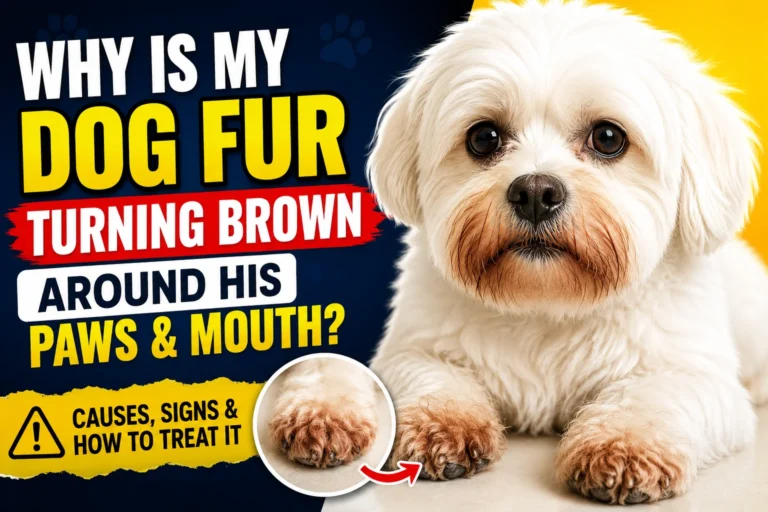
When a dog licks, the paw stays wet. Warm, dark, wet spaces breed yeast (Malassezia) and bacteria (Staph). This creates an itch-scratch-lick cycle.
- Signs: Brownish-red discoloration of the fur, a musty or cheesy smell, and thickening of the skin (elephant skin).
3. Boredom & Anxiety (Psychological Licking)
Dogs are creatures of routine. If you have returned to the office post-pandemic, or if the family is stressed, your dog may self-soothe by licking.
- The Test: Does your dog only lick when you leave the room? Do they stop when you walk in? That is separation anxiety.
4. Pain (The Hidden Cry)
Dogs are stoic. If their paw hurts, they don’t whine they lick. Why? Licking releases natural opiates that relieve pain.
- Look for: A broken nail, a thorn, a cracked pad, or even arthritis in the elbow or shoulder (referred pain makes them lick the paw).
5. Dry Skin (Winter Weather)
Just like humans, dogs get winter eczema. Low humidity zaps moisture from their paw pads, causing cracking and itching.
6. Parasites
Ticks, fleas, and mites love the hair between toes. Sarcoptic mange often starts on the elbows and paws.
Also Check; Boiled Chicken and Rice Good for Cats With Diarrhea?
How to Stop the Licking (The 3-Step Protocol)
Do not just buy a bitter spray. Follow this medical protocol.
Step 1: The Emergency Soak (For Raw Paws)
If the paw is raw (bleeding or oozing), do not apply cream yet you’ll trap bacteria.
- Recipe: 1 gallon warm water + 1 cup povidone-iodine (Betadine) until it looks like iced tea.
- Action: Soak paw for 5 minutes, 2x daily. Pat dry thoroughly.
Step 2: Identify the Root via the “Collar Test”
Buy an E-collar (cone). Leave it on for 5 days. If the paws heal but get raw again when the cone comes off: It is behavioral (anxiety). If the paws stay raw despite the cone: It is medical (allergies/pain).
Step 3: Targeted Treatment
| If the cause is… | Do this… |
|---|---|
| Allergies | Switch to a hydrolyzed protein diet (vet prescription) or give Apoquel/Cytopoint injection. |
| Yeast | Vet-prescribed Miconazole wipes + oral ketoconazole. |
| Anxiety | Adaptil diffuser, increased exercise, or Prozac (fluoxetine) from your vet. |
| Pain | X-rays to check for bone fragments or arthritis. |
Home Remedies That Actually Work (And Ones That Don’t)
Safe & Effective:
- Dog socks (with grips): Physical barrier without the cone’s misery.
- Apple cider vinegar spray (diluted 50/50): Kills yeast, but do not use on open wounds (it stings).
- Omega-3 fish oil: Reduces systemic inflammation.
Dangerous & Useless:
- Hydrogen peroxide: Destroys healthy tissue and slows healing.
- Human hydrocortisone cream: If ingested, causes stomach ulcers.
- Bitter apple spray: Treats the symptom, not the cause.
When to Rush to the Emergency Vet (Red Flags)
- The paw is twice the normal size (severe infection).
- You see black, necrotic tissue (dying skin).
- The dog is lethargic or feverish (infection entering bloodstream).
- A “pillow” of fluid on the top of the paw (pododermatitis).
Final Verdict
Why does your dog keep licking his paws raw? In 80% of cases, it is untreated allergies or boredom. The remaining 20% is pain or parasites.
The Single Best Next Step: Take a video of the licking, book a veterinary dermatology appointment, and ask for a skin cytology (looking under the microscope at the gunk between the toes). It costs $30 and tells you if it is yeast, bacteria, or mites instantly.
Frequently Asked Questions (FAQs)
Can I use Neosporin on my dog’s raw paw?
Yes, but only a thin layer and only if you use an E-collar so they don’t lick it off. Ingesting Neosporin can cause gut flora imbalance. Veterinarians prefer Vetericyn or silver sulfadiazine cream.
Why does my dog lick his paws more at night?
Nighttime licking is usually due to histamine release (allergies spike at night) or boredom (the house is quiet, and you aren’t paying attention). It is rarely pain-related at night unless it is arthritis from lying still.
Will Benadryl stop paw licking?
Benadryl (diphenhydramine) works in only 30% of dogs. It is weak for environmental allergies. If you try it, dose is 1mg per pound of body weight. If no change in 3 days, stop you need Apoquel or Cytopoint from a vet.
My dog’s paw is red but not swollen. Is it serious?
Redness without swelling is usually early-stage contact irritation (grass, soap) or a mild food allergy. It is not an emergency, but if it persists 48 hours, it will likely develop into a secondary yeast infection.
Why does my dog lick one paw raw but ignore the others?
This is the biggest clue for focal pain. Check that specific paw for a broken nail, a foxtail (grass seed embedded in the skin), or a torn pad. Unilateral licking = injury. Bilateral licking (both front paws) = allergy.
Does diet affect paw licking?
Absolutely. 10-15% of paw licking is due to a protein allergy (chicken is the 1 culprit). Switch to a novel protein diet (venison, rabbit, kangaroo) for 8 weeks strictly. You should see a 50% reduction in licking.
Can I put socks on my dog to stop licking?
Yes, but change them daily. Wet socks create a “sauna” for yeast. Use breathable cotton socks with silicone grips. Remove them for 2 hours daily to let the paws air out completely.
Why does my dog lick his paws after eating?
This is a classic food allergy sign. The body triggers an inflammatory response 30-60 minutes after the allergen hits the stomach, causing itching in the “extremities” (paws and ears). Keep a food diary.
Is paw licking a sign of liver disease?
Rarely. In very old dogs, Cushing’s disease (adrenal gland tumor) causes calcinosis cutis (calcium deposits in the skin) which itches horribly. If your dog also drinks gallons of water and has a pot belly, get a blood test.
How long does it take for raw paws to heal?
Superficial rawness: 3-5 days with a cone and antiseptic wipes. Deep infection (yellow pus): 2-3 weeks of oral antibiotics. You must keep the cone on for the entire duration; one 10-minute licking session can reset healing to day zero.