Essential Items For a DIY Pet First Aid Kit
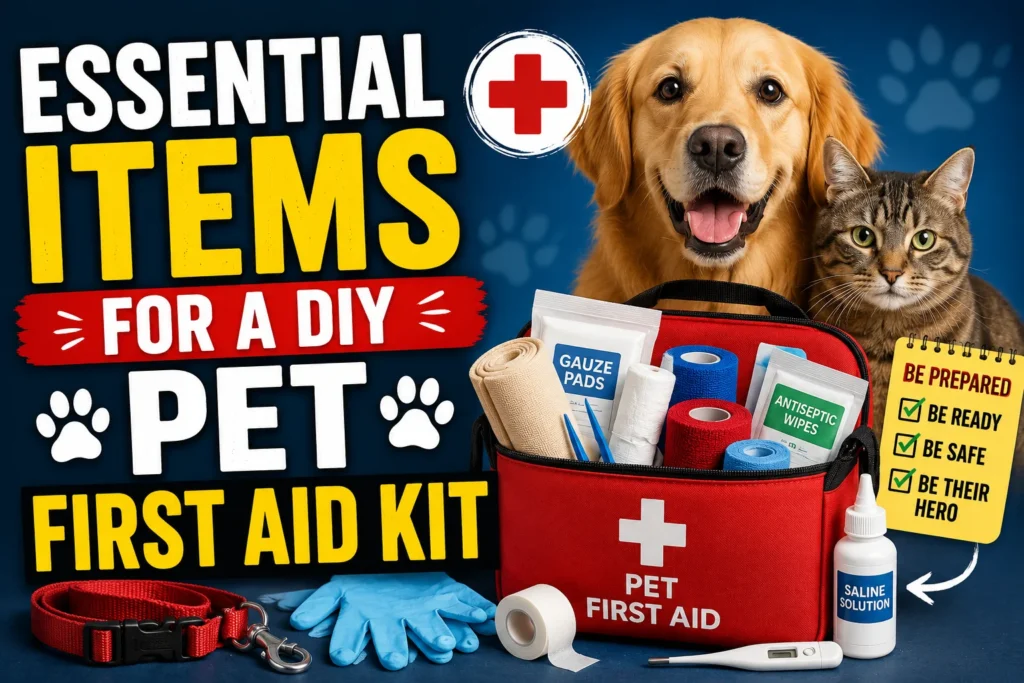
Essential Items For a DIY Pet First Aid Kit. As a practicing veterinarian, I have seen too many emergencies turn into tragedies simply because precious minutes were lost searching for basic supplies. As a pet parent you are the first responder. Whether it is a sudden cut during a walk an allergic reaction to a bee sting, or a gastrointestinal blockage, what you do in the first 60 seconds matters.
You do not need a fancy, expensive pre-made box. Building a DIY pet first aid kit is cheaper, more comprehensive and ensures you know exactly where every item is located.
Why a Store-Bought Kit Isn’t Enough
Commercial kits usually contain bandages for humans and generic tweezers. They rarely include items sized for a Chihuahua’s paw or strong enough for a Labrador’s jaw strength. A DIY pet first aid kit allows you to customize for your specific animal’s breed, size and medical history.
Essential Items For a DIY Pet First Aid Kit
1: The Tools (Restraint & Examination)
You cannot help a pet who is biting out of pain. Safety first.
- Muzzle: Even the gentlest dog will bite when terrified. A basket muzzle allows panting and drinking.
- Nylon Leash: Used to restrain a pet without touching injured areas.Pro tip: A spare leash can become a makeshift tourniquet or splint tie.
- Digital Rectal Thermometer: Normal canine temp is 100°F to 102.5°F. Never use a mercury glass thermometer.
- Hemostats: Much stronger than tweezers. Essential for removing porcupine quills, ticks, or glass shards.
2: Wound Management (The “Red Zone” Items)
Speed stops bleeding; cleanliness stops infection.
- Gauze Pads: Do not use cotton balls. Cotton fibers stick to raw wounds.
- Rolled Gauze: For wrapping legs or tails.
- Vet Wrap: The holy grail. It sticks to itself not fur. Warning: Do not wrap too tight.
- Absorbent Cotton Roll: For cleaning large areas or applying pressure to heavy bleeding.
- Styptic Powder: For broken nails. If you cut the quick dip the nail in this powder to stop bleeding instantly.
- Saline Solution: To flush out debris from eyes or deep wounds. Contact lens saline works in a pinch.
Also Check: Can Dogs Eat Raw Chicken Bones Safely?
3: Antiseptics & Medications
Do not use Ibuprofen, Acetaminophen or Naproxen on your pets. They are not good for your pets.
- Povidone Iodine: Better than alcohol. It must have the same concentration as that of weak tea.
- Chlorhexidine Diacetate Solution: Excellent antiseptic solution for cleaning the infected ears and wounds.
- Hydrogen Peroxide: Do not use hydrogen peroxide for deep wounds. Hydrogen peroxide is only applicable when a veterinarian instructs you to vomit your pet.
- Artificial Tears: Use dust or sand particles for cleaning the eyes.
- Diphenhydramine: Either in liquid form or in tablets. Dose: 1 mg or pound. Vital in allergies, hives and bee stings.
4: Immobilization & Transport
Broken bones need stabilization before the car ride.
- Splint Material: Cut to size longer than the broken bone.
- Splints for Small Toes and Tails: Tongue depressors.
- Instant Ice Pack: Becomes active when squeezed. Alleviates swelling caused by sprain or heat stroke.
- First Aid Blanket: Prevents shock. Retains 90% body heat.
- Foldable Stretcher: To lift a large immobile dog. Never pull a pet by the legs.
5: Ingestion & Poison Control
- Large Syringe : To squirt liquid medicine, water, or saline into the cheek pouch.
- Activated Charcoal: Absorbs certain toxins. Do not use without veterinary guidance.
- Turkey Baster: For flushing deep wounds or administering liquids if the syringe is lost.
- Vet’s Phone Number: Do not rely on your phone battery. Tape this to the lid of the kit.
6: The “Boo-Boo” Kit for Minor Issues
- Pet-Safe Wipes: For cleaning paws and dirty fur around a minor scrape.
- Nail Clippers: Always in the kit a broken nail is the 1 minor emergency.
- Tick Remover: Twisting with tweezers leaves the head embedded.
- Ear Cleaning Solution: For sudden head shaking.
- Blunt-Tip Scissors: Used to cut fur around an injured area without piercing the skin.
- Penlight: To determine pupil reaction or examine mouth or throat.
How to Store Your DIY Pet First Aid Kit
- Container: A bright red, water-resistant tackle box or tool box. Write “PET” in large letters.
- Location: Not the bathroom. Keep it in a hallway closet or the garage.
- Expiration check: Every 6 months. Replace used gauze and expired medications.
When to Stop DIY and Go to the Vet
Your kit is for stabilization, not a cure. Go to the emergency vet immediately if you see:
- Unconsciousness or seizures.
- Profuse bleeding.
- Bloated, hard abdomen.
- Inability to urinate or vomiting for >12 hours.
- Any eye injury involving the eyeball itself.
Frequently Asked Questions (FAQs)
Could I put on my dog the bandages the way I would do for myself?
Not at all since human bandages do not stick well to dogs. They may give rise to allergies if applied to the dog’s skin and the dog will end up tearing the bandage apart and swallowing it leading to intestinal troubles.
Can I apply hydrogen peroxide on my dog’s wound?
It delays wound closure. Use diluted povidone-iodine or chlorhexidine instead
How much Benadryl do I put in a pet first aid kit for a 50lb dog?
For a 50lb dog, the correct dosage is 50mg. However, keep the liquid children’s formula in your kit for faster absorption. Always confirm the concentration before dispensing
What is the single most important item for a cat’s first aid kit?
A towel. Cats in pain become aggressive. Throwing a thick towel over a fractious cat allows you to burrito-wrap them to examine a paw or administer medication without being bitten.
Can I use aspirin for my dog’s pain in an emergency?
Generally, no. Aspirin can cause gastric ulcers and kidney failure. It also thins the blood, worsening bleeding. Never give human NSAIDs as they are toxic. Consult a vet before any pain relief
How do I stop my dog’s nail from bleeding without styptic powder?
Use cornstarch or baking soda. Pack the powder firmly into the bleeding nail tip and hold pressure with a clean cloth for 2 minutes. A bar of plain soap can also work push the nail tip into the soap
Should I include a snake bite kit in my DIY pet first aid kit?
No. Snake bite kits that cut and suction are useless and waste time. Do not apply ice or a tourniquet. The only treatment is antivenin from a vet. Your kit’s job is to keep the pet calm and carry them to the car.
How often should I replace the items in my DIY kit?
Every 6 months. Check gauze for sterility, replace expired hydrogen peroxide and ensure oral syringes aren’t brittle. Set a calendar reminder for Jan 1st and July 1st.
My cat hates the vet. How do I use a muzzle in my kit?
Never use a standard dog muzzle on a cat. Use an Elizabethan collar from your kit or the towel wrap method. For extreme cases ask your vet for a dose of gabapentin to keep in the kit for travel.
What food item should I keep in my pet first aid kit?
A small tube of canned pumpkin or honey. Use pumpkin for sudden diarrhea to bind the stool. Use honey for a hypoglycemic small-breed puppy or diabetic crash.
Final Expert Tip
Take a Pet CPR & First Aid course. A kit full of tools is useless if you don’t know the Heimlich maneuver for a dog or how to check a femoral pulse.
Build your DIY pet first aid kit today. Your furry family member is relying on you.