Feed a Newborn Kitten That Won’t Suckle
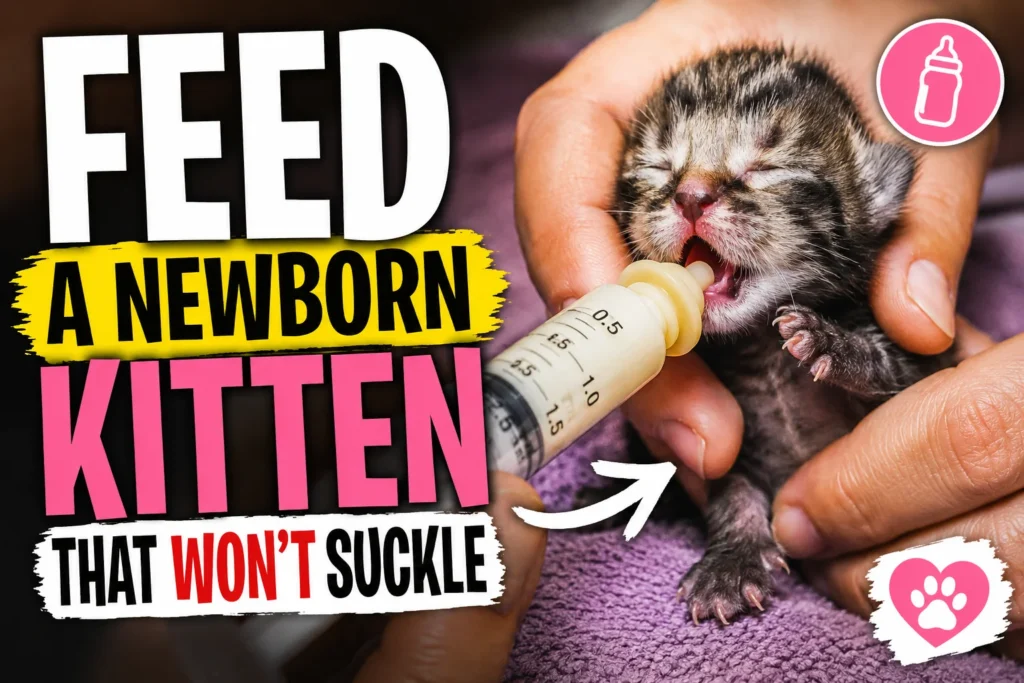
Feed a Newborn Kitten That Won’t Suckle. An orphaned kitten that just won’t suckle a kitten care crisis-can leave you in a state of pure panic! All your instincts scream to Feed the Baby!, but here’s the kitten that won’t eat a drop. It’s an emergency but it also something you can save. Read on to be prepared with an action plan. This guide is an expert recommended protocol for hand feeding neonatal cats that is tried and tested. When you have to take care of a baby kitten and it won’t suckle or latch on correctly, it can be an incredibly scary moment. You know that tiny kitten needs food; however, it just can’t seem to latch on as you would expect.
Feed a Newborn Kitten That Won’t Suckle
Why Won’t the Kitten Suckle?
But if you cannot understand the problem, you cannot solve the issue. A kitten that does not want to suckle has a symptom, not the problem itself. What may be reasons that this happens? Let us look at the possible reasons and causes for this.
The “Big Three” Causes:
- Hypothermia (Too Cold): this is by far the 1 killer. Because a baby kitten cannot regulate its own temperature body, when cold, their GI system shuts down and there simply aren’t any nutrients, strength, or instinct left to suckle the bottle. Never try to feed a cold baby unless they are warmed properly first the milk just sits in their stomach and ferments creating other terrible problems.
- Hypoglycemia (Low Blood Sugar): A baby that has not eaten is weak, it’s in a very scary catch 22 situation it is too weak to suckle, and so it isn’t eating and becomes even more weak.
- Technical Issues: The problem might be the kit. Opening of nipple is too small or too large, the formula temperature is not correct or baby doesn’t know how to use bottle nipple. Some times, giving just a tiny energy shot will be the inspiration the kitten needed to help it latch onto the bottle.
Also Check: Signs Your Dog Has a Yeast Infection on Their Skin
Immediate Step by Step Protocol: What to Do Right Now
Step 1: Check and Warm the Kitten
This is your absolute first priority. A kitten that feels cool to the touch is in danger.
- The Test: A healthy kitten should feel warm, like a hot water bottle. If its paws or mouth feel cold, it is hypothermic.
- The Action: Warm the kitten slowly. Place it on a heating pad set to low, wrapped in a towel, or hold it against your own skin. Do not use high heat, as this can cause burns. The kitten should be warmed over 15-20 minutes until it feels warm to the touch before you even offer the bottle .
Step 2: Give an Energy Boost
If the kitten is weak but not cold, it may have low blood sugar.
- The Solution: Rub a tiny drop of honey, Karo syrup, or sugar water on its gums. This provides an immediate, easy-to-absorb energy source that can give the kitten the strength to start suckling . This is a temporary, emergency measure to buy you time.
Step 3: Prepare the Proper Feeding Tools and Formula
A Normal Kitten bottle might be rejected by an already unwilling kitten, so change to another method. How to Hand Feed a Kitten The Syringe method:
Within the first 24 to 48 hours it is sometimes best to use a 3ml Syringe (no needle attached!) in order to better control the flow of the KMR for a stronger or struggling feeder, or the “Miracle Nipple” from a kitten feeding bottle that attaches to a syringe in order to help encourage him with a shape that better resembles that of his mother
- The Formula: only buy powder form of High Quality KMR (Kitten Milk Replacer). Do not buy any KMR that is labelled Cat milk to be fed to adults, as the food that a newborn need would be detrimental for a more mature kitten. Never use cow’s, goat’s, or plant based milk, as they are nutritionally inadequate and can cause severe diarrhea, which is deadly for a kitten this young .
- Preparation: Mix the formula according to the package directions. It should be warmed to approximately 100°F about the temperature of your skin. Always test a drop on your wrist to ensure it’s not too hot .
Step 4: Master the Feeding Technique
This is the most crucial step. Do not simply squirt milk into the kitten’s mouth.
- Get the Position Right Place the kitten on its stomach you’ll want its head elevated slightly, as if it were nursing from mom. Never lay a kitten on its back to feed that can send milk into its lungs and lead to aspiration. Go for the Latch Open your kitten’s mouth by slipping a finger inside it; then introduce the nipple of the syringe or bottle.
- Rather than forcefully push milk in, wiggle the tip of the nipple back and forth until the kitten grasps it; alternatively, you can place a drop of milk on the kitten’s lips.
- Feed the Drops Tiny. Feed drops from a syringe, letting the kitten swallow between each. For a bottle, try keeping the nipple on an angle of about 45 degrees so no air bubbles go in the kitten’s stomach. Keep a close eye for a ‘vacuum’ effect.
- For any kitten over one month that’s refusing food, be sure it may be starting to be weaned, and has it examined at the vet, just in case.
Step 5: Stimulate Elimination
Mother cats lick their kittens to stimulate them to urinate and defecate. Newborns cannot do this on their own.
- The Action: After each and every feeding, gently rub the kitten’s genital area with a warm, damp cotton ball or soft cloth. This mimics the mother’s licking. You should see the kitten urinate and possibly defecate .
- The Reason: A kitten’s discomfort from a full bladder or bowel can also cause it to refuse to eat . Failing to do this can lead to a painful, distended abdomen and eventual death.
Step 6: Establish a Strict Feeding Schedule
Newborn kittens have tiny stomachs and need to eat very frequently to survive.
- Feeding Frequency: For the first two weeks, kittens need to be fed every 2 to 3 hours around the clock (8-12 feedings a day) . This includes throughout the night.
- How Much to Feed: Start small. A newborn kitten will typically take 2-6 mL of formula per feeding . Follow the guidelines on your formula’s packaging. You should be aiming for a total of about 30 mL of formula per 100 grams of body weight per day . A healthy kitten should gain 15-20 grams of weight every day . Weighing the kitten daily on a kitchen scale is the best way to ensure it’s getting enough to eat .
Frequently Asked Questions (FAQs)
What if my kitten’s mother is present? Can she help?
Absolutely. If the mother cat is available, continue to try to get the kitten to nurse from her. You can squeeze a little milk from her nipple to encourage the kitten. However, if the kitten is consistently failing to nurse, you must supplement with bottle or syringe feeding. Don’t wait to see if the situation improves on its own. A mother’s milk provides essential colostrum, but for a weak or rejected kitten, colostrum supplements are also available .
My kitten is 4 weeks old. Why isn’t it taking the bottle?
At 4 weeks old, a kitten is at the prime age for weaning onto solid food. If it’s refusing the bottle and the mother is not present, it’s likely ready to transition to “gruel” a mixture of high-quality wet kitten food and formula . Offer this in a shallow dish and encourage it to lap. It still needs to be fed formula, but this is a natural progression.
Can I use a human baby bottle for my kitten?
No. Human baby bottle nipples are too large and have the wrong flow rate for a kitten’s mouth. Use a commercially available kitten nursing bottle or, preferably, a syringe with a specially designed kitten nipple like the Miracle Nipple .
What should I do if the kitten is “sucking” on its littermates?
This is called cross-sucking and is dangerous. It can lead to injury, infection, and the sucking kitten consuming its littermate’s urine and feces, leading to digestive upset . To stop it, separate the sucking kitten from the others, especially when you’re not present to supervise. You can use a clear plastic divider so they can still see each other for comfort . Often, this behavior indicates the kitten is hungry, so ensuring it is fully fed can help.
How do I prepare the formula properly?
Be sure to always follow the manufacturer’s directions. Never add extra water or use less milk powder than recommended it will lower the essential calories and nutrients your little one desperately needs. Mixing a fresh batch, in a smaller size each day, and storing it in the refrigerator is a great idea. Warm it slightly by placing the bottle/syringe into warm (not hot!) water never use a microwave as it’ll create hot spots that will scald the kitten’s throat and mouth.
My kitten inhaled some milk What do I do?
If milk gets in the kitten’s nose, or if it’s coughing, turn the kitten upside down so that its head is toward the floor, and remove any excess milk with a bulb syringe. It can cause aspiration pneumonia, which may be fatal. Seek medical attention.
What is the best type of milk replacer?
We highly recommend purchasing a high quality powdered Kitten Milk Replacer (KMR) from a reputable source, such as PetAg KMR, as the best choice. They are nutritionally formulated to mimic the contents of a nursing mother cat’s milk as closely as possible.
My kitten is over 10 days old. Can I use a bottle now?
Now is the time that it is often possible to move to bottle feeding.
An older kitten who has opened his or her eyes may adapt to a bottle. Just ensure the opening on the nipple is of a size where the milk will drip/ ooze out slowly. (It shouldn’t flow freely from the nipple).
When should I take the kitten to the vet?
If a baby is not eating, that is an emergency and he/she is in a fight for life or death. Don’t wait. You need to consult your vet immediately and learn if he/she has a physical abnormality such as a cleft palate, learn tube feeding, if needed, or other assistance. Don’t take a ‘wait and see approach.’