Why Does My Cat Bite Me Softly When I Pet Her?
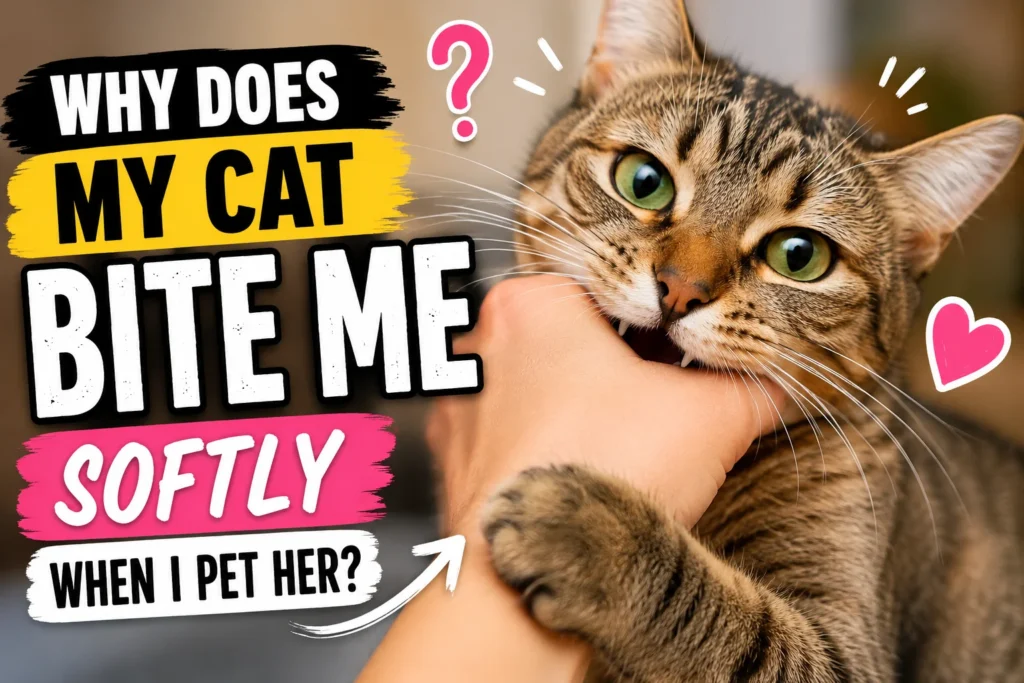
Why Does My Cat Bite Me Softly When I Pet Her? If you are a cat owner, you have likely experienced a confusing scenario, You are gently stroking your feline friend, she is purring loudly, and suddenly without a growl, she turns her head and gives you a soft bite on the hand. It doesn’t break the skin, but it leaves you wondering, Does she hate me? Am I doing something wrong?
As a veterinarian, I assure you this is one of the most common questions in feline behavior. The short answer is, She is not being aggressive. In fact, this behavior, often called a “love bite,” is usually a complex form of communication.
In this comprehensive guide, we will decode the science and emotion behind those gentle nips, how to tell the difference between a love bite and a warning bite, and how to respond correctly to keep your bond strong.
What Is a “Love Bite”? (The Clinical Definition)
In veterinary behavioral medicine, a true “love bite” is a non-aggressive, inhibited bite. Unlike a defensive or predatory bite (which aims to injure), a love bite is gentle, brief, and usually lacks the full force of the cat’s jaw muscles. It is often accompanied by licking or kneading (making biscuits).
Think of it as your cat’s way of saying, “I have a lot of feelings right now, and I don’t have hands to express them.”
Also Check: Why Is My Cats Stomach Bloated and Hard?
Top 5 Reasons Why Does My Cat Bite Me Softly When I Pet Her?
Understanding why requires looking at feline instinct, sensory processing, and social behavior. Here are the most common clinical explanations.
1. Overstimulation (Petting-Induced Aggression)
This is the 1 reason. Cats have extremely sensitive skin and nerve endings. While humans enjoy long, rhythmic strokes, a cat’s nervous system can only handle so much tactile input before it becomes irritating.
- The warning signs: Tail twitching rapidly, skin rippling on the back, ears flattening.
- The bite: A gentle nip saying, “That’s enough for now.”
2. The “All Done” Signal
Cats are independent creatures. Unlike dogs, they often initiate and terminate social interaction. When your cat bites you softly, she may simply be telling you the petting session is over. She wants to stay on the couch with you, but she wants you to stop touching her.
3. Redirected Excitement (The “Frustration” Bite)
Have you ever felt so happy you wanted to pinch something? Cats feel the same way. When you hit a “sweet spot” (like the base of the tail or under the chin), the flood of pleasurable sensations can cause conflicting emotions in the feline brain. The bite is a reflex to that sudden surge of excitement.
4. Grooming Instincts
Mother cats gently nibble their kittens to remove fleas or debris and to show affection. Adult cats often retain this behavior. If your cat licks you and then gives a soft nibble, she is treating you like a member of her colony. She is grooming you.
5. Play Behavior
If your cat didn’t have siblings to teach her bite inhibition, she might use soft bites during play. While this usually happens when you use your hands as toys (not recommended), it can happen during petting if she shifts into “play mode.”
Love Bite vs Warning Bite, How to Tell the Difference
| Feature | Love Bite (Affectionate) | Warning Bite (Aggressive) |
|---|---|---|
| Force | Gentle, no skin breakage | Hard, may bruise or draw blood |
| Body Language | Relaxed body, purring, kneading | Stiff body, hissing, growling, flattened ears |
| Duration | Quick nip, then returns to licking | Prolonged hold or rapid, repeated biting |
| Aftermath | Cat stays with you | Cat runs away or swats |
Vet’s Note: If the bite is hard, accompanied by claws, or your cat’s pupils are fully dilated, stop interacting immediately. That is not a love bite; it is a stress response.
How to Respond When Your Cat Softly Bites You
Your reaction in the next 2 seconds determines if this behavior repeats. Follow this protocol:
- FREEZE. Do not pull away. Pulling your hand back triggers a cat’s prey drive to “chase” the moving hand, which may turn a soft bite into a hard bite.
- Stop petting immediately. This reinforces the bite as a successful communication tool.
- Do not scold or yell. Negative attention is still attention. It creates anxiety.
- Redirect the energy. Offer a soft toy or a feather wand. If she bites the toy, praise her.
How to Prevent Soft Biting in the Future
Since most soft biting is caused by overstimulation, the solution is to pet smarter, not longer.
- The “5-Second Rule”: Pet your cat for 5 seconds, then pause your hand for 3 seconds. Let her push into your hand if she wants more. This gives her nervous system a break.
- Pet the “Safe Zones”: Most cats prefer petting on the cheeks, chin, and base of the ears. Avoid the belly (a vulnerable area), the back (too sensitive), and the tail (overstimulating).
- Watch the Tail: A thrashing tail means “stop.” A tail held high with a slight curl means “continue.”
- Hands are for Petting, Not Playing: Never use your fingers as a toy with a kitten. Use wand toys. If hands are always gentle, the cat learns hands are not chew toys.
When to See a Veterinarian
While soft biting is usually normal, sudden changes in behavior warrant a check-up. Schedule a vet visit if:
- Your cat previously enjoyed long petting sessions but now bites after one stroke.
- The biting is accompanied by yowling or hiding.
- You notice signs of pain: limping, decreased appetite, or avoiding the litter box.
Medical causes like dental pain, arthritis, or hyperesthesia syndrome (rippling skin disease) can make petting physically painful, causing a previously gentle cat to bite.
Final Verdict: It’s a Compliment (Mostly)
When your cat bites you softly while you pet her, she is not being mean or moody. She is communicating a boundary or expressing a surge of feeling. Think of it as your cat’s version of saying, “I love you, but I’m a little overwhelmed right now.”
By learning to read her body language and respecting her limits, you will strengthen your bond and enjoy a safer, happier relationship with your feline companion.
Frequently Asked Questions (FAQs)
Does my cat bite me softly because she is angry?
No. Anger usually triggers hissing, growling, and hard bites. A soft bite during petting is typically due to overstimulation, excitement, or affectionate grooming, not anger.
Is it okay to let my cat give me love bites?
Yes, as long as the bite is gentle, doesn’t break skin, and your cat’s body language remains relaxed. However, if you have children or immunocompromised guests, it is safer to discourage mouth-on-skin contact.
Why does my cat lick me then bite me?
This is classic grooming behavior. The lick cleans you, and the gentle nibble removes imaginary debris or matted fur. It is a sign that your cat sees you as part of her social family group.
Why does my cat bite me when I pet her belly?
The belly is a cat’s most vulnerable area. When she exposes her belly, she is showing trust, not asking for a rub. Touching the belly overstimulates the sensitive hair follicles, leading to a reflexive grab-and-bite.
How do I train my cat to stop soft biting?
Use “response interruption.” When she bites, say “Ouch” in a calm, high-pitched voice (mimicking a kitten’s yelp) and immediately withdraw your attention for 30 seconds. Consistency teaches her that biting ends the fun.
Do all cats give love bites?
No. It depends on personality, socialization, and breed. Cats who were weaned too early or raised without littermates are more likely to bite because they never learned proper bite inhibition from their mother.
Why does my cat bite me softly when I stop petting her?
That is a “reverse love bite.” She is asking you to continue. If you stop and she nips, wait 5 seconds. If she rubs her head on your hand, resume petting. If she walks away, she was just signaling annoyance.
Is a soft bite a sign of dominance?
No. Cats do not use inhibited biting to establish dominance over humans. That is a dog behavior. In cats, gentle bites are almost always related to social grooming or sensory regulation.
My cat purrs and bites at the same time. Is she bipolar?
No, she is perfectly normal. Purring is not only for happiness; it can also signal overstimulation or nervousness. Purring + biting simply means her emotional state is conflicted (pleasure vs. sensory overload).
Can I pet my cat after she bites me softly?
Wait at least 1-2 minutes. Let her reset. Hold your hand near her nose. If she sniffs and turns away, do not pet her. If she head-butts your hand, you may try 1-2 gentle strokes on the cheek, then stop and observe her reaction.