
Can A Cat Recover From A Broken Tail On Its Own?
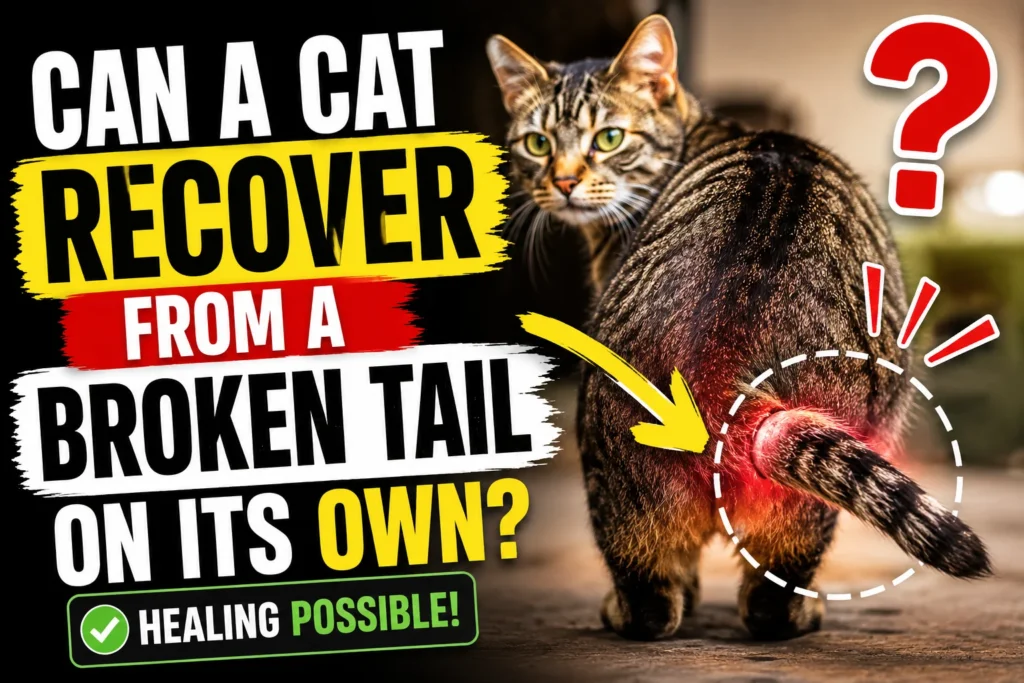
Can A Cat Recover From A Broken Tail On Its Own? To be short, it all depends on the site and degree of the injury. Although there may be certain fractures that could heal without treatment, a “wait-and-see” strategy should never be applied since it results in lifelong disability. As a veterinarian and an expert in this topic, I will tell you what signs to watch out for and when to get immediate help.
A Cat’s Tail An Extension of the Spine
The cat’s tail is more than just an adorable organ; it is vital for its bodily functions. It is basically an extension of the spinal cord and consists of 14 to 24 movable bones, known as caudal vertebrae. These bones are surrounded by a complex network of muscles, nerves, and blood vessels . The tail is essential for balance, communication, and even controlling bowel and bladder movements, as the nerves at the base of the tail influence these functions .
Injuries to the tail can range from minor abrasions to severe fractures and nerve damage. Understanding the difference is key to determining if a cat can recover without veterinary intervention .
Can A Cat Recover From A Broken Tail On Its Own?
Fractures vs. Nerve Damage
The key is in one distinguishing factor: Is it a bone fracture or nerve damage?
- Fractures (Bone Breaks): Simple fractures, particularly those located toward the tip of the tail, often heal well on their own . Because it is almost impossible to splint a cat’s tail effectively, these bones may heal with a noticeable “kink” or bump, but the tail usually regains full function .
- Nerve Damage: This is the more serious issue. If the nerves controlling the tail are damaged, it will not heal on its own without veterinary assessment. This is especially true for “tail pull” or avulsion injuries, where the tail is yanked, stretching or tearing the nerves at the base .
The Danger Zone: Injuries Near the Base
An injury closer to the base of the spine is much more severe because it can damage the nerves that control the hind legs, bladder, and bowel . This can lead to:
- Urinary or fecal incontinence (loss of control) .
- Hind leg weakness or paralysis .
- A permanently limp tail .
In such cases, the cat does not have a chance to recover alone.
How to Recognize a Serious Tail Injury
Here are a few signs that your cat might exhibit in case of a tail injury:
- A completely limp or flaccid tail that doesn’t move at all .
- Inability to control urination or defecation (soiling themselves) .
- Heavy bleeding or deep lacerations .
- Signs of extreme pain (hissing, growling, or aggression when the tail is approached) .
- Visible deformity where the tail is bent at an unnatural angle .
- Weakness or paralysis in the hind legs .
Prognosis and Recovery Timeline
The prognosis for tail injuries has been studied in veterinary medicine. For instance, a study on cats with tail avulsion (a severe pulling injury) found that while 11 out of 15 recovered tail function within 14 to 90 days, many of them had undergone primary stabilisation surgery . This highlights that even when recovery is possible, it often requires surgical intervention.
Generally, if the cat has intact sensation at the base of the tail, the prognosis for recovery is good, with some regaining control of urination within a few days . However, full nerve recovery can take months, and in severe cases (neurotmesis), the damage is permanent .
Also Check: Can You Use Human Shampoo on a Dog in an Emergency?
When Medical Treatment is Necessary
There are several ways in which tail injury can be treated:
- Pain Management and Antibiotics: To control pain and prevent infection in open wounds .
- Surgical Stabilisation: For severe fractures or avulsions, a technique using sutures can support nerve recovery .
- Amputation: If a tail is paralyzed, has lost blood supply, or is constantly soiled with feces and urine, amputation is often the recommended humane option . Cats adapt well to life without a tail .
Conclusion Why You Should Never Wait and See
Though a small crack at the end of the tail will heal by itself, you must never underestimate an injury just like that because there is a very high possibility that it could cause serious permanent nerve damage that results in your cat becoming incontinent. Getting a medical checkup is a must in order to ascertain whether what your cat got is just a bone injury or something far worse than that.
Frequently Asked Questions (FAQs)
My cat has a kinked tail, although he seems okay. Do I still need to visit the vet?
The kink suggests a healed break. While your pet eats normally, walks, and eliminates waste products from the body in the proper way, it means that the injury happened before and it has healed itself. In case it was recent, you should visit your vet to be sure that there are no nerve injuries at all.
Is there a way to identify if my cat has a fractured tail or sprain?
Sprain typically results in swelling and pain, but the tail can move in this case. Fracture (break) also brings about pain, but an obvious indicator will be the changed shape or floppiness of the tail. If you can’t move the tail at all, or if movement causes severe distress, it’s likely a fracture .
How long does a broken cat tail take to heal?
A simple fracture may heal in a few weeks, often leaving a kink. If there is nerve damage and the tail responds to treatment, it can take 6 weeks to 6 months for nerve function to return fully . Incontinent cats may regain control within 30 days .
What is a “tail avulsion”?
A tail avulsion is a severe injury where the tail is pulled, stretching or tearing the nerves at its base. It is a common cause of “limber tail” and can lead to incontinence . This type of injury rarely resolves without veterinary treatment.
Will my cat be incontinent if she breaks her tail?
Not necessarily. If the break is at the very tip and doesn’t involve the sacral nerves, it won’t affect bowel or bladder control. However, if the break or injury is near the base of the tail, it can damage the nerves that control the bladder and anus, leading to incontinence .
Why can’t you put a cast on a cat’s broken tail?
Tails are very mobile and taper in size. It is practically impossible to apply a cast that will stay on, not restrict blood flow, and withstand the cat’s movement. The motion of the tail is precisely why fractures often heal with a kink .
When is tail amputation recommended for a broken tail?
Amputation is usually recommended if the tail is paralyzed and dragging, causing it to get soiled (risk of infection), if the blood supply is damaged (tissue death), or if the injury is too severe to repair surgically .
Can I treat my cat’s tail injury at home?
Small cuts can be washed using some mild soap and warm water and then rubbed with an antibacterial lotion. In no way should you attempt to set bones which are broken or deal with deep cuts by yourself.
Can a cat live without a tail?
Yes, absolutely. Cats adapt remarkably well to the loss of a tail. While they lose a tool for balance and communication, they quickly learn to compensate. Amputation is a routine procedure that often greatly improves a cat’s quality of life when an injury is severe .
Does a broken tail hurt my cat?
Yes, a broken tail can be excruciatingly painful, especially if the nerves are still intact . Pain medication is often necessary to keep the cat comfortable while the injury heals and reduces the stress that can slow recovery.