Why Does My Cat Have Bad Breath?
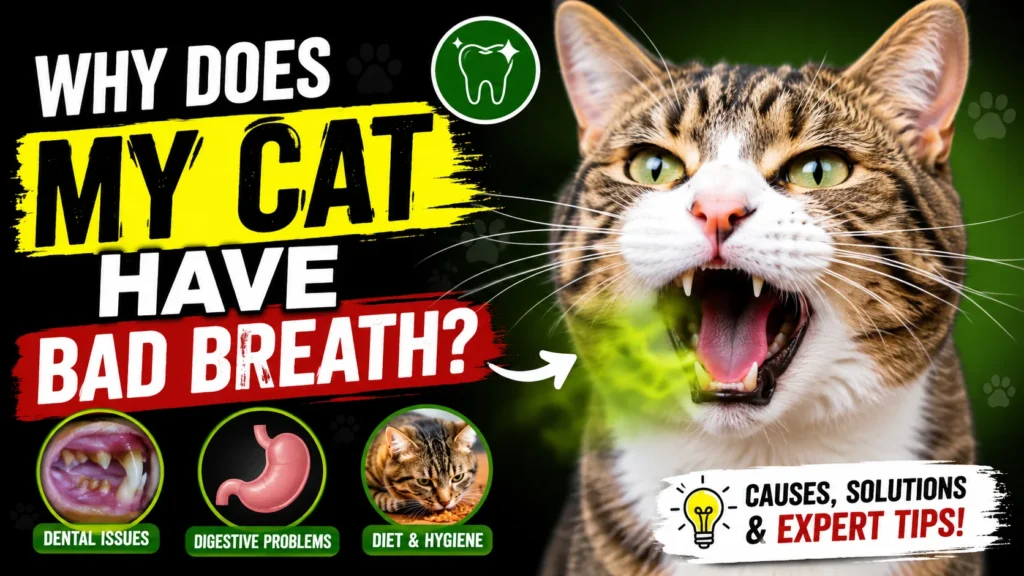
Why Does My Cat Have Bad Breath? We’ve all been there leaning in for a snuggle with our beloved cats, only to recoil slightly when a pungent scent wafts from your feline friend’s breath. While you don’t necessarily anticipate a breath of fresh mint from your cat, a constant, unpleasant odor can be a red flag for something serious.
As a veterinarian, it is extremely important for me to point out that bad breath in your cat, technically known as halitosis, is a sign, and it is time to pay attention. In this guide, we will cover the usual suspects and serious health reasons why your cat’s breath stinks, when you should consult your vet, and what you can do to treat and prevent it.
Why Does My Cat Have Bad Breath?
The Most Common Culprit Dental Disease
By far the most common reason for foul breath in cats is periodontal disease. This is a disease that affects the teeth and gums over time. It can develop in your cat from age one onwards, and by the age of four most of cats have some degree of the disease. How it happens.
1. The Plaque and Tartar Cycle
When your cat eats, sticky plaque is left on their teeth. Bacteria loves to reside on this plaque. If plaque isn’t removed it turns into a hardened, mineralized deposit ( tartar or calculus). Tartar’s rough surface allows for even more plaque to cling.
Plaque causes inflammation of the gum tissue, which can cause them to appear red and inflamed this condition is called gingivitis. Eventually bacteria can actually begin destroying the tissues and bones supporting the teeth, which is known as periodontitis. As a result, unpleasant smells (caused by the production of foul-smelling sulfur compounds by the bacteria) are generated, and the remnants of their food will accumulate in the pockets created by their receding gums.
2. Feline Chronic Gingivostomatitis (FCGS)
This is a very uncomfortable condition to treat where the cat’s immune system is essentially attacking the plaque in its teeth causing significant inflammation of the mucosal tissues in the mouth (gums, tongue, back of the throat), and this condition most frequently arises in cats which are FIV or FeLV positive. This can cause the painful bleeding gums that account for that distinctive metal smell that we so often experience with bad breath.
Beyond the Mouth: Other Serious Health Issues
The most obvious offender causing your cat’s foul breath is certainly dental issues. But what many owners don’t realize, bad breath in cats can actually signal an underlying health problem. Your vet can sniff clues within the smell itself to diagnose certain diseases such as:
kidney disease(remia): When your pet’s kidneys can’t properly remove waste from their blood, toxins can accumulate, leading to breath that is quite noticeably pungent, with a very unmistakable odor of urine or ammonia.
It often goes with excessive thirst and urinating frequently.
Diabetes Mellitus: If untreated, the cat will then begin to break down its own fats and will develop ketones, which may give a sweet/ fruity breath and sometimes can smell a little like nail polish remover! Liver disease A cat whose liver is struggling to function may also develop breath that is unpleasant and with a feculent odor.
Respiratory infections: Respiratory conditions like herpes or calicivirus may contribute to a cat’s bad breath when ulcers develop within their mouth or the cat has significant discharge from its nose.
Gastrointestinal conditions: A cat with an intestinal blockage or very bad digestive problems might also have breath that smells like poop.
Oral tumors: Unfortunately, masses within the mouth can include malignant types of tumors like squamous cell carcinoma. These tumors can also get infected, resulting in a pungent, necrotic odor.
Also Check: Why Is My Dog Drinking So Much Water?
Kitten Breath vs. Adult Cat Breath
When a kitten develops foul odor it is more common to have a less serious reason. The teething process-the stage where a kitten loses his or her baby teeth and his or her adult teeth emerge-can sometimes result in slight odor and inflammation. Nonetheless, if the odor has not subsided when all of his or her adult teeth have emerged-typically by the time he or she is 6 to 9 months old-it may signal pre- periodontal disease and require veterinary examination.
What to Do if Your Cat Has Bad Breath?
If your cat’s bad breath persists:
Go to the vet: It is best to get a diagnosis from your vet and do not attempt to treat it on your own without first finding out what is causing the problem. They can do a thorough physical examination and blood work for you and they will be able to check for underlying diseases such as kidney or diabetes disease.
Be ready for professional cleaning: If your cat does have periodontal disease it may require you to have your cat undergo general an aesthesia for dental cleaning and X-rays of the tooth. There may be instances where your cat needs a tooth extracted due to severity of disease. Follow your vet’s advice Follow the recommendations that your vet gives you. For any underlying illness, they will outline a special diet, prescribe medication such as insulin for diabetes and provide you with other instructions.
How to Prevent Bad Breath in Cats?
When it comes to feline wellness, prevention is key and certainly much more of a comfort than trying to manage an illness after it strikes.
At-Home Dental Care
- Tooth Brushing: Your pet’s oral health “gold standard” and the most effective tool in fighting plaque is daily brushing of your cat’s teeth using a pet-safe toothpaste and a cat tooth brush. Ease into brushing gradually and make it a pleasant experience for both of you.
- Dental Products: When brushing isn’t an option, the next best bet is to opt for a VOHC (Veterinary Oral Health Council) recognized product that is backed by science and has been proven to reduce the accumulation of plaque and tartar, including treats, water additives and food diets.
Regular Veterinary Checkups
Dental Checkups with Your Vet Your cat ought to receive a dental checkup with their veterinarian at least once or twice a year in addition to their routine checkups. A vet can take notice of your cat’s teeth and oral health and encourage professional cleanings when there’s no opportunity to address a minor concern before it becomes serious.
Hydration
Keeping your kitty hydrated is essential in stimulating the mouth to produce saliva which acts as the body’s natural cleaner. For cats that don’t seem too interested in their water bowl, think about a cat water fountain.
A Note on Natural Remedies
While certain natural products are advertised for treating bad breath in pets such as parsley and coconut oil these will do nothing to solve the underlying causes of gum disease. A study found mastic resin might help with both bad breath and gum inflammation but that’s still experimental and can’t replace your veterinarian. If your dog has bad breath, discuss it with your vet before trying any alternative treatment.
Conclusion
So while the bad smell itself is just a symptom of your cat’s underlying issues, not a disease, you should take halitosis very seriously. It could indicate a variety of painful oral issues, systemic illnesses such as diabetes or even a more critical condition like kidney disease. Make sure that your cute and sweet smelling cat is around for a long time and to make that so the best you should be doing now is figuring out what could be causing it and head to the vets with this information.
Frequently Asked Questions (FAQs)
Does My Cat’s Breath Smell?
No. There’s a small window where a cat’s breath can smell a bit funky or fishy, usually right after a meal. After that small window, there should be no noticeable foul odor. When your cat has a strong odor on his breath on a consistent basis, it’s typically a sign of a problem.
Why does my kitten have bad breath?
Kittens can have bad breath due to their teeth changing from baby to adult, sometimes associated with a mild inflammation and odor. However, if the odor is persistent, your kitten’s bad breath may indicate dental disease and you’ll need to visit your veterinarian.
If my cat’s breath has an ammonia odor?
A breath that smells like ammonia is a very serious warning sign that usually indicates your cat has kidney disease (uremia) because the kidneys are failing to filter out waste products from the blood and are letting toxic buildup accumulate. You will need to have your veterinarian see your cat immediately. Q4: My cat’s breath smells sweet.
What could cause this?
The smell of sweet or fruity breath can be another sign your cat may be diabetic. Your cat is breaking down fat and building up something called ketones because it does not have enough insulin. If your cat’s breath has a sweet smell, you’ll need to visit your veterinarian to test them for diabetes.
How do I treat my cat’s bad breath at home without seeing the vet?
Unfortunately, you will not be able to treat the underlying problem of your cat’s bad breath at home; you’ll need a diagnosis from and possible treatment from your veterinarian. After you have taken care of the problem with the vet, daily tooth brushing with VOHC-accepted dental treats and/or water additives will help prevent your cat’s bad breath from returning.
Is bad breath an emergency for cats?
While not necessarily an immediate crisis, your cat’s bad breath should warrant a trip to your veterinarian as soon as you notice it. Something is wrong. But if you have notice any other concerning symptoms along with your cat’s bad breath (like vomiting, difficulty breathing, extreme lethargy), it’s an emergency: call your veterinarian or the local emergency animal hospital.
What is the “gold standard” for cat dental care at home?
Daily tooth brushing is considered the gold standard when it comes to preventing and treating tartar and plaque. Use a soft-bristled brush or a finger toothbrush along with an enzyme toothpaste made for pets never use a toothpaste formulated for humans.
Can dental treats for cats help bad breath?
Dental treats for cats can help to reduce the buildup of plaque and tartar that can cause bad breath, as long as you choose a product that has the seal of approval from the Veterinary Oral Health Council (VOHC). A product with this seal has been scientifically shown to be effective.
Does the food my cat eats cause bad breath?
The meal that you fed your cat may cause his bad breath on occasion, but usually food will not be the cause of bad breath on a regular basis. While feeding your cat a healthy diet that consists of the right balance of high protein can prevent many problems from occurring and avoid oral disease in the first place, food will not cure an existing problem, and foods high in carbohydrates will often accelerate the rate at which plaque forms.
What will the vet do to treat my cat’s bad breath?
The first thing the vet will do is conduct a general physical examination. If the vet determines that the issue is dental, you’ll most likely be told that he or she recommends a professional dental cleaning under general anesthesia (including a thorough scaling, polishing, and X-rays) in order to check the roots of the teeth. If a systemic health problem is the underlying cause of the bad breath, further diagnostic tests will be conducted and a plan for treatment will be developed.