
Signs of Ear Infections in Scottish Fold Cats
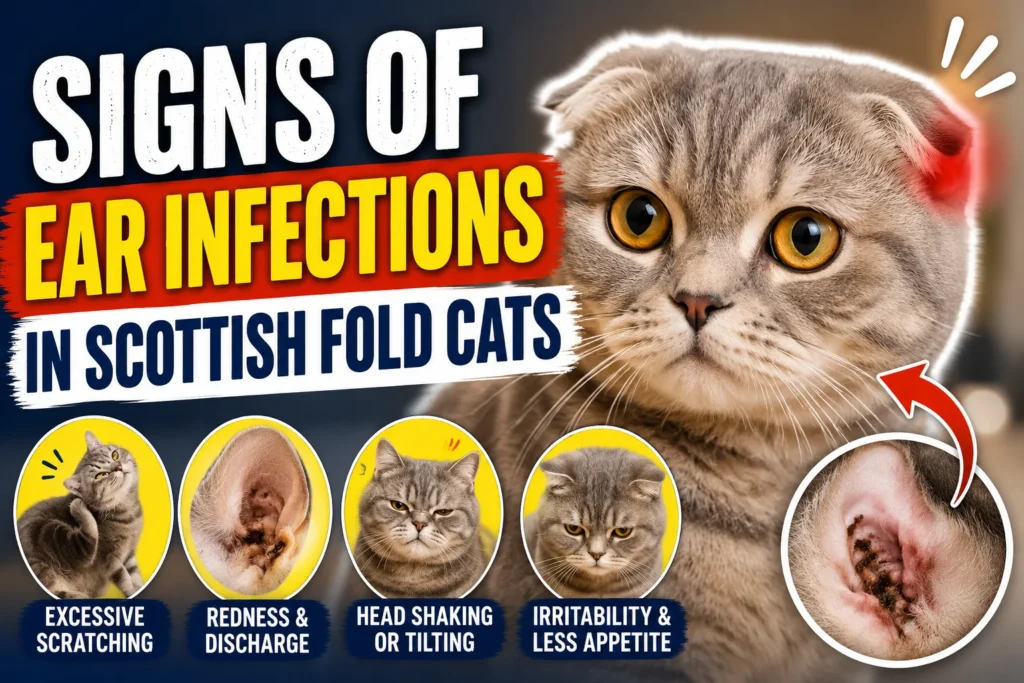
Ignoring the early Signs of Ear Infections in Scottish Fold Cats can lead to ruptured eardrums, facial nerve paralysis, or even chronic hematomas. In this guide, I will walk you through the clinical symptoms, breed-specific risks, and actionable home care strategies to keep your Fold comfortable and healthy.
As a veterinarian, I often tell cat parents that the Scottish Fold is a breed of contradictions. While their adorable folded ears make them look like perpetual owls, those same unique ears create a specific microenvironment that requires vigilant care. Due to their cartilage mutation, Scottish Folds are predisposed to certain ear conditions that differ from typical domestic shorthairs.
Why Scottish Folds Are Prone to Ear Issues
Before identifying the signs, you must understand the anatomy. The gene responsible for the fold (osteochondrodysplasia) affects cartilage throughout the body. This makes the ear canal cartilage softer and more “crinkled” than in other breeds. Consequently, these irregularities trap wax, debris, and moisture more easily, creating a breeding ground for yeast and bacteria.
Additionally, Scottish Folds have smaller ear openings relative to the size of their ear canal. This narrows the passage, reducing natural ventilation and making routine cleaning more challenging but also more critical.
Also Check: Signs Your Dog Has a UTI and Needs a Vet
10 Critical Signs of Ear Infections in Scottish Fold Cats
Unlike dogs, cats are masters of disguise. In the wild, showing weakness leads to predation. Therefore, your Scottish Fold may suffer significantly before you hear a whimper. You must rely on visual and behavioral cues.
1. Aggressive Head Shaking (The “Flapping” Sign)
While any cat shakes its head occasionally, a Fold with an infection will shake frequently and aggressively, often flopping their ears against their skull. This is a reflex to dislodge fluid or debris. If you hear a wet “flapping” sound during shaking, suspect an infection immediately.
2. Unilateral Scratching (One Ear Focused)
Cats scratch their ears casually. However, watch for localized scratching where the cat uses the hind paw of one side exclusively to dig at the same ear repeatedly. If the scratching is intense enough to cause hair loss or scabs at the base of the ear, the infection is likely advanced.
3. The “Scottish Fold Lean”
This is a subtle sign most owners miss. When the ear feels full of pressure or painful, the cat will tilt their head toward the affected side. Unlike the curious head tilt of a hunting cat, this tilt is static and persistent. If your Fold holds their head at a 15- to 30-degree angle for more than 24 hours, a middle ear infection is probable.
4. Visible Discharge (Color Matters)
Lift the ear flap and look inside a healthy ear. It should be pale pink with minimal wax. In an infected Scottish Fold, you will see:
- Dark brown/crumbly discharge: Usually indicates yeast (Malassezia).
- Yellow/green pus: Indicates a bacterial infection (Pseudomonas or Staph).
- Black, granular “coffee ground” debris: Often a sign of ear mites (Otodectes cynotis), which are common in folds due to excessive wax production.
5. Malodorous Odor (The Yeast Bomb)
A healthy cat ear is odorless. An infected ear produces a distinct smell. Yeast infections smell like musty bread or sweet corn chips. Bacterial infections smell foul, like rotting garbage or old cheese. If you smell this from three feet away while playing with your cat, do not wait for a vet visit.
6. Redness and Swelling (Pinnal Erythema)
Because the Fold’s ear cartilage is thinner, inflammation shows up faster. The inner flap (pinna) and the ear canal opening will become bright red or purple. In severe cases, the ear canal swells so much that the opening looks like a tiny slit rather than a round hole.
7. Pain on Palpation
Try gently massaging the cartilage at the base of your Fold’s ear. A comfortable cat might purr. A cat with an ear infection will:
- Flatten the affected ear aggressively.
- Withdraw their head.
- Hiss or growl.
This “pinna reflex” is a clinical sign of deep ear pain.
8. Balance Issues and Circling
The inner ear controls balance. If the infection spreads past the eardrum (otitis interna), your Scottish Fold may suddenly appear drunk. Watch for:
- Stumbling or falling to one side.
- Circling repeatedly in one direction.
- Nystagmus (eyes jerking back and forth involuntarily).
This is a veterinary emergency requiring immediate anti inflammatories and antibiotics.
9. Changes in Vocalization (The Silent Meow)
Cats often go quiet when in chronic pain. However, some Scottish Folds will become unusually vocal when the ear is touched or when they shake their head. Listen for a low, guttural groan or a sharp yelp during grooming sessions.
10. Reluctance to Jump or Play
Chronic ear infections cause systemic inflammation. Your usually agile Fold may suddenly refuse to jump onto the sofa, not because of joint pain (another Fold issue), but because the pressure change from landing reverberates painfully in the infected ear canal.
When to See a Vet vs. Home Care
If you see mild brown wax and occasional head shaking, you may gently clean the ear with a veterinary approved cerumenolytic solution (never use hydrogen peroxide or alcohol). However, if you see pus, blood, swelling, or neurological signs (circling/tilting), you need a prescription.
Treatment protocol a vet will use:
- Otic cytology: Identifying yeast vs. bacteria under a microscope.
- Topical medications: Antibiotic/antifungal/steroid drops (e.g., Mometamax, Posatex).
- Oral medications: For severe infections or ruptured eardrums.
- Flushing: Under sedation for chronic cases.
Prevention Cleaning the Fold Ear Safely
Because of their narrow canals, never use cotton swabs (Q tips) on a Scottish Fold. You risk pushing debris against the eardrum, causing a rupture.
The safe cleaning protocol:
- Fill the ear canal with a veterinary ear cleaner (flush type).
- Massage the base of the ear for 30 seconds (you’ll hear a squishing sound).
- Allow the cat to shake their head.
- Wipe the outer ear with gauze or a cotton ball.
- Reward with a treat. Do this weekly.
Conclusion
The same genetic quirk that makes Scottish Folds so charming also makes them vulnerable to painful ear infections. By monitoring for the 10 signs outlined above from the subtle “Scottish Fold lean” to aggressive scratching you can catch infections early, preserve your cat’s hearing, and avoid costly surgical interventions. When in doubt, remember: A smelly, red ear is never normal. Trust your vet.
Frequently Asked Questions (FAQs)
Can a Scottish Fold’s folded ear cause more infections than a straight-eared cat?
Yes. The folded cartilage creates a narrower, more humid ear canal with poor airflow, significantly increasing the risk of yeast and bacterial overgrowth compared to straight-eared cats or other breeds.
How can I tell the difference between ear mites and a yeast infection?
Ear mites produce dry, black, crumbly debris resembling coffee grounds and cause intense itching. Yeast infections produce moist, brown, smelly wax with a musty odor. A vet’s microscope is required for a definitive diagnosis.
Are over-the-counter ear drops safe for Scottish Folds?
No. Many OTC drops contain neomycin or alcohol, which can be ototoxic (cause deafness) if the eardrum is ruptured. Never use OTC drops without a vet confirming the eardrum is intact.
My Scottish Fold shakes his head but his ears look clean. What’s wrong?
Head shaking without visible debris often indicates a deep hair shaft or a foreign body (like a foxtail) lodged past the horizontal canal. This requires a veterinary otoscope examination.
Can diet affect ear infections in Scottish Folds?
Absolutely. Food allergies (often to chicken or fish) manifest as chronic yeast otitis. Switching to a novel protein diet (duck, rabbit, or hydrolyzed protein) can resolve recurrent infections without medication.
Can I use coconut oil for my Fold’s ear infection?
Clean once weekly for maintenance. If your Fold has a history of infections, clean every 3–4 days. If the ears are dry and clean, leave them alone over-cleaning strips protective oils and invites infection.
Is an ear infection a sign of polyps in Scottish Folds?
Yes, in young Folds (under 2 years). Nasopharyngeal polyps are non cancerous growths that cause persistent infections, head tilting, and noisy breathing. They require surgical removal.
Can I use coconut oil for my Fold’s ear infection?
No. While coconut oil has mild antimicrobial properties, it is occlusive (traps moisture) and can worsen yeast infections. It also provides a sticky surface for environmental bacteria to adhere to.
Why does my Scottish Fold scream when I touch his ear after swimming?
Water trapped in the folded cartilage causes maceration (skin breakdown). The scream indicates a deep, painful inflammation or a ruptured eardrum. Flush with a drying agent (vet prescribed only) and see a vet immediately.
How much does vet treatment cost for a Fold’s ear infection?
A basic exam and ear cytology cost $75–$150. Medicated drops add $40–$80. Severe cases requiring sedation for flushing cost $500–$1,200. Chronic cases requiring a Total Ear Canal Ablation (TECA) surgery cost $2,500–$4,000.