
Can Cats Eat Canned Tuna in Water Every Day?
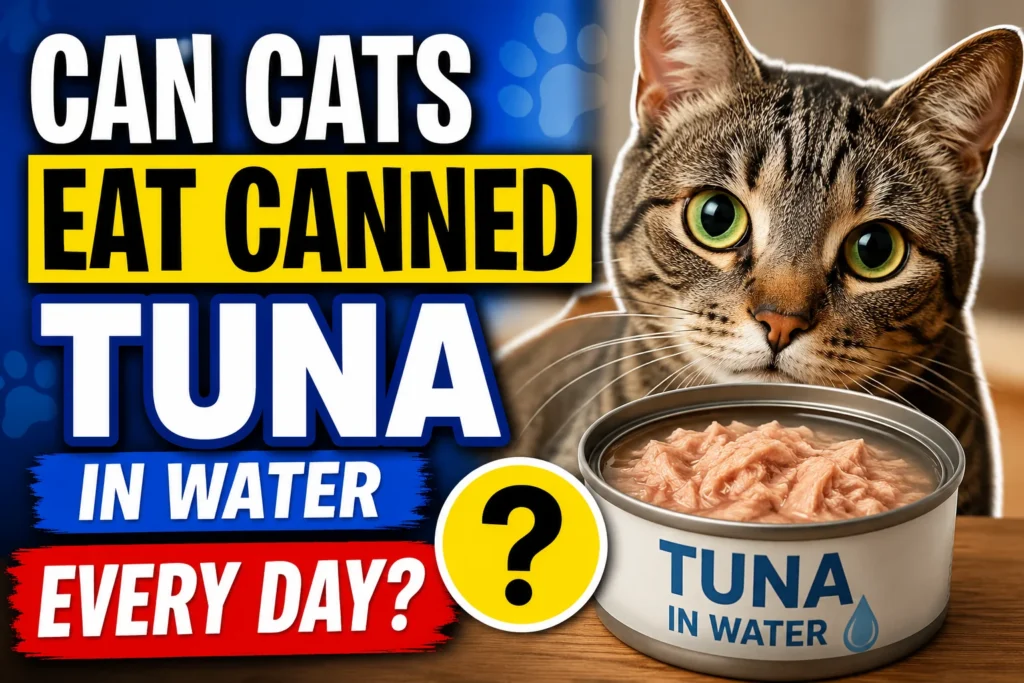
Can Cats Eat Canned Tuna in Water Every Day? If you share your home with a cat, you know the drill. You pop open a can of tuna, and within seconds, a tiny, furry shadow appears at your feet, meowing with intense, unwavering focus. It is no secret: cats love tuna. Because it is an affordable and convenient protein source, many owners ask a critical health question: Can cats eat canned tuna in water every day?
The short answer is no. While an occasional bite is harmless, feeding your cat canned tuna daily is a fast track to serious medical problems. This article explains exactly why, what happens to your cat’s body on a “tuna-only” diet, and the safe alternatives veterinarians recommend.
Why Do Cats Love Tuna So Much?
Before diving into the risks, it helps to understand the “why.” Tuna is a smelly, oily fish. Cats rely heavily on smell to determine if food is edible. The strong odor of tuna activates their appetite centers powerfully. Additionally, tuna contains high levels of histidine, an amino acid that cats crave. However, what a cat wants is rarely what a cat needs for long-term health.
The 4 Major Dangers of Daily Tuna Feeding
Feeding your cat canned tuna in water every day creates four predictable and preventable health crises.
1. Mercury Poisoning (Heavy Metal Toxicity)
Tuna is an apex predator it eats smaller fish and lives a long time. As a result, tuna accumulates mercury in its tissues. Canned tuna (especially albacore/white tuna) contains measurable mercury levels.
- What happens: Mercury attacks the nervous system.
- Symptoms in cats: Loss of coordination (stumbling), abnormal tremors, blindness, seizures, and behavioral changes.
- The risk: Daily feeding leads to bioaccumulation, meaning the mercury builds up faster than the cat’s body can eliminate it. After several months, toxicity becomes inevitable.
2. Steatitis (Yellow Fat Disease)
This is perhaps the most shocking risk for cat owners. Steatitis is a painful, often fatal inflammation of fatty tissue caused by a severe vitamin E deficiency.
- How it happens: Tuna is very high in polyunsaturated fats. To process these fats safely, a cat needs high levels of vitamin E. Canned tuna contains almost zero vitamin E. Daily feeding depletes your cat’s natural stores.
- Symptoms: Extreme tenderness when touched (cats cry out), fever, loss of appetite, and hard, lumpy fat deposits under the skin.
- Prognosis: Steatitis requires aggressive veterinary treatment, often weeks of vitamin E injections and supportive care.
3. Thiamine Deficiency (Neurological Collapse)
Cats require thiamine (vitamin B1) to convert carbohydrates into energy. Here is the problem: tuna contains an enzyme called thiaminase, which destroys thiamine.
- The process: When a cat eats tuna daily, the thiaminase actively breaks down any available thiamine. After a few weeks to months, the cat becomes severely deficient.
- Symptoms: Dilated pupils, poor balance, head pressing against walls, arched neck (stargazing), and eventually seizures and coma.
- Bottom line: This is a medical emergency. Without veterinary intervention, thiamine deficiency causes permanent brain damage or death.
4. Nutritional Imbalance & Junk Food Syndrome
Call tuna what it is: feline junk food. It lacks taurine (an essential amino acid that prevents blindness and heart disease), vitamin A, vitamin D, calcium, phosphorus balance, and fiber.
- The result: A cat fed daily tuna will become malnourished while appearing “full.” Over months, lack of taurine leads to dilated cardiomyopathy (heart failure) and retinal degeneration (blindness).
Also Check: How to Heal a Torn Dog Claw at Home?
What About “Tuna in Spring Water” or “Light Tuna”?
- Tuna in spring water is safer than tuna in brine or oil, but all canned tuna for humans lacks the added vitamins and minerals of commercial cat food.
- Light tuna (skipjack) has less mercury than albacore tuna, but it still contains thiaminase and imbalances fat ratios. It is less bad, but still not safe for daily feeding.
How Much Tuna Is Safe for Cats?
Veterinarians apply the 10% rule: Treats (including tuna) should never exceed 10% of your cat’s daily caloric intake.
- Safe frequency: A teaspoon of canned tuna in water, once a week maximum.
- Safe method: Squeeze the water out (to reduce sodium and mercury concentration) and mix it with their regular, balanced wet food as a topper.
The Only Time Vets Recommend Tuna (Medical Use)
The sole exception is for anorexic cats. When a sick cat refuses to eat for 24-48 hours, a small amount of warm tuna water can stimulate appetite. This is a short-term, vet-directed tool not a diet.
5 Healthy, Cat-Safe Alternatives to Daily Tuna
Instead of tuna, offer these high-value proteins formulated for feline health:
- Canned sardines in water (no salt added): Smaller fish = less mercury. Give half a sardine once weekly.
- Cooked plain chicken or turkey: No skin, no oil, no seasoning.
- Commercial wet cat food (fish flavor): Balanced with taurine, vitamins, and minerals.
- Freeze-dried salmon or minnows: Single ingredient treats.
- Canned cat food labeled “complete and balanced”: Always the gold standard.
What to Do If You’ve Been Feeding Tuna Daily
Do not panic, but do take action:
- Stop the tuna immediately.
- Transition to a high-quality, complete wet cat food over 3-5 days (mix increasing amounts of new food with old tuna to avoid digestive upset).
- Schedule a veterinary checkup. Ask for a blood panel to check mercury levels, vitamin E, and thiamine status.
Final Verdict from the Vet
Can cats eat canned tuna in water every day? Absolutely not. What seems like a loving treat actually causes malnutrition, heavy metal poisoning, vitamin destruction, and painful inflammatory disease. Your cat’s intense love for tuna is not a health recommendation it is a flavor preference that overrides self preservation.
Be the responsible guardian. Offer tuna as a rare, tiny treat (once a week at most). For daily meals, stick with a complete and balanced commercial cat food. Your cat will live a longer, healthier, pain-free life because of that decision.
Frequently Asked Questions (FAQs)
Can I give my cat tuna juice from the can?
No. The juice contains the same high levels of sodium, mercury, and thiaminase as the tuna itself. It offers no nutritional value and can cause digestive upset. If you must, mix one teaspoon into their water to encourage drinking, but do not do this daily.
Is tuna in brine or oil worse than tuna in water?
Yes, significantly worse. Tuna in brine has dangerous sodium levels that can cause salt poisoning (vomiting, diarrhea, seizures). Tuna in oil adds unnecessary fats and calories, which can trigger pancreatitis in cats.
What are the first signs of tuna-related illness in cats?
Look for lethargy, a rough coat, decreased appetite, sensitivity to touch (crying when petted), and an unsteady gait. These signal early steatitis or thiamine deficiency.
Can kittens eat canned tuna in water?
No. Kittens have rapidly developing nervous systems and require precise calcium-to-phosphorus ratios for bone growth. Tuna has none of this. Avoid tuna entirely for kittens under 1 year old.
My cat refuses all food except tuna. What do I do?
This is called food addiction. Do not give in. Withhold tuna completely. Offer a highly palatable commercial cat food (warmed slightly). Most cats will eat within 24–48 hours. If they refuse for more than 48 hours, see your vet immediately.
Is albacore (white) tuna or light tuna better for cats?
Neither is “good,” but light tuna (skipjack) has approximately 3x less mercury than albacore. If you offer a rare treat, choose light tuna in water. Still limit to once per week, half a teaspoon.
Can cats with kidney disease have canned tuna?
Generally, no. Tuna is high in phosphorus, which worsens chronic kidney disease (CKD). Some vets use tiny amounts of tuna water to stimulate appetite in late-stage CKD, but only under direct supervision.
What happens if a cat eats a whole can of tuna by accident?
In a healthy adult cat, one whole can will likely cause vomiting, diarrhea, or temporary lethargy. Remove the remaining tuna, offer fresh water, and monitor. Call your vet if symptoms persist beyond 12 hours or if your cat is very young, old, or has pre-existing conditions.
Is raw tuna safe for cats?
No. Raw tuna carries risks of salmonella, E. coli, and Listeria (for both cat and human family members). It also contains higher levels of thiaminase than canned tuna. Always cook human-grade fish for cats, but again as a rare treat only.
What commercial cat foods taste like tuna but are safe?
Look for: Wellness CORE Simply Shreds Tuna & Salmon, Tiki Cat After Dark Tuna & Quail Egg, or Weruva Paw Lickin’ Chicken (if you want to avoid fish entirely). All are complete and balanced formulas approved by AAFCO.