
How to Treat a Minor Cat Wound at Home?
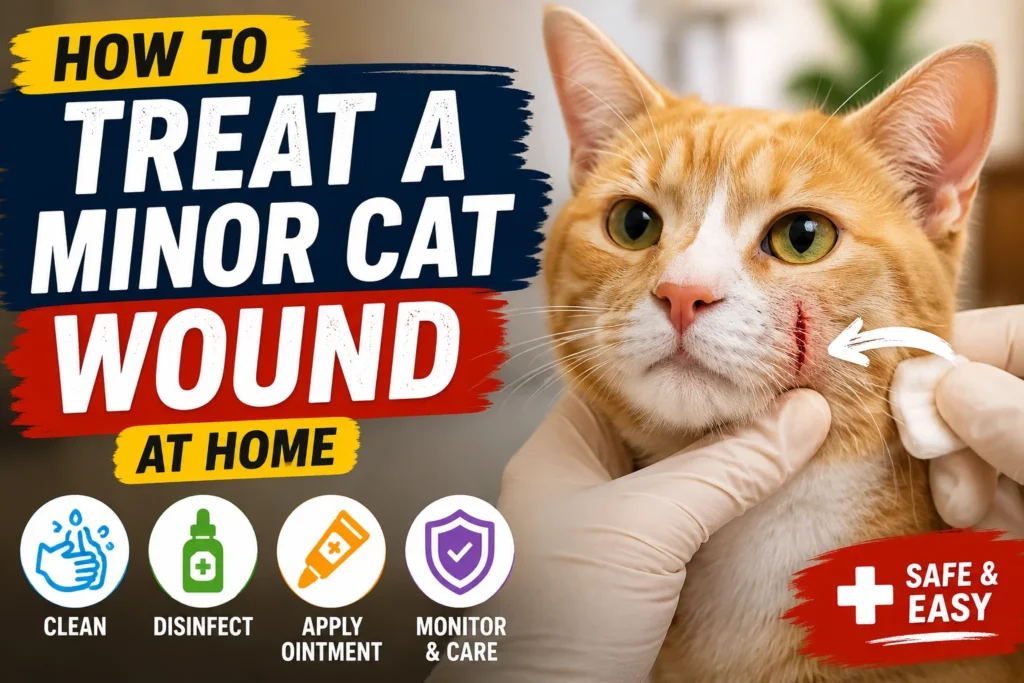
How to Treat a Minor Cat Wound at Home?. Whether it’s a tiny scratch, an injury sustained during a scuffle, or just an overzealous groomer, minor injuries can occur with the most well-adjusted cat. As a devoted pet parent, knowing what to do for a minor wound is important because it could spare you an emergency trip to the vet, a hefty vet bill and an infected furball. When Is It Okay to Treat a Cat Wound at Home?
Do you remember taking an oath as a cat owner to perform minor medical tasks if necessary?
Well, your oath has been put to the test! You may be able to treat your furry companion at home if the wound:
When Can You Treat a Cat Wound at Home?
Before you grab your first-aid kit, you must assess the injury. You can safely proceed with home treatment only if:
- The wound is superficial.
- The wound is smaller than a half-inch.
- Bleeding is minor and stops within 5–10 minutes with gentle pressure.
- Your cat is fully vaccinated.
- There are no signs of infection.
If the wound meets all the above criteria, follow the steps below.
The 5 Step Protocol For How to Treat a Minor Cat Wound at Home
Step 1: Prepare Your Workspace & Restrain Your Cat Safely
Even a sweet cat may lash out if they’re hurt; you may need to “burrito” your cat with clean towel, allowing access only to the injury site. A helper to hold the cat is preferable if one is available.
- Supplies Clean towels or gauze pads
- Saline solution or lukewarm
- tap water
- A mild, pet-friendly antiseptic Vetericyn Plus or hypochlorous spray
- Self-adhesive bandage
- Nonstick gauze pads.
Step 2: Stop the Bleeding
Apply firm pressure directly to the wound with a clean gauze pad for 3 to 5 minutes. No peeking! The newly formed clot is destroyed when the gauze is lifted. If blood seeps through, apply another gauze pad to the first.
Vet Tip: Don’t attempt a tourniquet on your cat’s leg, since you could easily damage his small bones and tissues
Step 3: Clean the Wound Gently but Thoroughly
Clean the wound. It’s just it. You know. You gotta! Hydrogen peroxide or rubbing alcohol don’t do it – that stuff kills all sorts of good cells and holds up the healing process! – apply saline or tap water in a jet for 30-60 seconds to rinse and then gently wipe any leftover blood, dirt or debris with clean, damp gauze. A dilute 0.1% povidone iodine or 0.05% chlorhexidine solution can be used if it is really mucky!
Step 4: Apply an Antiseptic and Cover the Wound
Clean the wound, apply antibiotic, and bandage it.
Spray the wound with Vetericyn Plus: Don’t use human-based antibiotics like Neosporin since many cats are allergic or get sick from eating it. A non-stick pad placed directly on the wound and then gently wrapped with a self-adherent wrap is recommended.
Also Check: Can a Dog Survive Parvo Without Going to the Vet?
Step 5: Prevent Licking
A cat’s tongue is like sandpaper with bacteria. Licking will introduce infection, pull out sutures, and reopen the wound.
Options to prevent licking:
- E-collar: The gold standard. Use a soft or inflatable collar for comfort.
- Recovery suit: A cat onesie that covers the torso. Excellent for belly or back wounds.
- Bitter spray: Applied around the wound as a deterrent.
What to Put on a Cat Wound at Home
| Safe | Unsafe |
|---|---|
| Saline solution | Hydrogen peroxide |
| Diluted chlorhexidine | Rubbing alcohol |
| Diluted povidone-iodine | Tea tree oil |
| Vetericyn Plus wound spray | Neosporin / triple antibiotic ointment |
| Manuka honey | Coconut oil |
Frequently Asked Questions (FAQs)
Will hydrogen peroxide work on a cat’s wound?
Nope. The chemicals can damage fibroblasts and make a small wound a large one that heals slowly.
How do I know if my cat’s wound is infected?
Look for a reddish region radiating out of the wound; increased heat, redness, swelling or the appearance of yellow or green discharge, a foul smell or signs your cat is listless and has lost her appetite.
Can a cat wound heal itself?
Minor scrapes may heal, but there’s a good chance of forming an abscess, particularly with a bite. Avoid essential oils as cats can get very sick if they eat them. Always clean and monitor.
What is a natural antiseptic for cat wounds?
Diluted chlorhexidine is the safest “natural-ish” option. Do not use essential oils as they can be toxic to cats.
How long does it take for a cat to heal from a wound?
If conditions are ideal, a minor surface injury should be on the mend in a matter of 2 to three days and start to knit closed within seven to 10 days.
Do I need to wrap my cat’s wound?
An adherent wrap and sterile nonstick pad can be used if you do not apply it too snugly to interfere with the blood flow. Check it twice every day to confirm that it’s too loose or too tight and avoid an adhesive or one that gets filled with fluid.
Can I use Neosporin on a cat?
No, but it is likely to trigger dermatitis (inflammation), but it’s of the biggest danger in the case that the cat licks the medication from a Wound site, leading to an upset stomach and or, a significant allergic reaction.
My cat refuses to wear the cone!
Try an inflatable cone of Shame, a Surgical suit or one of the donut shaped collar.
Do I have to take my cat to a veterinarian for the Wound?
As quickly as possible if your feline begins bleeding once again, swell and there’s additional growth, your feline loses eating or ingesting; he becomes listless; he grows a discharge of pus or he does not seem to improve in the first 24-48 hours.
Is it alright to use salt water to clean a wound on a cat?
Saline from the retailer just. Homemade saltwater is loaded with salt.