How Smart GPS Collars Track Your Dog’s Rest and Activity 2026
Learn How Smart GPS Collars Track Your Dog’s Rest and Activity?
As a veterinarian, one of the most common questions I hear is, “How much should my dog be sleeping, and am I giving them enough exercise?” For years, we’ve relied on observation and guesswork. Today, technology offers a clear answer through smart GPS collars. These devices have evolved far beyond simple location trackers, becoming sophisticated health monitors that quantify both rest and activity.
The Technology Behind the Tracking
To understand how these collars monitor rest and activity, it helps to first look at the technology inside them. They combine several key components to paint a comprehensive picture of your dog’s day.
Sensors and Motion Detection
At the heart of activity tracking is a 3D accelerometer. This sensor detects movement, not just steps. It registers the entire spectrum of a dog’s physical state . At its most basic, the accelerometer acts like a sophisticated pedometer. But its true power lies in interpreting these movements to differentiate between running, walking, and the near-stillness of sleep . Advanced collars also include gyroscopes to understand orientation, helping determine whether a dog is lying down, standing, or rolling.
Cloud-Based AI and Data Processing
The raw data from the sensors is only part of the story. The “smart” part of these collars comes from processing this data in the cloud using Artificial Intelligence (AI). The collar transmits data via cellular networks to a cloud-based AI engine . This AI establishes a personalized “baseline” for each dog. It understands what “normal” looks like for them and detects meaningful deviations that might signal health problems or stress. For example, if a normally energetic dog becomes lethargic, or a calm dog becomes restless and unable to settle, the AI can flag these changes.
Measuring Activity Levels with Precision
How do we know if a dog is getting enough physical activity? Smart collars provide several metrics to assess this objectively, moving beyond the simple “how long was the walk?” question.
Steps, Activity Time, and Calorie Burn
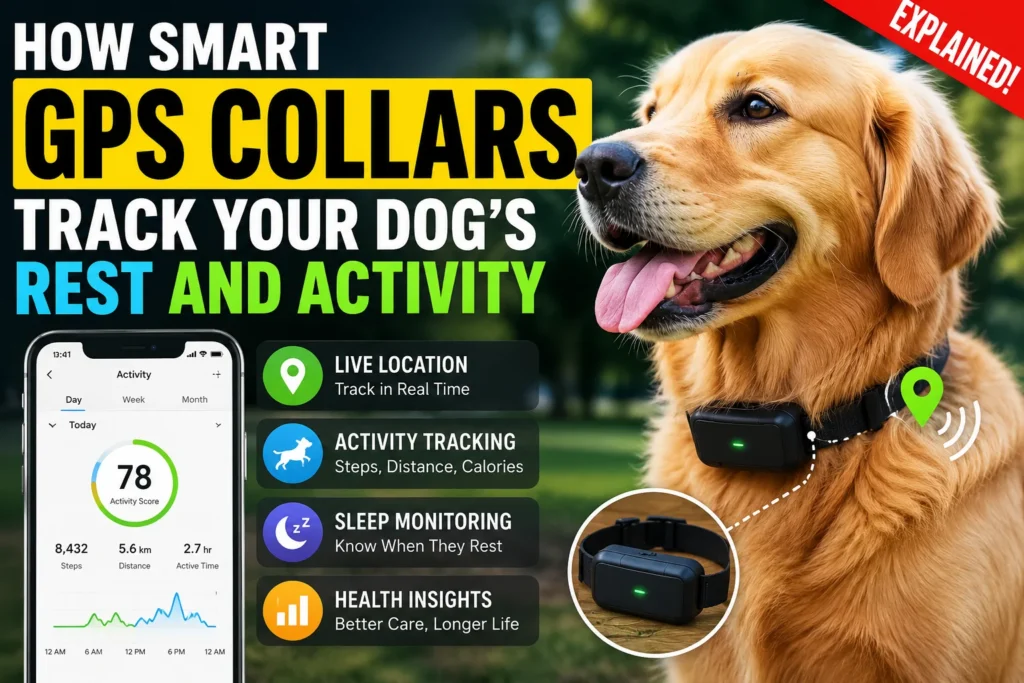
Most brands provide an easy-to-understand overview of daily activity. The collar tracks metrics like steps taken, total active minutes, and distance traveled . Some advanced systems, like PetPace, even use the dog’s weight and size to estimate calories burned . This provides owners with tangible goals. The Fi app, for instance, allows users to set daily step count targets and compare their dog’s activity level with other dogs of a similar profile . This transforms the abstract concept of “enough exercise” into a concrete and achievable target.
Identifying Health Trends
These devices are not just for tracking playtime; they are powerful tools for preventive health care. They can alert you to subtle shifts that might be early indicators of a problem. If a dog is sleeping more or moving less than their established baseline, it can be an early warning sign of illness, pain, or stress . PetPace’s AI even generates a “Wellness Score” to provide a quick, at-a-glance assessment of overall health . This type of data can give your veterinarian a much more detailed picture of your dog’s daily routine, making it invaluable during check-ups.
Key Activity Metrics
| Metric | What It Measures | Why It Matters |
|---|---|---|
| Step Count / Distance | Daily physical movement | Ensures baseline exercise needs are met |
| Active Minutes | Time spent in motion | Tracks total exercise duration |
| Calorie Burn | Estimated energy expenditure | Helps manage diet and weight |
| Wellness Score | AI-generated health assessment | Provides an overall health snapshot |
Decoding Rest Patterns and Sleep Quality
A dog’s rest is just as important as their activity. Sleep and rest are critical for physical and mental well-being. Smart collars now offer insights into this often-overlooked area.
Also Check: The Ultimate Guide to Common Health Problems in Golden Retriever Puppies
Differentiating Sleep from Inactivity
The technology uses a “lack of movement” as its primary indicator of rest . The AI analyzes periods of stillness to determine sleep duration. Many apps break this down further, distinguishing between deep night-time sleep and daytime naps . The Fi app can even provide details on sleep interruptions and how deep a sleep cycle was . For an indoor cat, an app might log that they were resting during your work hours but active in the early morning .
Recognizing Normal Rest vs. Lethargy
One of the most valuable features for any pet owner is the ability to understand what’s normal for their dog. While a general rule is that adult dogs sleep around 12-14 hours a day, puppies and seniors sleep more. By establishing a baseline over the first few weeks, these collars can help you spot a dog that is sleeping too much, which may be a sign of depression, illness, or pain . Conversely, a dog that is sleeping less than normal and seems restless could be experiencing stress or anxiety . In the app, you can often compare sleep patterns day-over-day, week-over-week, or even month-over-month to spot trends .
Frequently Asked Questions (FAQs)
How accurate are smart dog collars for tracking sleep and activity?
They are very accurate for differentiating between motion (activity) and stillness (rest). However, they can’t definitively confirm if a dog is in deep sleep or just lying awake. Consumer reports indicate that activity and rest statistics are “relatively accurate,” while features like drinking and eating are much less reliable.
Do smart GPS collars use Wi-Fi or a mobile network?
Most smart collars use a built-in cellular connection (LTE-M/NB-IoT) to transmit data, working like a mobile phone for your dog . Many also use Wi-Fi to conserve battery when the dog is at home and a base station is present . Apple AirTags are a notable exception they rely on a network of nearby iPhones and Bluetooth, which is not a true GPS solution.
What is an AI baseline and why is it important?
An AI baseline is a “normal” profile created for each dog. In the first few weeks, the AI learns the dog’s unique activity, rest, and behaviour patterns . Once established, it can detect when the dog deviates from this normal. This is important because a sudden change in activity or rest can be an early warning sign of illness, stress, or pain.
Can these collars help me spot a health issue before I see symptoms?
Yes. By continuously monitoring sleep and activity, these collars can detect subtle shifts. For example, a dog that sleeps significantly more than their baseline might be developing an illness, and a dog that is restless and active at night could be anxious or in pain . This data can prompt an early visit to the vet. Some medical-grade collars like Pet Pace can also track heart rate and temperature.
What is the difference between a pet GPS tracker and a fitness tracker?
A GPS tracker primarily shows your dog’s location. A smart collar combines GPS with health-monitoring sensors . While all trackers locate your dog, a smart tracker also measures activity, sleep, and sometimes vitals like heart rate and breathing.
What does “sleep quality” mean in these apps?
“Sleep quality” is measured by tracking sleep duration, interruptions (periods of wakefulness), and sleep cycles (deep sleep vs. restlessness) . A dog that has fragmented sleep with many interruptions could be stressed or uncomfortable, whereas a dog sleeping deeply for long periods is likely well-rested.
Is there a monthly subscription fee for these collars?
Yes, most require a subscription. The hardware purchase is often just the first cost. The subscription covers the cellular data plan needed to transmit GPS and health data to the cloud, as well as access to AI features. Plans typically range from $8.50 to $17 per month.
What is a geofence/safe zone and how does it link to health?
A geofence is a virtual boundary set on a map. While it’s for safety (alerting you if your dog escapes) , the data from a dog’s movement inside and outside these zones can be useful. For example, if a dog is constantly triggered by the fence or is inactive within the zone, it can inform you about their comfort levels and territorial behavior.
How long does the battery last?
This varies by model and usage. The Fi collar is known for its long battery life, lasting up to 3 months on a single charge in the right conditions . Others, like the Halo 5, last around 48 hours on a charge . Battery life is often extended when the dog is connected to a home Wi-Fi base station.
Are these collars suitable for all breeds and sizes?
Most collars are adjustable and are suitable for dogs as small as 10 pounds. Some brands, like Fi, even have a “Mini” version specifically designed for smaller dogs . It’s important to check the weight and size recommendations for each specific model to ensure a proper, comfortable fit.
Conclusion
Smart GPS collars have evolved from simple locator beacons into comprehensive health and wellness tools that help dog owners manage their pets’ well-being. By using motion sensors and AI to track activity and rest, they provide a level of insight that was previously impossible .
From a veterinary standpoint, these devices are an exciting development. They are not a replacement for regular veterinary check-ups or professional medical advice, but they are a powerful supplement to them. They empower you to become a more informed caretaker by turning daily activity and rest into quantifiable, understandable data. This allows you to catch potential issues early and ensure your dog is living a truly healthy and balanced life.