How to Treat a Respiratory Infection in a Pet Bearded Dragon?
Learn How to Treat a Respiratory Infection in a Pet Bearded Dragon?. Another extremely health hazard to a pet Bearded Dragon is a respiratory infection. Unless it receives immediate vet care from a reptilian specialist, a Bearded Dragons respiratory infection can become quite severe and can prove to be fatal very quickly. Unfortunately, most of the respiratory signs of infection may seem normal in early stages, just as they do for most other reptile’s upkeep, meaning the longer you put off seeing a reptilian veterinarian, the worse the infection may become. Thankfully, with proper care and taking the healthiest way out, your pet Bearded Dragon will be more apt to beat a respiratory infection.
What Is a Respiratory Infection in a Bearded Dragon?
RI, respiratory infection is a condition where the infection travels to the reptile’s airways, lungs, or respiratory tract. Although infections most commonly involve the bacteria, respiratory infections in reptiles may be caused by fungi, viruses or parasites but not so common in dragons. Respiratory infection in dragon mayoccur as a result of the neglect of husbandry standards, causing the dragon to be sick with the infection to go into the lungs causing death of pneumonia.
How to Treat a Respiratory Infection in a Pet Bearded Dragon?
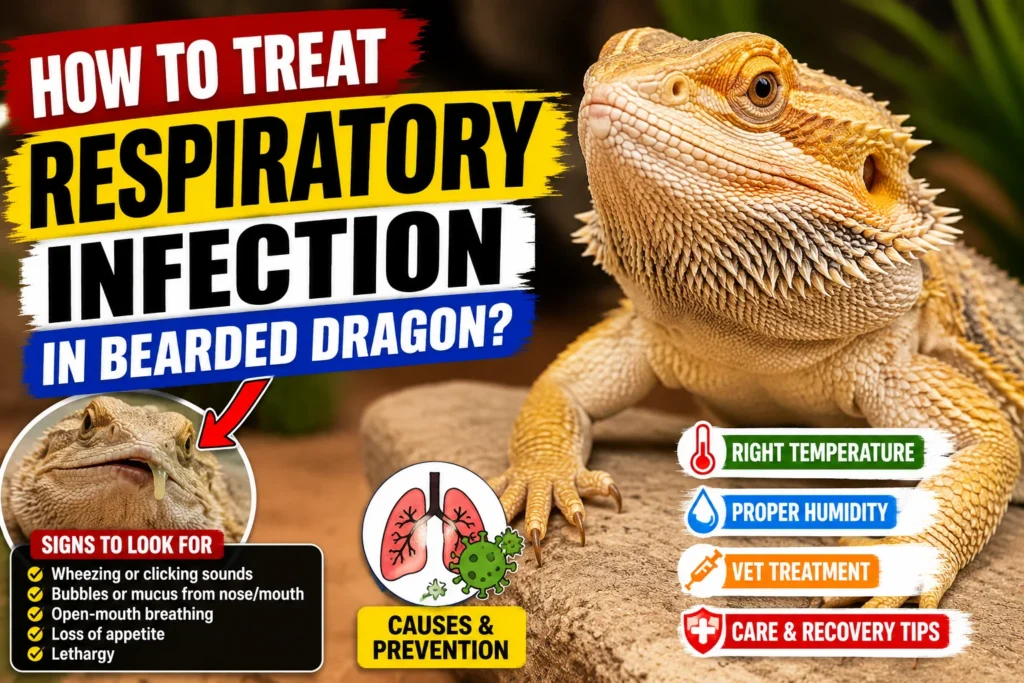
Look for these warning signs:
- wheezing or a clicking or popping sound when you’re trying to take a breath
- Open-mouth breathing
- Mucus around the nose or mouth
- Bubbles from the nostrils
- Frequent gaping unrelated to basking
- Lethargy
- Reduced appetite
- Weight loss
- Dark stress coloration
- Difficulty breathing
- Head held upward while breathing
- Excessive sleeping
As the illness progresses, breathing may become more labored and the dragon may stop eating completely.
Common Causes of Respiratory Infections
Several husbandry mistakes increase the risk.
1. Low Enclosure Temperature
Colder temperatures depress the immune system.
- Requirements for adult bearded dragon:
- Basking spot: 100-105F
- Cool side: 75-85F
The temperatures for juvenile require slightly warmer for the basking spot.
2. High Humidity
Humidity should be:
- 30%-40%
- Consistent humidity levels of 50%-60% or more, promotes bacteria to breed
3. Poor Ventilation
Stagnant air traps moisture and bacteria inside the enclosure.
4. Dirty Habitat
Waste, mold, old food and contaminated water promote bacterial growth.
5. Stress
Under stress. Impaired immune system causes include:
- Too much handling
- Cage-mates, Bad diet
- Moving to a different cage
- Missing UVB light.
6. Vitamin Deficiencies
Poor nutrition reduces the body’s ability to fight infections.
How Veterinarians Diagnose Respiratory Infections
Your veterinarian will take:
- Physical examination
- Listening to breathing sound
- X-rays
- Bacterial cultures
- Blood samples
- PCR tests
If required Your vet will give you correct medicine after proper diagnosis.
Veterinary Treatment Options
Most respiratory infections require professional treatment.
Antibiotics
Treatment your veterinarian may use, depending on the bacteria:
- Injectable antibiotics
- Oral antibiotics
- The course of treatment typically is 2-6 weeks, again, depending on how ill your dragon is.
- Do not stop the course of treatment even if your dragon starts to look better.
Nebulization Therapy
Some veterinarians recommend nebulization using prescribed medications to deliver treatment directly to the lungs.
Fluid Therapy
Dehydrated dragons may receive fluids by injection or orally.
Nutritional Support
If your dragon refuses food, assisted feeding may be necessary under veterinary guidance.
Also Check: Signs of Wet Tail Disease in Hamsters and How to Cure It
Home Care During Recovery
Home care complements vet treatment. This is not a substitute!
Increase Basking Temperature
Gradually increase the basking temperature to just within the safe range, this may boost the immune system. Always use an accurate digital thermometer.
Maintain Proper UVB Lighting
Replace old UVB bulbs regularly.
Provide 10–12 hours of quality UVB exposure daily.
Reduce Stress
Keep the enclosure in a quiet location.
Avoid unnecessary handling until recovery.
Encourage Hydration
Offer:
- Fresh water
- Gentle oral hydration if instructed by your veterinarian
- Moist vegetables suitable for bearded dragons
Keep the Habitat Clean
- Remove waste daily.
- Disinfect food bowls regularly.
- Replace dirty substrate immediately.
Foods That Support Recovery
Offer nutritious foods such as:
Vegetables
- Collard greens
- Mustard greens
- Dandelion greens
- Turnip greens
- Squash
Protein
- Dubia roaches
- Crickets
- Black soldier fly larvae
Dust insects with calcium and vitamin supplements according to your veterinarian’s recommendations.
What NOT to Do
Common mistakes to avoid:
- Don’t give human cold medicine.
- Never give your dragon antibiotics without your veterinarian’s guidance.
- Don’t attempt to force-feed a sick dragon.
- Do not neglect thewheezing and mucus.
- Do not put off taking to a veterinarian for breathing troubles
Emergency Warning Signs
Consult your veterinarian immediately if your bearded dragon is
- Having serious difficulty breathing.
- Continuous open-mouth breathing
- Blue or gray gums
- Complete refusal to eat for several days
- Collapse
- Extreme weakness
- Large amounts of mucus
- Bloody discharge
These signs may indicate advanced pneumonia.
Recovery Time
Recovery depends on:
- Severity of infection
- Age
- Immune status
- Husbandry improvements
- How quickly treatment begins
Mild infections may improve within two weeks, while severe infections can require four to eight weeks or longer.
Continue all medications exactly as prescribed.
How to Prevent Respiratory Infections
Preventive care goes a long way.
The basics include:
- Provide the correct basking temperatures.
- Provide proper levels of humidity (30-40%).
- Provide the correct reptile UVB lighting.
- Provide a balanced reptile diet.
- Keep the enclosure clean and tidy.
- Reduce stress.
- Ensure proper reptile ventilation.
- Routine vet care and check-ups.
- Quarantine all new reptiles.
- Watch for appetite and changes in breathing.
Can Respiratory Infections Spread to Other Reptiles?
Various types of infectious creatures are transferable amongst reptiles either by equipment use, contact or exposure. For the more than one animal owned, be sure to; Keep the ill dragon isolated. Wash hands before & after any interaction. Disinfect items, don’t use same food dishes & decorations.
Prognosis
A bearded dragon is more likely to fully recover when:
- The infection is identified early Appropriate antibiotics are administered
- Any husbandry issues are resolved
- All of the treatment plan is carried through to completion.
- Early treatment and intervention reduce the likelihood of pneumonia and lasting lung damage significantly.
Frequently Asked Questions (FAQs)
Bearded Dragon Diseases respiratory infections. Can I cure them?
Yes. The majority of beardies recover well with a course of antibiotics where required along with supportive care and adjusted husbandry.
What is the initial symptom of a respiratory infection?
Sneezing, clicking noises during breathing, wheezing, slight depression, appetite loss and at its worse nasal discharge can be visible.
Can I treat the respiratory infection at home?
Yes, and this involves correct enclosure temperatures along with supportive care. However many respiratory infections will need to be treated by your veterinarian.
How long do respiratory infections take to resolve?
This is entirely dependent on the severity of the infection and if treatment has been implemented. It is expected that they will take anywhere from two to eight weeks.
Are respiratory infections transmissible to other reptiles?
Potentially, it will depend on the specific cause of the infection. Sensitive reptiles should be immediately removed from the infected animal and their enclosures.
What humidity should my bearded dragon be kept at?
30 to 40 percent humidity is acceptable for the overwhelming majority of bearded dragons when within an enclosure.
What is the reason my bearded dragon is breathing with his mouth open?
Open-mouth basking from time to time can be normal for temperature regulation. Open-mouth breathing all the time or every now and then while heavily breathing with a lot of mucus or wheezing sounds could also be a sign of a respiratory issue.
Should I increase the enclosure temperature during illness?
Taking a little dose,maintained within a safe ‘range’ for basking should boost immune function,…mind the heat and there’s no guarantee however,so make sure you have reliable thermometers to keep track.
Can bad UVB lights lead to respiratory infections?
A low or dull UVB light can make a pig susceptible to infection by decreasing its overall health and immune ability. However it can not cause an infection directly.
When to visit a reptile vet immediately?
If your bearded dragon is experiencing serious, prolonged panting, or is not breathing properly at all; open mouth breathing, blue, gray or white gums, extreme lethargy, appetite loss, or a copious amount of discharge or mucus from any opening in his body you should take him to an emergency vet immediately.
Final Thoughts
How to treat a bearded dragon that has a respiratory infection How to treat a respiratory infection in a bearded dragon may determine the difference between an easy to recover situation, and a death sentence. Recognizing such signals as gasping for breath,wheezing, nasal mucous, and inactivity in your pet, can encourage an owner to take their pet in for immediate veterinary care.