
Why Is My Pet’s Gum Color Turning Pale Pink or White 2026?
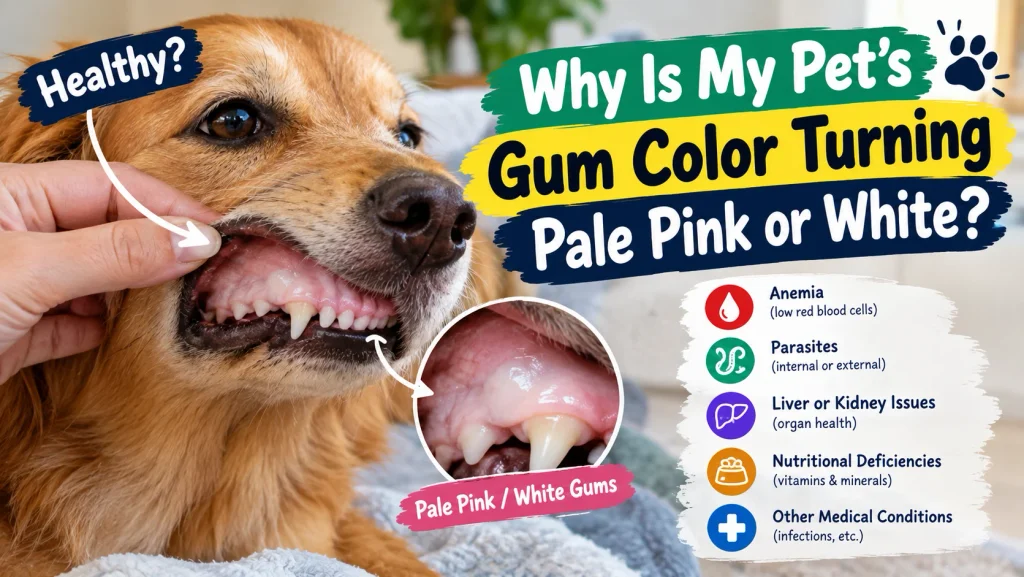
Why Is My Pet’s Gum Color Turning Pale Pink or White?. As a pet owner, you’ve probably peeked inside your dog’s mouth during a yawn or caught a glimpse of your cat’s gums during a stretch. Healthy gums in both dogs and cats should have a moist, bubblegum-pink color . This rosy hue is a quick, non-invasive window into your pet’s cardiovascular health specifically, whether enough oxygen-rich blood is circulating to their tissues.
When that stunning pink starts to turn a paler pink, gray or plain white, it’s not just for appearance. That change is actually a clinical sign referred to as pallor, and it nearly always means that something is obstructing your pet’s blood circulation or red blood cell production. In a veterinarian’s office, gum color is one of three “vital signs” together with heart rate and temperature. A white or very pale pink can be an emergency which requires immediate veterinarian evaluation, not something to ignore.
How to Check Your Pet’s Gum Color Turning Pale Pink or White?
Before you panic, ensure you’re reading your pet’s gums correctly. Some pets have naturally pigmented spots or patches of black or brown on their gums. This is normal pigmentation and not a sign of illness .
Step-by-Step Assessment:
- Gently lift the upper lip of your dog or cat to expose the gum tissue above the teeth .
- Look at the overall color of the broad gum area, not just the pigmented spots. You’re looking for a uniform, light pink tone .
- Press your fingertip into the gum until it blanches (turns white), then releases it.
- Count how long it takes for the pink color to come back. This is known as Capillary Refill Time (CRT). Usually in a healthy pet, the pink color should be regained within 1 – 2 seconds. If it takes more time, your pet has poor circulation.
If the gums are pale, white, gray, or blue, or if the CRT is delayed, your pet needs veterinary care. There is no safe “wait-and-see” window for white gums.
The Top Causes of Pale Pink or White Gums in Pets
There are only two underlying causes of pale gums: you’re not circulating enough blood, or your heart and blood vessels aren’t able to deliver blood to your extremities. Here are the most common explanations.
1. Anemia: The Most Common Cause
Anemia is a condition characterized by a shortage of healthy red blood cells or hemoglobin, the protein that carries oxygen . When the blood can’t carry enough oxygen, the gums lose their pink color. Anemia in pets is often classified by its underlying mechanism:
- Blood Loss Anemia: This occurs when red blood cells are lost from the body faster than they can be replaced. It can be acute or chronic .
- Hemolytic Anemia: This involves the destruction of red blood cells. Common triggers include ingestion of toxins, blood parasites, or immune-mediated diseases where the body attacks its own red blood cells .
- Non-Regenerative Anemia: This occurs when the bone marrow fails to produce enough new red blood cells. Underlying causes include chronic kidney disease, bone marrow disorders, leukemia, or severe nutritional deficiencies.
2. Internal Bleeding
Sudden pallor is most commonly caused by trauma. In the event of your pet being hit by a vehicle, falling from a great height or being subjected to blunt force trauma, bleeding may be present but not necessarily obvious with obvious blood loss into the chest or abdomen. Sudden trauma can rupture an artery or on the spleen or liver may cause rapid bleeding.
3. Shock
Signs of Shock occurs when the blood supply to the tissues of the body (including the skin and gums) becomes reduced in comparison to vital body organs, such as the brain and heart. Shock can be caused by anaphylaxis (allergic reaction), large quantities of infection (sepsis), heart failure or excessive dehydration. Gums may be pale, grey or even white and the pet is weak, cold and has a rapid, weak pulse.
4. Toxin Exposure and Poisoning
Specific toxins that harm blood cells or blood clotting:
- Rodenticide: Anticoagulant rodenticide inhibits blood from clotting, resulting in internal bleeding and anaemia.
- Onion, garlic, and paracetamol: Damage to red blood cells or destroying them by oxidising them is caused by these substances.
- Heavy metals: Production of red blood cells is hindered by Lead or zinc poisoning.
5. Heart Disease and Poor Circulation
Gums may appear pale due to reduced cardiac output conditions like dilated cardiomyopathy or severe valvular disease may cause the heart to pump less blood to the gums and the blood vessels to become constricted.
6. Dehydration
Dehydration can cause gums to appear dry, sticky, and pale because when they are dehydrated, the body has less overall blood volume. Dehydration may occur with vomiting, diarrhea, or fever.
What Other Symptoms Should You Watch For?
Pale gums alone are rarely all you will see. Watch closely for these associated symptoms that can help your veterinarian pinpoint the problem:
- Extreme weakness or lethargy: Your pet may have trouble standing, walking, or may not want to get up at all.
- Fast or difficult to breathe: Your pet is trying to take more in than it needs, which is compensating for low blood oxygen levels.
- Collapse or faintness: Always be concerned when trying to breathe is not enough of an indicator for the brain to get blood oxygen levels up.
- Swelling or distension of the abdomen: Likely internal bleeding or a ruptured organ.
- Vomiting or diarrhea: Likely bleeding in the gastrointestinal tract or a GI infection.
- Dark or bloody urine: Likely there is bleeding in the urinary system or hemolysis is occurring which is destroying blood cells.
- Cold limbs or extremities: All the blood may be diverted away from the limbs or the circulation may have shut down altogether.
Gum Color Guide: What Different Shades Mean
Understanding the spectrum of gum colors can help you communicate effectively with your vet.
| Gum Color | Potential Meaning | Urgency |
|---|---|---|
| Bubblegum Pink | Healthy, normal circulation and red blood cell count | None baseline |
| Pale Pink / Light Pink | Mild anemia, early blood loss, poor circulation, or dehydration | Same-day vet visit |
| White / Very Pale | Severe anemia, significant internal bleeding, or shock | Emergency, go now |
| Blue / Cyanotic | Severe oxygen deprivation; heart failure, respiratory distress, or severe shock | Immediate emergency |
| Gray / Muddy | Shock, severe cardiovascular compromise | Immediate emergency |
| Bright Red / Dark Red | Fever, heatstroke, toxin ingestion, or carbon monoxide poisoning | Immediate emergency |
What to Expect at the Vet: Diagnostic Tests
If your dog is brought into the clinic with pale gums, your veterinarian may choose to investigate the cause of anemia systematically.
Physical Examination
The vet will feel the heart rate and pulse, check the respiratory rate and the temperature and CRT. The vet will also feel the abdominal cavity for any presence of fluid, enlargement of abdominal organs or abdominal masses which could indicate internal bleeding.
Complete Blood Count (CBC)
This is the most important test for pale gums:
- The CBC tests: Red Blood Cell Count and Hematocrit confirms anemia and how severe it is.
- Red Blood Cell Indices: Determines if the anemia is regenerative or non regenerative.
- Platelet Count: Rules out clotting disorders as a cause for bleeding.
- White Blood Cell Count: Clues the presence of infection, inflammation or cancer.
Serum Biochemistry Profile
It measures the ability of your dog’s body to function including the kidneys and liver, which can cause non-regenerative anemia, as well as the level of electrolytes and proteins in their bodies.
Imaging and Additional Tests
Based on your dog’s test results, your vet may suggest:
- Abdominal X-ray or Ultrasound: To look for internal bleeding, tumors or other abnormalities.
- Coagulation Panel: To test for abnormal clotting times.
- Infectious Disease Testing: Testing for tick-borne disease or other parasites. Bone Marrow Aspirate: For diagnosis of bone marrow failure.
Also Check: How to Check if Your Dog is Dehydrated 2026?
Treatment Options: What Can Be Done?
Treatment for Pale Gums Varies depending on cause, this is not a treatment-all, pun intended.
- Acute Blood Loss: Patient stabilization may require volume expansion with intravenous fluids, oxygen administration, and supplemental transfusions of red blood cells
- Toxin ingestion: Treatment of this type of anemia is a symptom based on the source of the toxin. This could include induction of vomiting, administration of activated charcoal and treatment with vitamin K for rodenticide poisoning, or use of a specific antidote.
- Immune-mediated hemolytic anemia (IMHA): Treatment for this disease usually involves immuno-suppressive drugs such as corticosteroids to suppress the immune system destroying the red blood cells
- Nutritional deficiencies: Iron supplementation, injection B-vitamins, dietary modifications
- Chronic Kidney Disease (CKD): This disease is treated with supportive diet, fluid therapy, and medications to stimulate red blood cell production.
Frequently Asked Questions (FAQs)
Are pale gums always a sign of anemia?
Not always, but anemia is the most common cause. Pale gums can also result from poor circulation due to heart disease, shock, or severe dehydration, even if red blood cell counts are normal.
Can stress cause my pet’s gums to turn pale?
Stress alone rarely causes significant pallor. However, severe stress or fear can lead to a temporary drop in blood pressure. If pale gums persist or are accompanied by lethargy, it’s more likely a medical issue.
My pet’s gums are pale but they seem fine otherwise. Should I wait?
No. Pale gums are an objective sign that oxygen delivery to tissues is compromised. Even if your pet appears “fine,” internal bleeding or early-stage anemia can progress rapidly. A same-day veterinary visit is strongly recommended.
What is the difference between pale pink and white gums?
Pale pink gums suggest mild to moderate anemia or reduced circulation. White gums indicate severe anemia, significant blood loss, or shock and constitute a medical emergency.
How can I tell if my dog has naturally pigmented gums?
Some dogs have black or mottled gums naturally. To check for pallor in these dogs, look at the inner eyelid (conjunctiva), which is typically less pigmented and can provide a more accurate color assessment.
Can dehydration cause pale gums in cats?
Yes. Severe dehydration reduces blood volume and can make gums appear tacky and pale. Other signs include loss of skin elasticity and sunken eyes.
What toxins are most dangerous for causing anemia in pets?
Rodenticides (rat poison), onions, garlic, and certain human medications like acetaminophen (Tylenol) and ibuprofen are common household toxins that can cause severe anemia in pets.
Is pale gums a sign of cancer in pets?
Sometimes. Internal tumors (such as splenic hemangiosarcoma) can bleed slowly or suddenly, leading to anemia and pale gums. Unexplained pallor should always be investigated for underlying masses.
Can I give my pet iron supplements for pale gums?
Never give human supplements without veterinary guidance. Iron overdose is toxic to pets. The cause of anemia must be diagnosed first; iron deficiency is only one of many possible causes.
What is the capillary refill time (CRT) and how do I check it?
CRT measures how quickly blood returns to the gums after you press them. Press firmly on the gum until it turns white, then release. The pink color should return within 1–2 seconds. A delay indicates poor circulation.
Conclusion
The gums aren’t just tissue-they are a snapshot of your pet’s health in action. If your pet’s gums turn from pink to pale or white, your pet’s body is giving you a warning sign that something isn’t right. It doesn’t matter if it’s a nutritional deficiency or an internal bleed-the window to do something about this is short.
If you ever find yourself in that moment where the gums are no longer pink, get a hold of your veterinarian or an emergency animal hospital ASAP.
And go with your gut-you’re right about your pet’s needs, that pale gum just saved their life.




One Comment