How to Set Up a Low-Stress Tank for a Sick Goldfish?
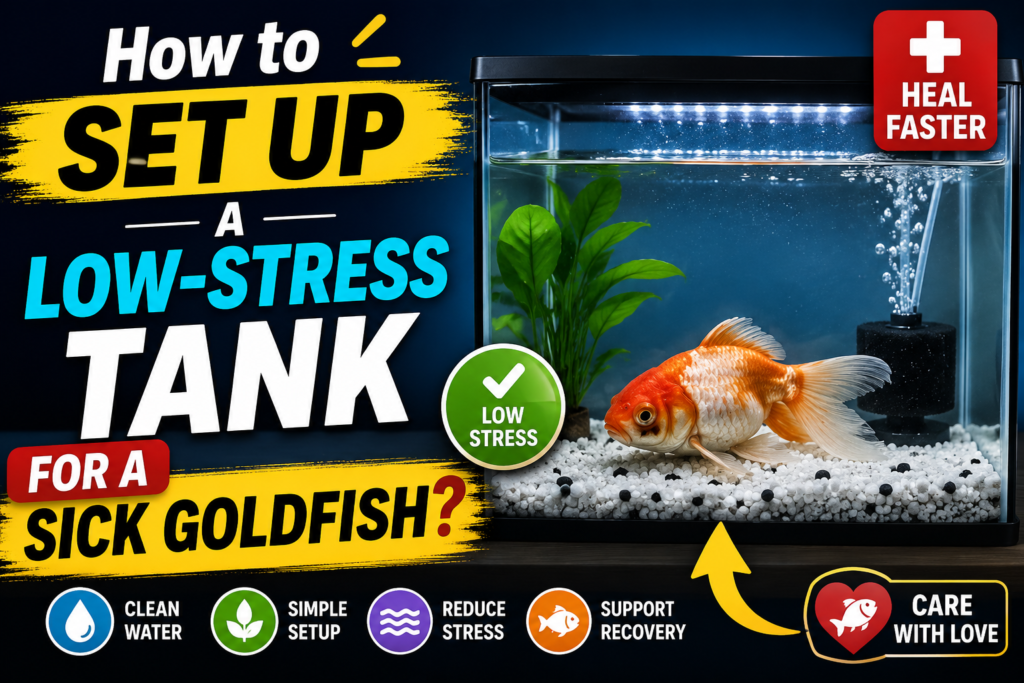
Learn How to Set Up a Low-Stress Tank for a Sick Goldfish?. Sick goldfish requires more than treatment to recuperate. It additionally requires a low-stress environment in order to do so. When your goldfish is dealing with one of those a lot more serious medical problems it might take additional steps apart from simply medication to recover.
The following will describe ways you can get a sick fish on the roadway to wellness with less additional concerns.
These are the very first of what need to occur with your aquatic fish. A recovery tank. For swim bladder condition fin rot viral infections and bacterial infections the below process of getting the sick fish out and right into a hospital tank will do a whole lot to enable it to heal without more complications.
Why a Recovery Tank Is Important
Some of the main advantages of having a separate tank for your recovering fish is that:
- Reduces stress from bullying tankmates
- Lets you closely watch for symptoms
- Medication is more easily and effectively administered
- Does not spread disease to the main tank. It is easy to control your tank environment with a separate tank.
- Even for an individual fish
Signs Your Goldfish Needs a Recovery Tank
Consider moving your goldfish if you notice:
- Lying at the bottom of the tank
- Difficulty swimming
- Loss of appetite
- Torn or damaged fins
- White spots
- Red streaks
- Cotton-like fungal growth
- Floating sideways
- Rapid breathing
- Clamped fins
- Lethargy
Early isolation often prevents the illness from worsening.
Choosing the Right Tank Size
Avoid tiny bowls.
Recommended sizes include:
| Goldfish Size | Minimum Recovery Tank |
|---|---|
| Small Goldfish | 10 gallons |
| Medium Goldfish | 20 gallons |
| Large Fancy Goldfish | 20–30 gallons |
| Common Goldfish | 30+ gallons |
Extra swimming space reduces stress and helps maintain stable water quality.
Keep the Tank Simple
A hospital tank should contain only essential items.
Include:
- Sponge filter
- Air stone
- Heater (only if treatment requires stable warmth)
- Bare bottom tank
- One hiding place
- Secure lid
Avoid:
- Sharp decorations
- Gravel
- Artificial plants
- Bright ornaments
- Strong water currents
The easier the tank is to clean, the healthier it remains.
Maintain Excellent Water Quality
Poor water quality is one of the biggest reasons goldfish become sick.
Ideal water parameters:
| Parameter | Ideal Range |
|---|---|
| Temperature | 68–74°F |
| Ammonia | 0 ppm |
| Nitrite | 0 ppm |
| Nitrate | Below 20 ppm |
| pH | 7.0–8.0 |
Test the water daily during treatment.
Use Gentle Filtration
The importance of clean water, with healthy fish and no harsh currents When your goldfish get ill they do not cope well in strong currents or filters.
I have found a sponge filter is the best:
It adds biological filtration to the tank, adds oxygen and has a soft movement of the water which does not harm the weak, ailing fish. Avoid any filter that you cannot lower the flow on or get a low powered one for your fish tank, unless you get something with a adjustable flow that goes from very weak to strong.
Increase Oxygen Levels
Sick fish have difficulty breathing.
To boost oxygen in water:
- Use an air stone
- Lower water level slightly
- Provide surface movement
- Maintain a clean filter
- Oxygen helps sick fish get healthy
Keep Lighting Low
Excessive lighting stresses the animal.
Instead: Keep room light low and avoid direct sun Light Aquarium no more than 6-8 hours per day Lights off at rest periods A relaxing environment promote recovery
Reduce Noise and Disturbance
The amount of activity may cause stress in your goldfish. Set up your hospital tank where it is far from:
- Televisions
- Radios
- Loud Speakers
- Doors and heavy traffic
- Do not tap on the glass of the hospital tank
Provide a Safe Hiding Spot
A place to hide will keep a fearful fish feeling safe.
Good options are PVC pipe Ceramic cave, Aquarium shelter, Plastic decorations with a smooth edge.
Feed Easily Digestible Foods
A sick fish may lose its appetite.
Offer:
- Gel food
- Shelled peas (occasionally)
- High-quality sinking pellets
- Bloodworms
- Brine shrimp
- Daphnia
Feed only small portions.
Remove uneaten food after five minutes.
Perform Frequent Water Changes
Water nourishes and helps with health. Guidelines on replacement:
- 20-30% per day for sick fish
- 25% every other day for stable fish
- Always keep these matches
- Water temperature Ph
- Water conditioner
- Do not drastically change
Quarantine New Fish
How a Lot of Disease Enters a Aquarium Purchase of Live fish:
You must isolate your live purchase for 2-4 weeks. By doing this, you’ll prevent diseases from destroying the entire fish tank.
Also Check: How to Set Up a Low-Stress Tank for a Sick Goldfish?
Avoid Overmedicating
Some conditions do not require medication. Prior to treating: Symptoms of condition to assess. Diagnose your fish (is there something else going on?)
Understand how the medication works and when you should remove it (many are inactivated by activated carbon).
Avoid over-medicating the fish, they have enough stress already!
Keep Stress to a Minimum
Even the smallest changes in habit can help. Here’s a list of what to do/don’t do: Don’t pick them up/touch them constantly Don’t net them constantly Don’t move things around their tank all the time Don’t change the temperature abruptly Don’t use any sort of vibration in or around the tank This helps boost immunity to heal.
Monitor Recovery Daily
Watch for: Improved appetite Increased activity Healthy swimming and fin development Redness is decreasing He is breathing normal. It might take from a couple days to couple weeks to for him to recover, depending on his diagnosis.
Common Mistakes to Avoid
This is the commonest reason why owners are delayed in helping their aquatic to recover:
- Not treating tap water first
- Over feeding your fish
- Not testing your tank’s water levels on a daily basis
Allowing your ammonia levels to sit higher than 0 - Feeding with very small tanks
- Mixing together medication not meant to be combined
Disregarding early symptoms of fish illness - Overcrowding the fish tank
- Over a supply of adequate oxygen
When to Contact an Aquatic Veterinarian
Consult your fish vet immediately if your goldfish is:
- Not eating for a few days
- Extremely ulcerated
- Heavily bleeding
- Floating upside down
Bloated eyes has a large fuzzy growth have severe trouble breathing is still struggling after a few days of support and treatment with this advice
Preventing Future Illness
Goldfish: Starting out right! Goldfish stay healthy through good management practices. Help prevent disease by Change water every week!
Feed a quality food!
Don’t overstock! Quarantine all new fish! Check your water often! Clean filter correctly!
Remove uneaten food quickly!
Provide enough tank space! “The best medicine is good husbandry.”
Frequently Asked Questions (FAQs)
Should I put my sick goldfish in a separate tank?
Definitely yes. This reduces stress and disease transfer and will also allow for the focused use of medication.
What is the best kind of filter for a sick goldfish?
A sponge filter is great as they filter well and give the maximum amount of oxygen.
Can I use aquarium salt?
Aquarium salt can treat certain conditions but is NOT appropriate for all illnesses. It should only be used when the appropriate illness is identified and following instructions.
How much and how often should I change the water in the hospital tank?
In the hospital tank, I do daily 20-30% water changes (more or less depending on water parameters and fish’s illness).
Should I feed my sick goldfish everyday?
The fish should be offered small bits of food and should not be fed every day if refusing to eat; leftover food should be removed quickly.
Does a sick goldfish need a heater?
Goldfish are cold-water fish but temperature fluctuations can increase stress. Maintaining stable temperatures is essential.
Can bad water cause my goldfish to become sick?
Absolutely yes. Ammonia levels and then nitrite and nitrate are a main cause of illness.
How long should a goldfish remain in a hospital tank?
Only until it has been illness-free for one to two weeks.
Is a bare-bottom tank better to keep a sick goldfish in?
Yes, a bare-bottom tank will allow waste removal to be maximized.
What is the most important aspect of treating a sick goldfish?
Good water quality with adequate oxygen and low stress levels are key.
Final Thoughts
One of the most powerful things you can do to help a sick goldfish is to set up a low-stress tank for them to recover in. With good water, a stable environment, mild filtration, sufficient oxygen and a peaceful setting, your goldfish will have its immune system free to do what it’s supposed to fight off whatever is wrong with it. Medications can be very important for many illnesses, but nothing is more important than husbandry in maintaining the health of your fish and keeping them healthy in the long run. Pay close attention to your goldfish and help it achieve full recovery in a calm recovery tank.