
Is Coconut Oil Safe for Dogs Skin 2026
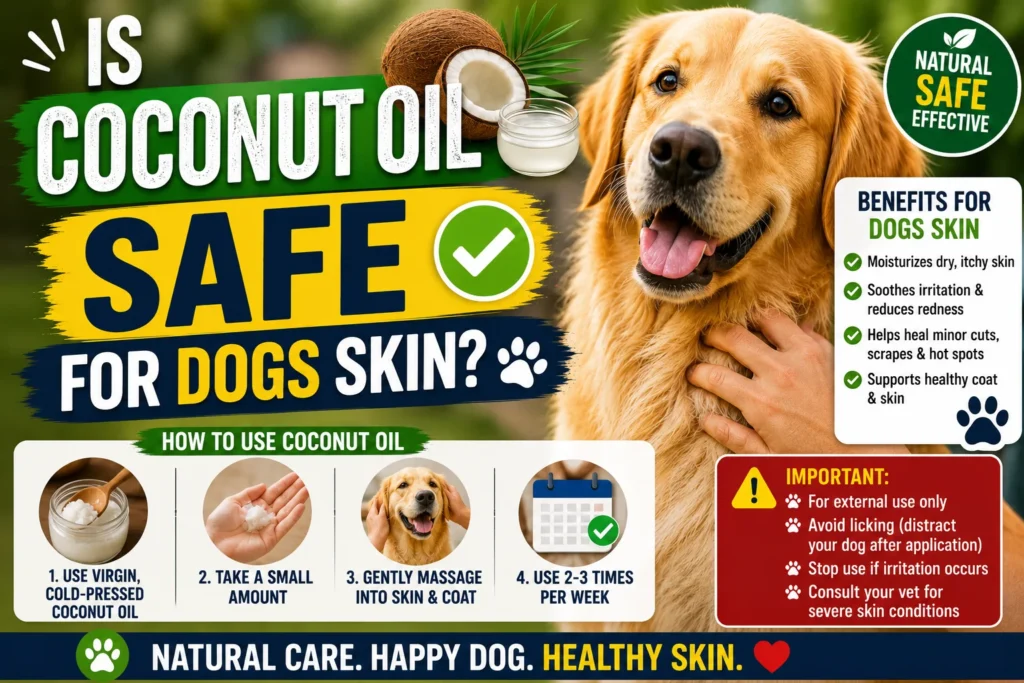
Chances are if you have been spending time on pet social media or scanning through some of the top natural health blogs you have probably heard of coconut oil being called a magical cure for pretty much everything, from flaky skin to hot spots to even fleas! Who wouldn’t want a cheap and easy all natural solution on hand for their furry friends? Unfortunately however, most of the time I need to take even well intentioned owners gently aside from their well-meaning remedy.
Is it really safe for your dog’s skin, you ask? The short answer isn’t, and the potential risks usually out way any potential benefits. While it’s not poisonous there is very little clinical data in support of topical coconut oil for canines and newly discovered studies suggest that topical use on dog skin cells could indeed be quite harmful!
Let’s see how far the fads go from the facts!
The Reality of Coconut Oil for Canine Skin
One of the main reasons behind this popular belief is the extensive albeit anecdotal evidence attributed to the well known effects on humans’ skin. Coconut oil has anti inflammatory and antibacterial components thanks to its medium chain triglycerides (MCTs), especially the lauric acid in it. It becomes apparent why this is believed to be true even for dogs.
Unfortunately, experts are of one accord in this matter: there is a distinct lack of empirical evidence proving these beneficial effects in dogs.
There have not been a sufficient number of substantial, organized studies on coconut oil showing how effective it actually is at alleviating itchy skin, allergies or infections in dogs – in a nutshell, it’s likely just a myth.
The Science That Gives Us Pause
It’s important to have good science on the benefits of what we feed or apply to our pets, not simply assumptions or Anecdotal claims. One of the most disturbing studies at the 2025 AVMA Convention really painted a harsh light on coconut oil . An in vitro (in a test tube) dog skin study revealed that when canine skin cells were exposed to virgin coconut oil, it led to “an increased disruption of plasma membrane integrity” .
Simply put: the oil was toxic to the outer layer of skin cells.
Now, in vitro doesn’t prove what happens to living dogs’ skin , but this is important evidence that perhaps coconut oil is NOT quite as innocent for our pets’ skin as we may believe .
The Risks of Putting Coconut Oil on Your Dog
If you’re thinking of adding a bit of coconut oil to your dog’s skin, it’s easy to be swayed by all of the supposed positives, but to do that you have to also acknowledge the definite negatives! As a veterinarian, the issues I typically encounter are the result of owners using coconut oil on their dog, in all the cases seen in veterinary general practice, typically these include the followings:
1. Trapping Moisture and Worsening Infections
You’ll really want to steer clear of applying oils to ‘wet’ skin conditions, such as a hot spot (moist dermatitis). The oil is going to trap even more heat and bacteria against the skin, further aggravating and exacerbating the infection. Hot spots need fresh air and the ability to dry to help them properly heal.
2. The “Licking” Problem
There is no question that your canine is inherently curious, nor do they mind grooming themselves. You name it, it’s likely to make it onto their coat or into their mouth as soon as it’s introduced, by a long lick! Whilst coconut oil alone, in small doses, are relatively harmless, consuming the concentrated volume you’ve just poured into it? Brace yourself for digestive misery in the form of diarrheas’ and or vomiting and possibly pancreatitis.
3. Potential for Allergic Reactions
Like anything you may use in connection to your pup, you do run the slight risk of an allergic reaction on the skin. Contact with coconut oil may lead to such unpleasantties as hives, a red reaction, heightened itching and scabbing which may be exactly the opposite of your desired outcome.
4. Ineffectiveness Against Fleas
Other remedies flea may die from coconut oil In a shocking fact, coconut oil is often said to contain numerous benefits, and one in particular may be interesting to many owners as a way of getting rid of fleas for your pets, where it helps to suffocate the insects, but it also happens to kill their eggs too!
It doesn’t take any special effort whatsoever, as one simply needs to create a fine coating of coconut oil and the fleas, and the eggs too for that matter, will very soon start to have that difficulty breathing! This is to try and keep fleas from hopping on them that do come outside, and they are also fed a prescription deworm medication.
When Coconut Oil Might Have a Place
Now this is not to say coconut oil is without it’s uses in extremely isolated cases but use them in moderation and preferably under the supervision of a veterinarian.
Soothing a Sore Paw or Nose : Coconut oil can be the perfect supplement to for the odd dry skin in their toes, feet, or nose as long as only the smallest amount is used and that it is rubbed well into the fur so your dog can’t just lick it all off.
Coconut Oil In Balms : Like a lot of paw balms commercially created coconut oil appears as just one part of an entire recipe which can protect skin, but is typically better to avoid pure oil entirely.
If Your vet okays a reason, only use unstopped, cold pressed virgin oil. Do not use treated or refined oil which will surely include chemical agents with coconut oil by products and ingredients . Coconut is actually in lots of dog foods: http://health.usnews.com/usnews blog/food blog/archive/2010/06/09/avoid unusual dog food ingredients , which explains that if you feed your dogs food manufactured by a trustworthy brand, you do not have to worry.
The Bottom Line From Your Vet
Coconut Oil as a topical treatment rubbing it on your dog has no scientific basis whatsoever. In nearly all circumstances the dry, itchy, or inflamed skin requires more reliable tested methods to treat. The best treatment usually involves an antibacterial soap made by your vet, a prescription diet, and medicine such as a supplement of fatty acids.
Your vet can diagnose your dog with such condition as allergies, infections and or pests.
We can help treat your pet for better-off or best health. The following are the treatments the veterinary clinic for better health care use with such as the ones listed above.
For More Info about : Cat Eye Infection Home Remedies 2026
Frequently Asked Questions (FAQs)
Is coconut oil toxic to dogs if they lick it off their skin?
Coconut oil itself is not toxic to dogs . However, if they ingest a large amount which they may do if you apply a thick layer to their coat it can cause significant digestive issues like diarrhea, vomiting, and, in severe cases, pancreatitis .
Can I use coconut oil to treat my dog’s hot spots?
No, this is not recommended. Hot spots are “moist dermatitis” and benefit from being kept dry and open to the air. Applying coconut oil can trap moisture and bacteria against the skin, making the infection much worse .
Does coconut oil help with dog allergies and itchy skin?
There is no scientific evidence to support using coconut oil for allergic skin disease in dogs. While it’s been shown to help with dry skin in humans, its efficacy for dogs has not been proven, and it may even cause a reaction that worsens the itching .
Is it safe to leave coconut oil on my dog’s skin overnight?
It is generally not recommended. Leaving it on for extended periods increases the chance your dog will lick it off and ingest a large amount, leading to stomach upset. Some vets suggest applying a thin layer for less than an hour and then wiping away any residue .
Can coconut oil help with flea and tick prevention?
No. Coconut oil is not effective at killing or repelling fleas. Relying on it for pest control is a dangerous mistake. Always use veterinary approved, proven flea and tick preventatives .
What type of coconut oil is best for dogs, if any?
If your vet recommends using it, choose an unrefined, cold pressed, virgin coconut oil . Avoid partially hydrogenated or refined versions, which may contain unhealthy trans fats or chemical residues .
Is there any research on coconut oil for dog skin?
Yes, but much of it is concerning. A 2019 in vitro study showed that virgin coconut oil can be toxic to canine skin cells (keratinocytes) . While this was a lab study, it suggests a potential for harm that outweighs any unproven benefits .
Is coconut oil safe for dogs with pancreatitis or a history of it?
No. Dogs with pancreatitis or those predisposed to it should not be given coconut oil. The high-fat content can trigger a painful and potentially life threatening attack of pancreatitis .
Are there better alternatives to coconut oil for my dog’s skin?
Yes, absolutely. For skin and coat health, fish oils that contain omega 3 fatty acids are a much better choice. They have a proven track record for reducing inflammation and are less likely to cause stomach upset .
What should I do if my dog has dry, flaky skin?
The best course of action is to consult your veterinarian. Dry skin can be caused by a variety of issues, from nutritional deficiencies and allergies to parasites or hormonal imbalances. A vet can diagnose the problem and recommend a safe, effective, and proven treatment plan.