
How Often Should You Bathe an Indoor Cat 2026
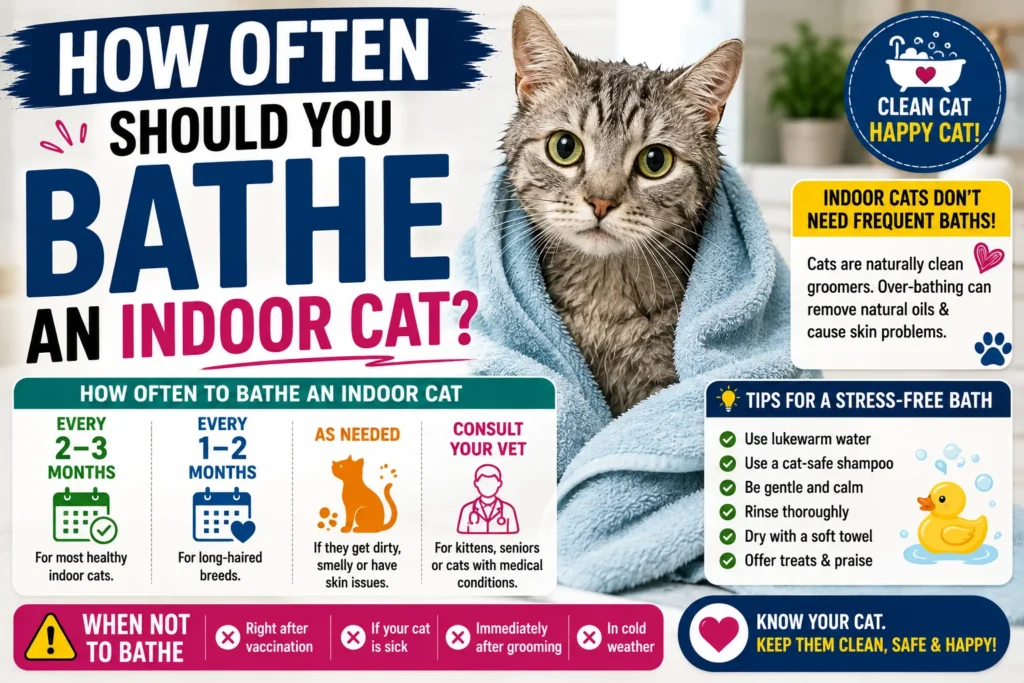
How Often Should You Bathe an Indoor Cat This is one of the MOST common questions I get from cat loving parents.
Perhaps you’re feeling ashamed of your infrequent baths, or perhaps you’re currently battling an enraged beast of a cat in the bathtub, silently questioning why you ever agreed. “I know my cat doesn’t stink why on earth do they need a bath? ”I’m here to reassure you: For the average indoor cat, in good health, regular baths are unnecessary. Not only can unneeded bath time cause stress for your cat and Damage their fur, But It can Damage our relationship.
The Short Answer Less is More
Clean Cats Groom Themselves Clean Bathe Indoor Cats Only As Needed If you own a healthy, self grooming indoor cat, you don’t need to establish a bathing routine for them at all. If you do opt to wash your feline, stick to the practice no more than every four to six weeks. Better yet, Many cats, with perfectly clean coats, get bathed from head to tail once every six months.
The bottom line: as long as your cat isn’t otherwise dirty, dealing with a skin issue or being encouraged to bathe by the veterinarian, don’t even think about baths.
Cats take care of business.
Why Your Cat Doesn’t Need Frequent Baths
The Self Grooming Superpower
Your cat have an in built cleaning product which far surpass any cat shampoo. Cats’ tongues are lined with small hooks that point backwards. This helps get rid of loose fur and dead skin and, together with it, dirt and fluff. These hooks also spread and massage body oils into their coat, and these oils, called sebum, can provide luster and make coats waterproof.
The Problem with Over Bathing
When you bathe your cat, you strip their hair of these important natural oils . This can result in your cat experiencing:
* Dry, Itchy Skin The removal of the necessary oils can cause skin irritation and flaking .
* Greasy and Dull Hair When the skin is dried out in this manner, it often goes in overdrive, producing more oils in response to help replace the missing ones, causing the hair to appear greasier rather than more clean .
* High Levels of Stress and anxiety Bating is generally traumatizing to cats, and while this will of course make your furry friend miserable, high stress is not good for your pet in the short-term or in the long-term. If your pet experiences trauma, their immune system becomes significantly depleted, not to mention your cat will lose faith in and respect of your judgement .
Given all of this, most veterinarians and the following
tips: including myself, rarely recommend routine bathing for feline patients .
When Bathing is Actually Necessary
It is not necessary to give a daily bath but there are times when it is necessary or desirable.
They’ve Ended Up in Something Sticky: If their fur is coated in something sticky, smelly, or hazardous (such as paint, sap, or potent substances) a swim is needed to wash it away.
Medical problems: your Vet may recommend a medicated bath for fungal infections, allergies or fleas. This is a treatment and not a grooming routine.
Senior or Overweight Cats: arthritis or obesity could prevent a cat from grooming painful or unreachable areas such as the back or rump. Assist as needed.
Hairless Breeds (e.g., Sphynx): Since the lack of fur prevents the variety from absorbing skin oils, these cats will need to be bathed routinely about once every one to two weeks.
Bad mats: can be very painful to a long-haired cat. Sometimes a bath (then dry) can help to loosen them up before combing through.
Recommendations for Different Scenarios
A Better Alternative Brushing
Longhaired Cats 2 Brush Daily or several times a week This practice will save your feline from painful tangles or mats. Short haired Cats 1 Brush them weekly to groom loose cat fur, minimize hair balls and oils. Regular brushing is the healthiest approach in hygiene you could approach you feline without bathing them, it’s safe, non stressful, bonding with you kitty.
If You Must Bathe: A Few Crucial Safety Rules
If you absolutely have to bathe your cat follow these guidelines so that it is as stress free and safe for them as possible:
Use ONLY cat safe shampoo: DO NOT use human shampoo, dish soap, or even baby wipes. The pH is wrong and can cause horrible skin irritation 4, Dawn Original is seen as safe for pets in certain situations but should only be used on rare occasion and you should always ask your vet 4. The best solution is a cat-specific pH balanced shampoo 4.
Use lukewarm water: Use lukewarm water not hot or cold, it can be very uncomfortable for a cat
Avoid the face: Don’t let water or soap get in their face, ears or eyes 4.
Rinse, Rinse, Rinse: If you don’t rinse it all the shampoo left on the cat can be irritating and even toxic if they ingest it while cleaning themselves 4.
For More Info : Is Coconut Oil Safe for Dogs Skin 2026