How to Treat Dog Dandruff and Dry Flaky Skin?
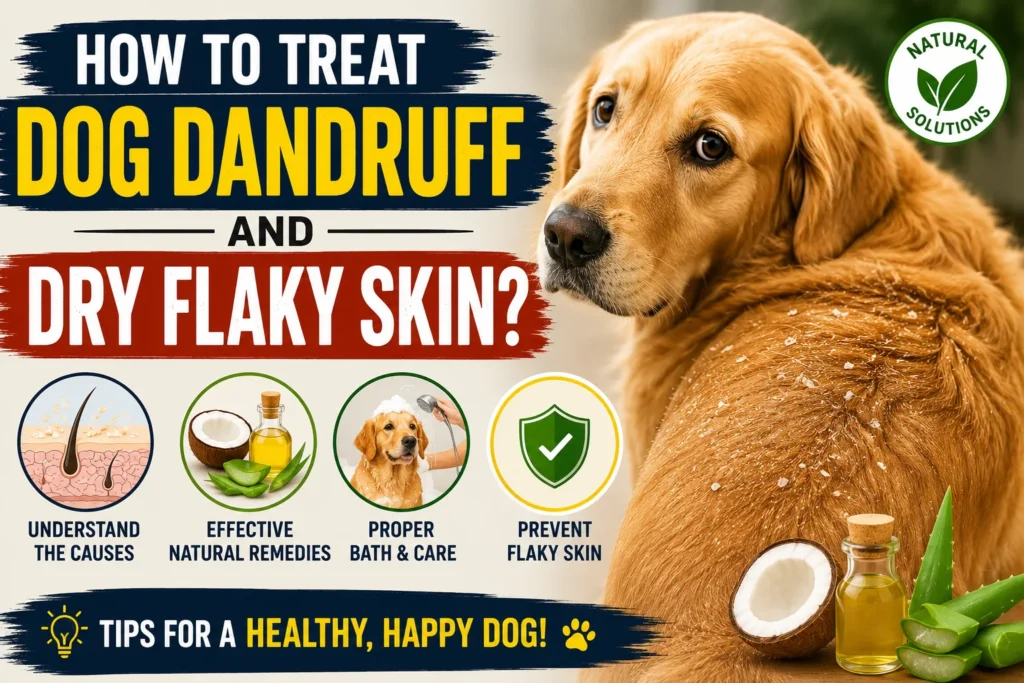
How to Treat Dog Dandruff and Dry Flaky Skin? As a veterinarian, perhaps the most frequently voiced pet owner worry that reaches my ears is: “My dog has dandruff and dry, flaky skin-what do I do?” This is perfectly reasonable worry. Beyond just looking bad, the existence of dandruff in your dog is often evidence that your canine’s largest organ his skin is suffering. Dandruff in dogs is variable and it’s can be innocuous to quite a serious issue.
How to Treat Dog Dandruff and Dry Flaky Skin?
1. First Step: Know When to See the Vet
Home Remedy 1: Rule out underlying medical causes. The good news is that most cases of light dandruff are relatively simple, but flakey skin can be a sign of Parasites.
Walking Dandruff: A mite known as walking dandruff or Cheyletiella results in very intense scaling and is highly infectious (to other animals in your house and can spread to people too)!
Hormonal Imbalances Hypothyroidism: an under-active thyroid or Cushing’s disease typically cause dull, dry hair coats and flaky skin, in addition to increased weight or lethargy in senior dogs.
Bacterial and fungal infections: normally yeast skin infections, which make flaky, crusty, dry red patches with inflammation. Food and/or environment allergic reactions can make a dog’s skin feel dry and irritated and become flaky. Call the Vet If you find hair loss, the dog seems to be painful or listless, their skin is red or inflamed, you smell something odd or you see open sores you need to have your veterinarian perform skin scrapings, a blood test or cytology, etc., in order to get an accurate diagnosis.
2. Fix the Root Causes of Dry Skin
Now that the vet has cleared you of any issues, you just need to narrow down the lifestyle factors responsible. 5 Bathing Blunders Most pet owners get the frequency wrong. Over-bathing a dog, especially using human shampoos which are more acidic than those made for canines (a dog’s pH is more alkaline) can strip natural skin oils and result in flaky skin.
What to do?
Use a PH-balanced dog friendly shampoo, bathe only one a month and only if needed. Unless told by yourvet to bathe at shorter intervals. Only ever use lukewarm water.
Low humidity: This can affect your dog’s skin the same way as yours, particularly in the winter when you rely heavily on central heating.
What to do?
Place a humidifier in the room in which your dog sleeps; it makes a huge difference to both their skin and their coat.
7 Unhealthy diet About 35 per cent of the protein a dog eats is put to use building and repairing its skin and coat. Deficiencies in Omega-3 and Omega-6 essential fatty acids are directly linked to a dull and dry coat.
What to do?
Feed a quality, kibble made with animal protein as the first ingredient. A quality Omega-3 fish oil supplement (EPA/DHA) for dogs will help boost your dog’s health over four to eight weeks.
3. Topical Treatments and Home Remedies for Dog Dandruff
After you’ve treated the cause, try these pet-approved remedies on the skin.
A. The Soothing Oatmeal Bath
Oatmeal provides a barrier that seals in moisture and othes itchiness naturally. You’ll want to grind plain, unflavored oats to a very fine consistency, and then add to warm bath water and let your dog soak for 5 to 10 minutes, then rinse him well to prevent the residue from sticking to the skin .
B. Medicated Shampoos (For Stubborn Flakes)
An anti seborrheic shampoo from your veterinarian If moisturizing shampoos haven’t proven effective, your vet may prescribe one of these antiseptic/keratolytic shampoos.
It works on: Dry flakes look for ingredients with sulfur or salicylic acid in them The product in this picture is keratolytic in nature which means that it helps remove those dead cells (dry flakes) from your skin.
For Greasy Flakes: For the oily type of dandruff, which consists of a greasy, waxy scale, a shampoo containing benzoyl peroxide is recommended for grease breakdown and thorough cleaning.
How it Works: As with most types of medicated shampoo, these should typically be lathered into the fur, allowed to remain on the skin for ten to fifteen minutes and rinsed completely, followed by a dog-friendly conditioner designed to address dry, flakey skin.
Also Check: Why Is My Dog Suddenly Scared of Loud Noises?
C. Topical Moisturizers and Sprays
While they are in-between-bath times, make use of hydrating mousses and sprays approved by your veterinarian. Research have shown that the topical remedies that include active substances these as Adelmidrol have helped alleviate itch and dandruff in just two weeks . To comfort any dry patches, make use of natural aloe vera gel without additional preservatives.
4. The Power of Brushing
Brush your dog It boosts circulation and encourages the distribution of natural oils called sebum, from the roots of the hairs to the tip, which lubricate your dog’s coat as if it were a natural conditioner .how often? Ideally once a week for dogs with short hair, once a day for dogs with long or thick hair, which tend to matt up .what kind of brush? A brush with a bristle-filled surface for short coats, and a Slicker brush for dogs with longer or curly hair.
Frequently Asked Questions (FAQs)
Can I use human dandruff shampoo on my dog?
No. The pH of human dandruff shampoo is different and generally more acidic, making it more irritating to dogs than it is for humans. It can also strip natural skin oils and lead to increased skin issues.
How do I know if it is just dry skin or walking dandruff mites?
If you see your dog scratching their skin a lot and large pieces are peeling or moving on your dog’s back and neck areas, this may be “walking dandruff” which is technically Walking Dandruff Mites. This contagious condition requires immediate veterinarian care.
What natural oils can I use on my dog’s dry skin?
Coconut oil has amazing benefits and can be topically applied or mixed in with a dog’s food to promote healthy, hydrated skin from the inside out. Vitamin E is another good oil that is safe for topical application on your dog’s nose and paws.
Does coconut oil help with dog dandruff?
Yes! Rub coconut oil directly on the dog’s flaky areas to soothe and moisturize the skin from the outside in. Adding it to food is another beneficial way to introduce fatty acids to help support skin health.
Why would a dog have dandruff in winter?
This is called “seasonal xerosis” because as the weather gets cold and humidity decreases inside, due to heating, it draws moisture from a dog’s skin. Humidifying the air and supplementing with an omega 3-rich product is a solution.
Can a food allergy contribute to dandruff?
It certainly can. Although it’s not usually the first cause of it, food allergies can also be the reason a dog’s skin is unhealthy, contributing to a dull coat, flaky, dry dandruff, or both.
How long will it take for fish oil to start helping a dog with dry skin?
Fish oil supplements typically take anywhere from 4-8 weeks before you can expect to see a change in a dog’s lipid barrier of the skin and consequently reduce dryness.
Can stress or dementia cause dog dandruff?
The more common issue is a dog who has become too stressed or who suffers from canine cognitive dysfunction (which may make the dog too “confused” to groom) may simply neglect his routine of grooming. This can lead to a dry, matted coat, accumulation of dead skin cells, and ultimately, dandruff.
Are there any ingredients that treat the dandruff on my dog?
Ingredients used to treat the dry, flakey dandruff on dogs include; colloidal oatmeal, sulfur, aloe vera and salicylic acid. Ingredients to help dry grease dandruff on dogs would be the ingredients containing benzoyl peroxide and/or selenium sulfide.