Why Is My Dog Poop Black And Tarry?
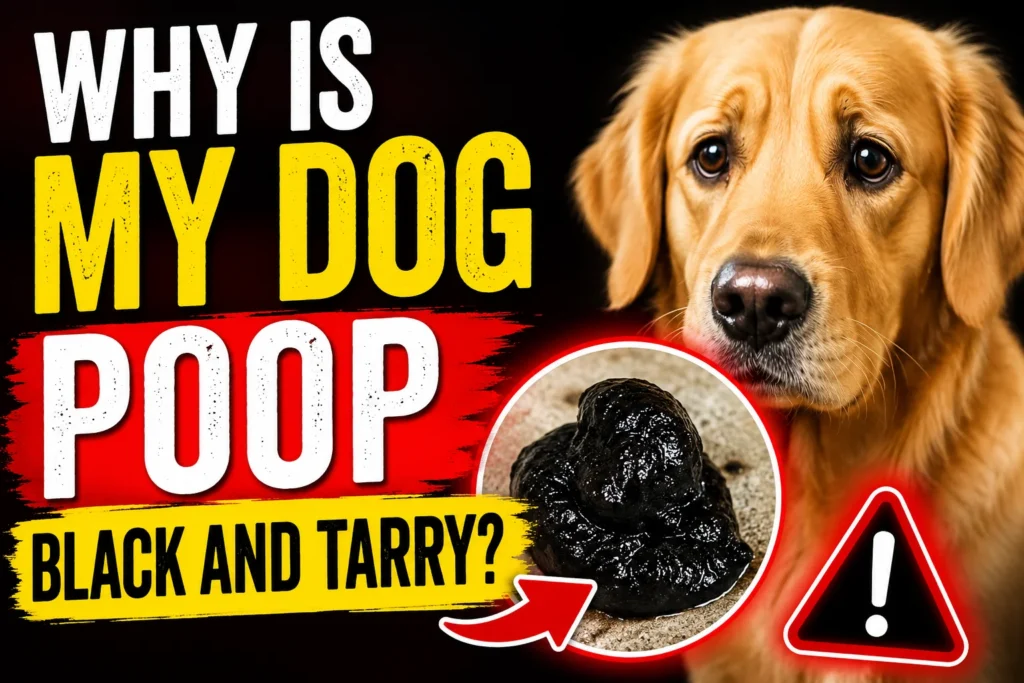
Why Is My Dog Poop Black And Tarry? If you’ve ever noticed black, tarry looking stool from your canine companion, you likely did what most concerned pet owners would and hit the panic button. Melena is the medical term that describes black, tarry stool in your dog. Melena usually indicates blood is somewhere in the digestive tract, which is cause for concern in most cases. Here is what you should know about black, tarry stool in dogs.
What is Melena in Dogs?
Melenais the medical term for black, tarry looking stools that are sticky and have a very strong, metallic smell. This happens when digested blood appears in your stools. The bleeding occurs in the upper gastrointestinal tract-the stomach or small intestine.
While the blood makes its way down the digestive system, stomach acids and enzymes alter its color from red to a deep, tarry black.
That is distinct from fresh red blood in the stools (hematochezia), which usually reflects the presence of the lower gastrointestinal tract such as the colon or rectum bleeding. They cannot be considered a simple symptom as they do not appear without reason. That is whymelenashould not be taken lightly and will need veterinary attention as quickly as possible.
Common Causes of Why Is My Dog Poop Black And Tarry?
A number of issues can lead to melena in dogs. Knowing about some of the possibilities will help your veterinarian by providing them with detailed history of your pet, and it is not recommended to attempt to manage the issue without the help of veterinary care.
1. Gastrointestinal Ulcers
The most common cause of bleeding into the upper GI tract is the ulcer. The ulcer is an open area in theliningof either thestomachor thesmall intestine, and as it occurs, it may also cause a small amount of bleeding into the GI tract. Causes of Ulceration include:NSAID or Steroid Mediation – Drugs like carprofen and meloxicam (NSAIDs) and prednisone (a steroid) are known ulceratingmedicationsof thestomachOther Factors – Stress, infections, and some other health conditions also affect a dog’s risk for ulcers.
2. Ingestion of Foreign Objects or Toxins
As a notorious garbage mouth, dogs will eat objects that definitely don’t belong in their diets. Sharp objects ( such as bone pieces or toys), harmful materials, or certain metals and other heavy materials might injure or chemically damage your dog’s lining of the GI tract and result in internal bleeding. Poison consumption, especially rat poison, can interfere with your dog’s blood coagulation ability, and this may cause considerable internal bleeding .
3. Tumors and Cancer
Growths or masses inside the esophagus or small intestine and of course growths or tumors within the stomach or throughout the gastrointestinal tract can develop and bleed simply as the tumors grow larger or as they eat their way through surrounding tissue .
4. Severe Infections and Parasites
- Parvovirus: a serious systemic illness. Causes bleeding throughout the entire body which in turn can lead to the accumulation of bloody, tarry feces.
- Parasites: intestinal parasites such as hookworm.
- These attach to theintestinal tract, as well as their parasites drink some blood.
- Melena: this blood is secreted with stool.
5. Systemic and Clotting Disorders
- Bleeding disorders such as thrombocytopenia (low platelet count) or a lack of a clot factor (e.g. Von Willebrand’s Disease), as the body will no longer effectively stop itself from bleeding.
- Organ failure in severe kidney and liver cases the digestive system lining can be damaged resulting in bleeding .
6. Ingested Blood
Sometimes, the blood isn’t from the GI tract itself. Some bleeding wounds on your dogs mouth, nose, and/or throat can be swallowed. The body will actually digest this blood which can result in your dog passing it as melena.
Also Check: What To Do If A Puppy Eats A Small Piece Of Plastic?
Non-Medical Causes (Ruling Out False Alarms)
Here is what to examine first: rather than hoping you do not have a medical concern: What are you eating? Eating big portions of food colored black – for example , black liqorice , although the very own blueberry or food dishes colored with black dyes or similar may result in brief , black colored stool .
What are you taking?
Certain drugs , as for instance iron pills or medications such as as , might result in blackened stool .
Should the feces be black and tarry ( sticky ) , the cause can be melena from digested blood and have unpleasant odor. If black fecal content shows consistent composition without obvious abnormalities on canine conduct , your canine might have consumed one thing coloured black .
Dangerous Accompanying Symptoms to Watch For
Passing black, tarry stool is concerning in and of itself. If coupled with any of the following, however, it’s a veterinary emergency; get your animal to the vet immediately:
- Abdominal pain or bloating
- Increased respiration rate or heart rate
- Paleness (especially noticeable in the gums-it’s indicative of blood loss-anemia)
- Vomiting (especially if it appears like coffee grounds or contains blood
- Poor appetite
- Lethargy/weakness
How is Melena Diagnosed?
When you visit the vet, they will perform a thorough physical exam, including a rectal exam, and take a detailed history . To find the source of the bleeding, they will likely recommend several diagnostic tests:
- Fecal Exam: To check for intestinal parasites .
- Blood Tests (CBC and Chemistry): To assess for anemia, organ function (liver/kidney), and infection .
- Clotting Profile: To rule out a bleeding disorder .
- Imaging: X-rays or an abdominal ultrasound can help identify tumors, foreign bodies, or other abnormalities .
- Endoscopy: In some cases, a camera is passed into the stomach to directly visualize the source of the bleeding .
When to See a Vet
The long story is to do that as quickly as possible. If you spot black, tarry droppings in your dog’s stool, don’t just watch and wait. Unless there’s a clear-cut, non-serious reason, such as recently changing their diet and your dog being perfectly healthy otherwise, it’s best to get your vet on the line right away.
Frequently Asked Questions (FAQs)
What can it mean for my dog to poop tar-like black poop?
It signifies that there’s digested blood in the poop, and blood is a warning of internal bleeding in the dog’s gastrointestinal (GI) system-specifically, within the stomach or upper small intestine.
If your dog pooped black-like-tar poops, should I consult my vet immediately?
You should consult a vet whenever you encounter that in your dog’s poops. It’s possible and often that the cause may be dietary. Yet, it could be fatal; hence, immediate attention is necessary.
What’s melena versus black poop?
In medical terms, melena is dark, black, and tarry to the touch poop caused by blood that has been broken down by a canine body in the GI system. Meanwhile, dog food may make poop turn dark, black color, but the poops won’t be black and sticky.
Could there be any specific dog food that would result in a black-and-sticky dog poop?
While there is some dog food with added coloring pigments or high concentrations of iron that can cause your canine’s poop to turn dark-but not to a state where it’s tar-like and gooey-it’s important that you don’t discount this as the reason behind your pet’s melena. In reality, other underlying medical issues could contribute.
What meds are responsible for black-and-tarry dog droppings?
NSAIDs like carprofen or steroid medications may give your pet gastrointestinal bleeding, prompting your canine to excrete blood via the poop. Meanwhile, others like Pepto-Bismol as well as supplements containing iron can produce black poop but usually do not bring health risks.
Can a dog’s black poop result from eating a bone?
Yes. Swallowing dog bone pieces-especially when they’re sharp-can trigger damage in the canine’s GI tract, leading to bleeding . Additionally, ingestion of marrow from such bones may trigger your pet’s poop to go darker.
What steps will my vet take if my dog shows signs of black poop?
Your veterinarian will typically complete physical, behavioral, as well as blood and fecal tests on your pet to get to the bottom of the condition. X-rays and ultrasounds can also be done if the source cannot be located through non-invasive means.
How is the medical melena treated in a canine?
Treatment is dependent on the underlying cause of melena in dogs. Options range from taking stopping dog-NSAIDs and steroid drugs- and beginning to treat ulcer cases using medications that can coat the stomach, such as sucralfate and gastro protectants .
Can my canine breed predispose it to the GI condition?
Several breeds like miniature Schnauzers are inherently more prone to the gastrointestinal problem known as hemorrhagic gastroenteritis, or HGE-the common reason for bloody dog poop.