
Can You Add Unflavoured Gelatin to Homemade Cat Food for Joint Health 2026?
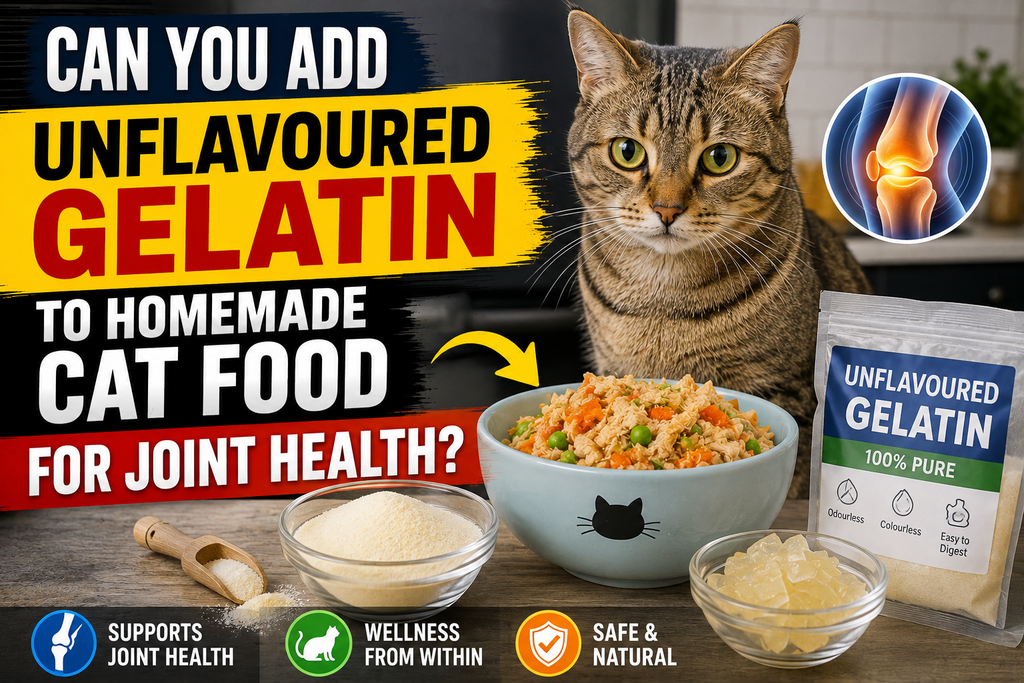
Can You Add Unflavoured Gelatin to Homemade Cat Food for Joint Health?.Yes, plain gelatin can be given to cats as a joint supplement with their homemade diet but is very specific and must be given in certain amounts. Unflavored gelatin contains both the collagen and the essential amino acids that cats were adapted to eat in entire prey animals, and correctly given, it’s a very affordable and natural source of support that an aging joint needs and mobility improvement in older felines.
There is quite a catch, of course and if it’s not given in a certain way, it will be of no help to them. Let me tell you how to give it correctly-without causing harm and with full benefits.
Why Gelatin Benefits Cat Joints
The gelatine protein found is based on an animal based collagen, which has similar structure to your cat’s own cartilage and bone. It is enriched with amino acids, such as glycine and proline to assist:
- Comfortable & Mobile seniors
- Skin, coat, and nail health
- Gut health and protein absorption
For cats with arthritis or age-related stiffness, adding gelatin to their diet may help them move more comfortably . It also provides a natural way to increase hydration, especially for cats who don’t drink enough water.
Can You Add Unflavoured Gelatin to Homemade Cat Food for Joint Health?
1. Choose the Right Type of Gelatin
Use only plain, unflavoured gelatin never Jell-O or any sweetened, flavoured varieties, which contain sugar and artificial ingredients toxic to cats .
Look for:
- Flavorless beef/pork/chicken gelatin
- no other seasonings, salt, or sugar should be added
- Brand name and good quality gelatin
2. Follow the Correct Dosage
Feeding recommendation: Approximately ¼ teaspoon of gelatin powder per cat per day, or 1–2 tablespoons per 1 kg (2.2 lbs) of meat in a homemade recipe .
This is a supplemental amount gelatin should not replace complete nutrition.
3. Use the Proper Preparation Method
The “blooming” technique is essential for smooth results:
Step-by-step:
- Sprinkle your gelatin powder on the cold water
- Allow it to sit without stirring for about 3-5 minutes-the gelatin will absorb the water and appear “jiggly.”
- Gently warm your broth or food liquid (warm, not boiling, boiling can damage beneficial proteins)
- Whisk the bloomed gelatin into the warm liquid until completely dissolved
Never dump dry gelatin directly into hot liquid it will create stubborn, rubbery clumps that won’t dissolve .
4. Serve Safely
- Always cool completely before serving never give hot food to your cat
- Mix 1–2 tablespoons of the gelled gravy into wet or dry food
- Refrigerate leftovers in an airtight container for up to 5 days, or freeze in portion-sized cubes
Also Check: The Ultimate Guide to Protecting Your Dog’s Paws from Winter Ice and Salt Burn
Important Safety Considerations
What to Avoid
No harmful ingredients: The bone broth or liquid you mix with gelatin must be 100% free of salt, onions, garlic, and any seasonings bthese are toxic to cats .
Don’t replace complete nutrition: Gelatin is a supplement, not a balanced meal. Cats are obligate carnivores and require taurine, calcium, and other nutrients . If you’re feeding homemade food regularly, work with your veterinarian to ensure proper supplementation .
When to Consult Your Veterinarian
- If your cat suffers from a disease such as kidney disease, diabetes, or IBD this is something to take into consideration regarding the food.
- Other medications always check with your vet before giving your cat new supplements, as some may interact.
- Some cats do not like changes and will not eat the new food if the texture is different.
Sample Recipe: Simple Gelatin Gravy Topper
This easy recipe can be drizzled over your cat’s regular food:
Ingredients:
- 1 cup pet-safe bone broth (no salt, onion, or garlic)
- ½ teaspoon unflavored beef or pork gelatin
- 2 tablespoons cool water
- Optional: finely shredded unseasoned cooked chicken or tuna in water
Instructions:
- Sprinkle gelatin into cool water and allow to bloom for 3-5 minutes
- Warm broth gently (do not boil)
- Whisk bloomed gelatin into warm broth until dissolved completely
- Cool to room temperature
- Store in fridge it will set like a gel
- Scoop 1–2 tablespoons over your cat’s meal
The Bottom Line
Unflavored gelatin can be a safe, beneficial addition to homemade cat food for joint support when used correctly. The key rules are:
- Use plain, unflavored gelatin only
- Follow proper dosage (¼ tsp per cat per day)
- Always “bloom” the gelatin first
- Use bone broth free of onion, garlic, and salt
- Cool completely before serving
- Consult your vet, especially if your cat has health conditions
With all of these things in mind, gel is an incredibly helpful and basic tool that can be used to ensure your cat is hydrated, able to move about, and feels more comfortable! It is a must have for the senior, or picky, cat.
Frequently Asked Questions
Is unflavoured gelatin safe for cats?
Yes, plain unflavoured gelatin is safe for cats when used as a supplement in proper amounts. However, it should only be supplemental not a primary protein source. Always avoid sweetened or flavoured gelatin products like Jell-O.
How much gelatin can I give my cat daily?
The general guideline is about ¼ teaspoon of gelatin powder per cat per day, or 1–2 tablespoons per 1 kg of meat in homemade recipes . Start with a smaller amount to see how your cat tolerates it.
Does gelatin really help with arthritis in cats?
Gelatin contains collagen and amino acids that support cartilage and joint tissue. Many cat owners and veterinarians report benefits for senior cats with joint stiffness when using gelatin appropriately . However, it should be part of a comprehensive joint care plan.
What’s the best type of gelatin for cats?
Unflavoured beef, pork, or chicken gelatin works well. Choose food-grade gelatin without added salt, sugar, or artificial ingredients. Some pet-specific products like “Chicken Jiggles” are also available.
Can I use bone broth instead of gelatin powder?
Bone broth contains some natural gelatin but not as much as concentrated powder. For noticeable joint benefits, using both unsalted bone broth plus added unflavoured gelatin is more effective.
How do I prevent clumps when adding gelatin to cat food?
Always “bloom” the gelatin first sprinkle it over cool liquid and let it sit for 3–5 minutes before whisking into warm liquid. Never add dry powder directly to hot food.
Can I give gelatin to kittens or cats with health issues?
Kittens generally don’t need joint supplements. Cats with kidney disease, diabetes, or IBD should only receive gelatin under veterinary guidance . Always consult your vet first.
How long does homemade gelatin cat food last in the fridge?
Prepared gelatin gravy keeps for about 5 days in an airtight container in the refrigerator. For longer storage, freeze in silicone ice cube trays for up to 1 month.
My cat won’t eat food with gelatin what should I do?
Start with tiny amounts and mix thoroughly. Some cats prefer a thinner consistency you can dilute the gelatin with more broth. The texture may take getting used to, especially for picky eaters.
Will gelatin make my cat’s homemade food nutritionally complete?
No. Gelatin is a supplement, not a complete protein source. Homemade cat food must be carefully balanced with essential nutrients like taurine, calcium, and vitamins. Work with a veterinary nutritionist if you’re feeding homemade food as a primary diet.






One Comment