How to Help an Overweight Cat Lose Weight Safely Without Liver Damage?
How to Help an Overweight Cat Lose Weight Safely Without Liver Damage?.
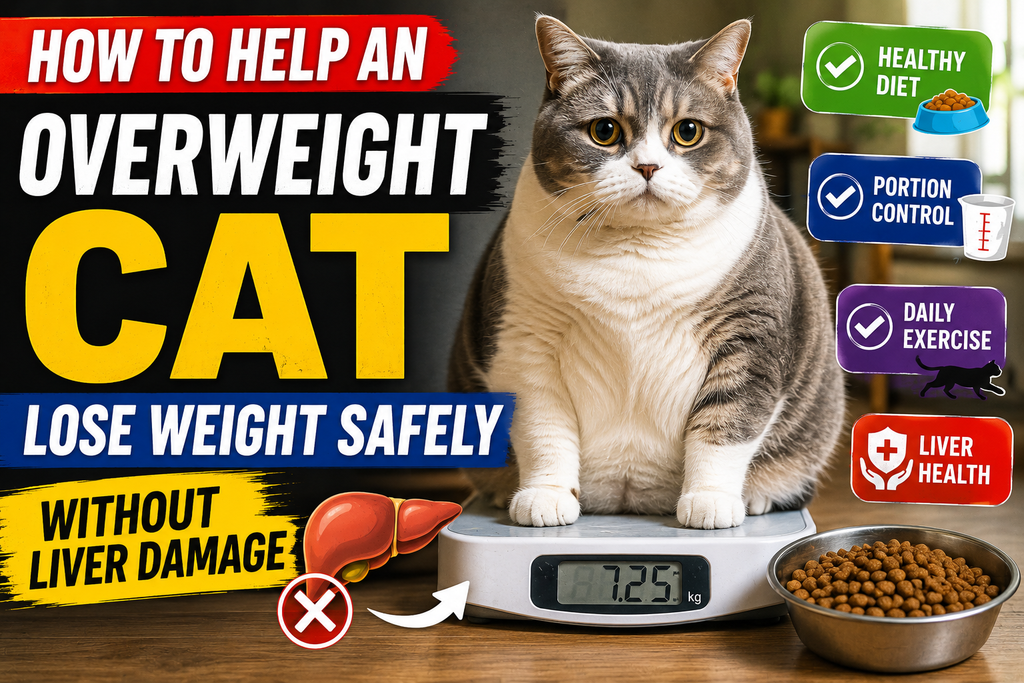
Of all the sensitive and common problems I deal with as your veterinarian, the overweight cat probably sits at the top of the list. If your friend, in addition to greeting you, also greets you as a furry butter ball, you’re in good company; A 2022 survey from the Association for Pet Obesity Prevention reported that 61% of cats are considered overweight or obese . That’s a lot of cats that have a health problem we, as owners, can help solve with a lot of love.
There’s just one catch.
Unlike with humans, an ‘inspirational,’ ‘crash’ diet is not only doomed to failure, it’s hazardous to their lives. The danger for a cat is an awful liver disease known as hepatic lipidosis, otherwise referred to as fatty liver disease. What happens in this terrible condition is the body, after it stop being fed or experiences weight loss in an already fat body, floods the liver with fat it can’t process quick enough and liver failure can be the end result .
Step 1: Confirm the Diagnosis with the Body Condition Score (BCS)
Before changing anything, you must establish a baseline. Veterinarians do not rely solely on the scale; they use a Body Condition Score (BCS), typically on a 1-9 scale where 5 is ideal .
You can perform a simple “hands-on” assessment at home:
- Feel for the Ribs: Place your hands on either side of your cat’s rib cage. Underneath the fur and skin you should feel the ribs, similar to touching the knuckles on the back of your hand. Press and if you need a lot of pressure to feel them, they are overweight.
- Look from Above: Stand over your cat. There should be a visible waistline that curves inward behind the ribs. If the outline looks straight or bulges outward, that indicates excess fat .
- Look from the Side: There should be a slight abdominal tuck. A hanging “belly” or a large fat pad swinging beneath the abdomen indicates obesity.
A cat is generally considered obese when it is 20% or more above its ideal body weight .
Step 2: Address the Immediate Danger of Hepatic Lipidosis
This is the most critical section of this guide. Cats must never be fasted or put on a starvation diet.
Why It Happens
In the case of the obese cat, these body fat deposits are huge. Should this cat then anorexia for 24-48 hours or reduce her energy intake too quickly, her body becomes so stressed about the fact that it has not eaten much that large amounts of body fat aremobilised and released to the liver. The liver releases body fat because fat makes the optimal nutrient when food is not readily available. To deal with the body fat, however, the liver uses protein and amino acids.
The mechanics of safe weight loss focus on preventing this by ensuring the cat continues to eat a balanced diet rich in protein to support liver function throughout the process. Any weight loss plan must be approached with the primary goal of keeping the liver safe.
Step 3: The Safe Weight Loss Strategy
The mantra for feline weight loss is slow and steady. A safe rate of weight loss is generally 0.5% to 2% of body weight per week (or roughly 1% per week/3-4% per month) . Rushing this process guarantees a trip to the emergency room.
Here is the formula for a safe plan:
1. Consult Your Veterinarian First
Schedule an appointment for a wellness examination before you ever consider shopping for a bag of “diet” food. Your veterinarian can check for an existing disease process – diabetes, hyperthyroidism, or arthritis for example – that may be predisposing your cat to becoming overweight or having trouble exercising. Then discuss a target calorie consumption rate for your cat and the ultimate ideal weight you wish them to achieve.
2. Choose the Right Food: High Protein, Low Carb
High protein and low carbohydrate diets is an overweight cat.
- Maintaining Lean Body Mass: Protein (over 40% metabolizable energy) is important. Muscle is metabolically active, and therefore burning calories. In overweight cats it also ensures the proper essential amino acids, to safely metabolize fat at the liver without lipodosis.
- Canned Food is Preferred: Dry foods are often high in carbohydrates and calories. Canned foods typically have a lower carbohydrate profile, higher protein, and a higher water content, which helps your cat feel full while eating fewer calories . A typical low-carb canned food ranges from 165-190 kcal per 5.5 oz can, making portion control easier .
Important: Look for veterinary therapeutic diets (like Royal Canin Satiety Support or Hill’s Prescription Diet Metabolic). These are specifically formulated with high fiber to reduce begging and high protein to maintain muscle. For example, Royal Canin’s Satiety formula boasts 34% crude protein and high fiber levels to help 97% of cats lose weight within 3 months while maintaining muscle mass .
3. Master Portion Control
The most common cause of weight loss failure is inconsistent portioning.
- Determine target caloric intake: Vet will tell you target caloric intake per day based on desired weight for cat-may only be as much as 130–150kcal per day for a large cat.
- Weigh the food: Please use a digital kitchen scale to accurately weigh the grams of food given, do not use a scoop which may throw off intake to double or half as intended.
- Stop Free-Feeding: Pick up the food bowl. You must switch to meal feeding. Divide the daily ration into at least 2-3 meals per day. This not only controls calories but also prevents the boredom and begging behavior associated with continuous grazing . Use a timer feeder if you are away during the day.
4. Control Begging with Satiety
The chances are that your cat will plead.
Solution: Feed her more fiber If you get your hands on a veterinary diet such as the high- fibre (approx. 14.6 per cent of crude fiber) Royal Canin Satiety Weight Management the natural fiber can keep your feline feeling full up between feeds, proving in trials to control begging in up to 82 per cent of weight loss patients.
5. Incorporate Exercise and Enrichment
While diet does 90% of the work, activity builds muscle and improves metabolism.
- Interactive Play: Aim for two 10-15 minute play sessions daily. Use wand toys, laser pointers (but end the session on a toy they can “catch”), or motorized toys to stimulate their hunting instinct.
- Puzzle Feeders: Use puzzle feeders for their meals. This forces them to “work” for their food, burning a few extra calories and keeping them mentally stimulated.
- Environmental Enrichment: Install climbing trees or cat shelves to encourage jumping and climbing .
6. Monitor Progress Religiously
- Weigh your cat weekly- either on a baby scale or on your vets scale (the same one is important). They should be losing about 1% of their body weight per week; you’ll need to add 5-10% more food if they are losing too rapidly (over 2%), or remove that much if they are eating too well (not losing weight).
- Adjust Monthly: You must adjust the food amount as the cat loses weight. Smaller cats require fewer calories to continue losing. Check back with your vet monthly for adjustments.
Also Check: Why Does My Cat Suddenly Stare at Me and Meow Aggressively?
FAQs
How can I tell if my cat is overweight or just “fluffy”?
Feel the ribs. If you cannot easily feel the ribs with a thin layer of fat over them, your cat is overweight. Stand above your cat; if they lack a waistline and look like a rectangle or have a bulging abdomen, they are likely carrying excess weight.
What is Hepatic Lipidosis and why is it a risk?
Hepatic Lipidosis (fatty liver disease) is a life-threatening condition where excess fat is mobilized into the liver faster than it can be processed. This happens when an overweight cat stops eating or loses weight too rapidly. It is a leading cause of liver failure in cats.
How fast is a safe speed for a cat to lose weight?
A safe and healthy rate is 0.5% to 1% of body weight per week (roughly 3-4% per month). For an average cat, this might look like just a few ounces a week. If they are losing weight faster than this, you risk triggering hepatic lipidosis.
What kind of food is best for helping an obese cat lose weight?
Canned food is generally preferred due to its high moisture content and low carbohydrate levels. Look for a high-protein, low-carbohydrate formula. The protein should be >40% of the metabolizable energy to preserve muscle mass, which is vital for a healthy metabolism.
Is dry kibble okay for weight loss?
It is generally not recommended for easy weight loss. Dry foods are calorie-dense and high in carbohydrates. While some prescription dry foods are high in fiber and protein, canned food is easier to portion control and has lower caloric density, allowing cats to eat a larger volume of food for fewer calories.
How do I stop my cat from begging all the time?
Switch to a high-fiber veterinary diet, which promotes a feeling of fullness. Divide the daily food portion into multiple small meals throughout the day (using a timed feeder if needed) to prevent long gaps where begging occurs.
My cat doesn’t like canned food. What should I do?
Transition slowly. Mix a tiny amount of the new canned food with the old food. Gradually increase the proportion over 7-10 days. You can also try different textures (pate vs. chunks in gravy) or warming the food slightly to enhance the aroma.
How many calories should a cat eat to lose weight?
This depends on the cat’s size and ideal weight. An average obese cat might need as little as 130-150 calories per day to start losing weight. Your veterinarian will calculate the precise number based on your cat’s Body Condition Score.
Should I increase exercise even if my cat is obese?
Yes, but carefully. Focus on short, gentle play sessions. Avoid activities that cause joint strain (like high jumps) initially. Wand toys and laser pointers are great for encouraging movement while allowing the cat to control the exertion.
Can my cat ever go back to free-feeding after reaching their goal?
Typically, no. Overweight cats often have a lower energy requirement than cats that have never been obese. Once the goal weight is reached, you must transition to a “maintenance” ration, which is usually about 30-40% more than the weight-loss ration, but still measured and portioned into meals to prevent weight regain.