What to Feed a Dog After Vomiting?
What to Feed a Dog After Vomiting? Watching your dog throw up is tough for any pet parent, and your immediate thought is often “How do I get him better, and what should I feed him?” Vomiting is often something that will clear up on its own, but it can also be a symptom of something far more severe. Fortunately, there’s a clear guide to what to feed a dog after throwing up, how to treat him during his recovery, and when you really should take your dog to the vet.
What to Feed a Dog After Vomiting?
Key Takeaways
- Wait before offering food Wait before you offer food, as this allows the stomach time to settle . When is it a fasting?
- Normally 4–12 hrs depending on size/age of dog is generally a suitable fast for a healthy adult dog to allow their digestive tract time to settle .
- Is he hydrated? Although he’s being fasted, he should have constant access to fresh, clean water. Give this to him in small amounts and often, to avoid making him gulp and vomit up even more .
- What should he be given once he’s fasting? Try to give him small amounts of a bland, easily digestible diet, like boiled chicken with plain white rice .
- Smaller and more frequent meals Continue to give him small amounts of this bland food every couple of hours .
- Red flags If the vomiting is constant, or there’s blood, lethargy or he’s showing any other ‘worrisome’ symptoms, then you should see the vet straight away .
Should You Feed a Dog Immediately After Vomiting?
The answer is not. Whether it’s a little upset or a potentially fatal emergency, giving the dog’s stomach rest is always the best first step.
The Importance of Resting the Stomach
A dog vomits because their stomach and gastrointestinal system are inflamed. Giving them food again before the stomach and intestines are able to settle could make them throw up again, hindering recovery. The best way to aid your dog’s digestive system recovery is to rest it.
When to Fast and for How Long?
However, for a healthy adult dog that has vomited a couple of times and seems perfectly normal otherwise, you can take your dog’s food away for a certain amount of time, called a “fast.” Here are recommended fast times based on age, size, and breed :
Pups and Small Adult Dogs (4-6 Hours): For puppies and adult dogs of the small breeds, withhold food for 4 to 6 hours . Giant and Large Adult Dogs (Up to 12 Hours): For giant and large breeds of adult dogs, withhold food for up to 12 hours .
Who Should NOT Be Fasted: Any dog that is not a healthy adult dog especially puppies under one year of age, and those with underlying conditions such as diabetes should not be fasted long-term and you should call your vet if you are in doubt.
Hydration is Non-Negotiable
While food is prohibited during this time, water is important. Dogs who vomit are likely to become dehydrated and may lose fluid very quickly. Provide a fresh source of clean water at all times. If your dog drinks a large quantity in a single gulp, offer small quantities more frequently to prevent them from “tanking up” and re-vomiting.
Also Check: How To Tell If A Dog Has A Fever?
The Best Bland Diet for Your Dog’s Upset Stomach
And once your fast is over, it’s crucial to gently reintroduce your body to food. When it comes to healing, a mild diet of bland foods is the key – it will be easy for you to digest and soft on your stomach .
What Exactly is a Bland Diet?
Bland foods and snacks are healthy foods which do not contain high levels of fat but contain nutrients and are easy to digest to do not further aggravate the stomach lining. This plan should not be adhered to for long as a method of feeding for dog; it should be undertaken for only a few days for recovery purpose and it is a completely healthy and harmless plan for short term.
The Top Vet-Recommended Bland Diet Options
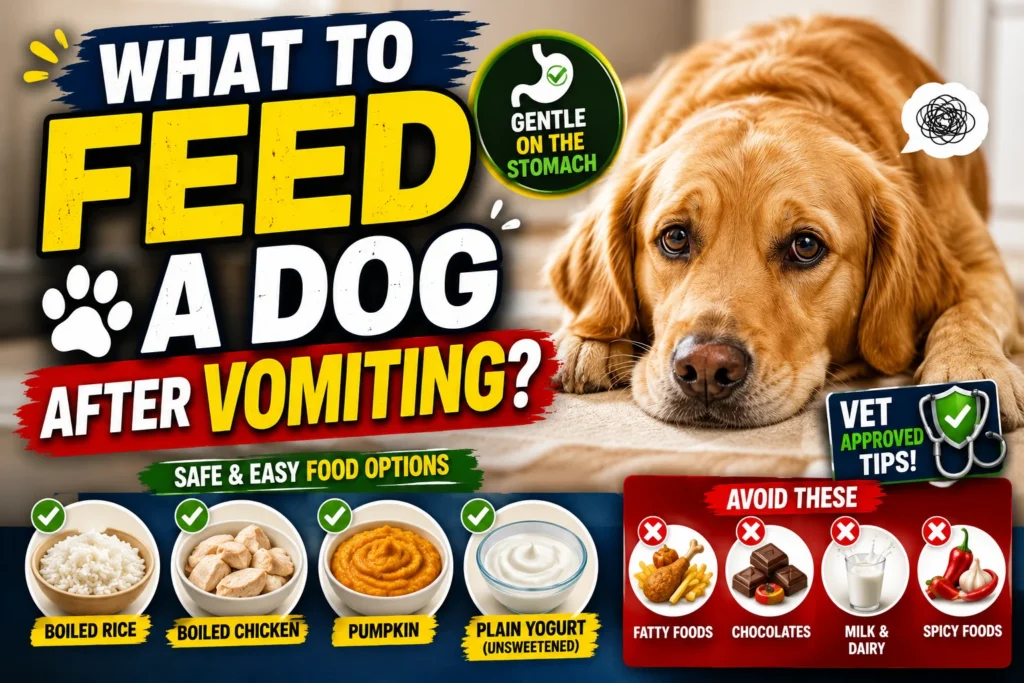
The Top Foods to Feed a Dog After Vomiting: 1. Boiled Chicken and White Rice This is the most well-known choice and the most frequently recommended by vets and owners alike. How to prepare: Use boneless, skinless chicken breast and boil until completely cooked through.
Avoid any salt, seasonings or oil: Boil white rice until it’s soft. Mix approximately one part chicken with two parts rice.
Plain, lean Ground Turkey or Hamburger meat: if your dog does not like chicken If chicken doesn’t agree with your dog, you can substitute very lean ground turkey or plain, lean hamburger meat. Ensure that it is thoroughly cooked and all of the fat has been drained off.
Plain, Boiled Potatoes or Sweet Potatoes: you can mashed this plain potato or plain sweet potato for them as a substitute to rice for carbohydrates.
Plain canned Pumpkin not pumpkin pie: filling you can even try plain canned pumpkin it is great source of soluble fiber in their diet to manage their bowls from getting constipated, especially in cases where their stools might be watery.
Sensitive stomach dog foods for you may also choose commercially produced, diet formulated specifically for your dogs for “sensitive stomach.” For the most accurate and specific treatment plan for your dog after a vomit episode, please always consult your veterinarian.
Foods to Absolutely Avoid
Spices, Salt, and Seasonings. These are not ideal for any dog but they will also irritate an upset tummy. Fatty Meats and Oils High fat content in meats or cooking oils may induce pancreatitis. Onions and garlic Dogs cannot handle these items they are toxic. Dairy While some dogs are fine with it, many can’t digest it very well and it can increase an upset stomach.
How to Reintroduce Food: The Gradual Method
Just as what you eat is as crucial as what you eat, how you eat the food that you reintroduce to your system after a fast. Take the following step by step instructions when breaking your fast.
Step-by-Step Feeding Guide
- Bland diet: 1 Day. Feed dog 10 percent of his regular amount for meals, wait a couple of hours. If not vomiting feed him 25 percent and wait a few hours then another 25 percent if he is doing fine .
- 2 nd Day: Feed him 50 percent and wait a couple of hours if he is doing fine then feed another 50 percent.
- 3rd Day: Feed your dog the whole amount in three or more small feedings . Fourth Day and onward. Start feeding dog his normal amount along with some bland food for 3 to five days
Monitoring Your Dog’s Progress
Monitor your dog closely after each small meal. If your dog keeps the food down, proceed with the diet. If theyvomit, feed them nothing more and consult your veterinarian. A temporary dip in your dogs energy level is expected, however it should improve over time.
When to Call the Vet: Red Flags to Watch For
Although you can usually treat most episodes of vomiting in the comfort of your own home, you should not attempt home remedies if your dog displays any of the following symptoms:
- Presence of blood in his vomit (which is often a sign of serious inflammation or internal bleeding);
- Frequent vomiting, meaning he has thrown up three or more times in a 24-hour period;
- Weakness and lethargy- your dog is very tired and weak, appears confused, or in pain;
- Other serious signs, such as significant diarrhea, inability to hold down water, distended belly, or painful straining to vomit without expelling anything (this is a classic sign of a life-threatening bloat);
- Pre-existing health conditions, such as diabetes or pancreatitis, or the dog is very young or old;
- No improvement-your dog hasn’t gotten better in 24 hours or is actually worsening.
When in doubt, it is always safest to err on the side of caution and contact your veterinarian or emergency veterinary clinic.
Frequently Asked Questions (FAQs)
Which is the best bland diet for a dog that has vomited?
The best bland diet consists of plain boiled skinless, boneless chicken and white rice. It is a low fat, easily digestible and safe diet that can be made easily for your dog.
How long after vomiting should I give my dog food?
In a healthy, adult dog it’s best to restrict food from between 4 and 12 hours depending on the size. Puppies or small breeds should be restricted from food for about 4 to 6 hours and larger dog breeds for 8 to 12 hours.
Is my dog allowed to have water after vomiting?
It’s very important to provide fresh, cool water to prevent any kind of dehydration. Let your dog have little bits at a time to make sure they don’t drink to much too quickly.
My dog doesn’t want to eat the bland diet.
It is not uncommon for a dog not wanting to eat after vomiting. Try hand-feeding, offering it on a plate or plate; you may even need to heat it up slightly to make it more enticing for your dog to want it. If your dog doesn’t eat after a day, give your vet a call.
Can I give my dog over the counter dog food if they have an upset tummy?
Many food producers create highly effective sensitive stomach, or GI sensitive food which you can find on the shelves at you local store. These are specifically balanced for animals with sensitive digestive systems.
Is it alright to give my dog pumpkin after vomiting?
Plain canned pumpkin ( NOT pumpkin pie filling) can be useful for your dog in certain circumstances as it can help to make a dog’s stools harder and may be very helpful in the event your dog has an upset stomach that includes diarrhea.
For how long do I need to give my dog a bland diet?
A bland diet for your dog generally needs to be fed for about 24 to 48 hours, or until vomiting has resolved. After this you can begin reintroducing your dogs’ regular food.
Could my dogs’ vomiting be from food allergies?
While food intolerances and allergies can lead to vomiting, vomiting as a symptom tends to be more consistent when this is the cause. If vomiting continues after food, your vet might discuss elimination trials with you.
Could my dog be vomiting because of stress?
Absolutely. Just like in people, stress and anxiety can take a physical toll on a dog and cause gastric upset and vomiting. Reducing stressors in your dogs environment might help!
Why is my dog throwing up yellow bile?
Yellow bile in your dogs’ vomit usually means that their stomach is empty and they are bringing up bile, a liquid from the liver that helps digestion. This is not usually something that would concern you, however if this has happened multiple times then you should speak to your vet.
Conclusion
Feeding a Dog After Vomiting Being able to determine what to feed a dog after it has vomited is important information to have. The benefits of feeding a bland diet can be great to your dog’s stomach and can assist in recovering the upset tummy faster. In addition, continue to be alert for further indications that your dog is not well and consult a vet as necessary.