How to Introduce a New Kitten to an Older Cat 2026
How to Introduce a New Kitten to an Older Cat Welcoming a new kitten into your home is exciting, but can also be incredibly stressful for your existing cat. An older cat is likely to have fixed routines and view their home as a safe, established space, and a bouncy, new addition can be seen as a threat to their world. Yet through a properly planned approach, patience, and a clear understanding of cat behavior, you can integrate a kitten into an older cat’s life for a harmonious, sometimes loving, multi-cat home.
This practical, up to date guide offers two expert views to help integrate a new cat using their expertise from both a veterinarian and a behaviorist point of view.
Understanding the Feline Mind Why Older Cats React
Before starting your cat introduction, it’s important to familiarize yourself with why your older cat might be exhibiting negative behaviours in the first place. Hissing, growling and swats are not necessarily signs of a “mean” cat. They are simply your cat communicating with you.
Your older cats has a established space that he considers “his”.
When a new kitty is introduced, this space is seen as being intruded and he needs to demonstrate his dominance over. The most common feline protestations you see when a brand new feline intruder arrives into the home are: territorial instincts the introduction process stress or anxiety Establishing boundaries For all the people I’ve met they want the new kitty to bond immediately, but this is not realistic. An older cat and his younger kitten are establishing a natural hierarchy. “If a cat is not taught to socialize with other cats from kittenhood on, that cat will continue to communicate as you and I would have communicated 20,000 years ago,” says Dr.
Wells.
Is this Normal?
I mean to some extent, yeah, and the trick to the first hello is to keep things from erupting into all out feline warfare.
The Pre Introduction Phase Setting the Stage for Success
Preparation is one of the key ingredients in how to introduce a new kitten to an existing cat. Fast-tracking this can cause issues down the road; you have to build positive associations from day one!
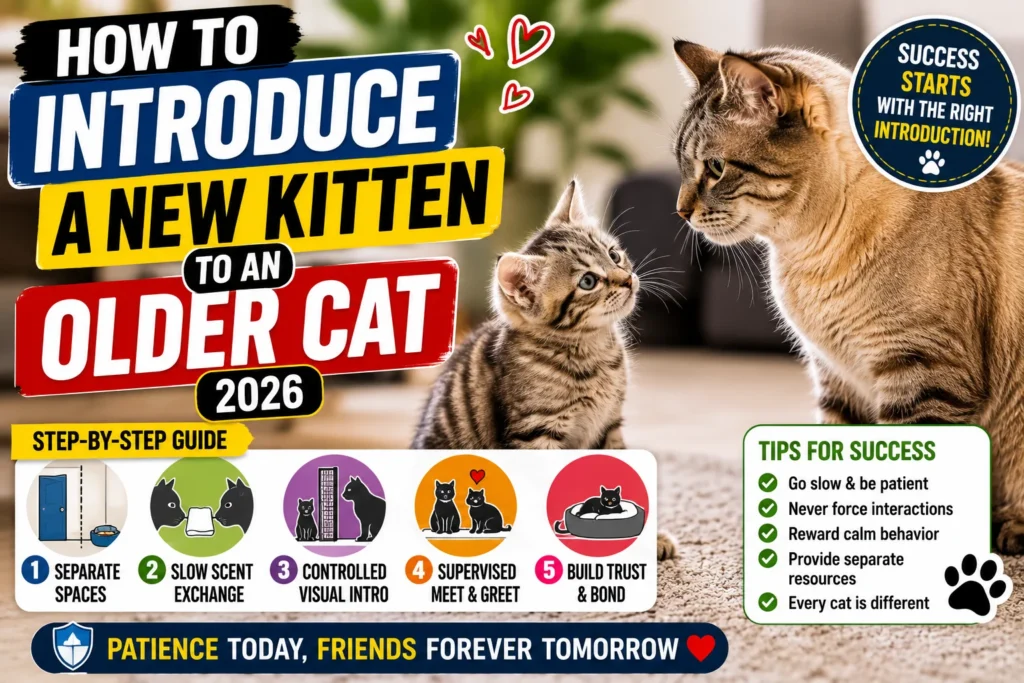
1. Create a “Safe Room” for the Kitten
“A dedicated space” To provide an inviting safe Haven, designate an extra room such as bathroom, office room or bedroom before the little fluff ball arrives! It will also have some basics ready for it, such as:
- Food and water bowls
- A litter box
- A cozy bed
- Scratching posts and toys
This area is designated for the kitten’s sanctuary. It allows them to gradually learn to identify the sights and sounds of the new house without being forced to immediately get face-to-face time with a fully territorial other cat. This prevents your older cat from feeling that you have completely invaded and taken over his or her space all in one step.
2. The Magic of Scent Swapping
“We want Cats to feel confident in whom it was that he and his friend is in both cases . When the introduction begin: let us introduce their smell for Cats before” says Petyon ”
3. Maintain Your Older Cat’s Routine
One of the most stressful elements of a new introduction for a senior cat is a disruption of their routine . Do your very best to try to keep your older cat on the usual schedule:
* Feeding times Continue feeding him his same meal times.
* playtime Offer playtime with the favorite toys your older cat is partial to playing with.
* affection Remember to give her attention and plenty of affection, maybe even more attention or attention than normal, to let him know the new kitten is not replacing him and therefore is not a threat to his time spent with you.
The Gradual Introduction Plan
After both cats have acclimated to each other’s scents your eldest cat isn’t hissing at the door, he’s accepting the presence move onto the subsequent steps.
Step 1: Visual Introductions (Days 4 to 6)
At this stage, allow them to see each other without physical contact. This is where “how to introduce a new kitten to an older cat” becomes a game of patience.
- Baby Gate Method: If your “safe room” has a door, replace it with a baby gate. Alternatively, prop the door open just a few inches, secured so it cannot be pushed further, to allow them to see each other .
- Feeding on Opposite Sides: The most effective way to build a positive association during this stage is by feeding them on opposite sides of the barrier. Start with their bowls far from the door and gradually, over several days, move them closer until they are eating peacefully on either side .
This creates a connection in their minds: Seeing the other cat means mealtime is coming, and good things happen. This is a cornerstone of behavioral training.
Step 2: Supervised, Face to Face Meetings
Supervised Meetings Once you notice that your cats are able to eat peacefully in each other’s presence, it’s time to schedule their first meetings. Keep visits short, pleasant. Some cats take better to being brought out by the new kitten in your arms; allow them approach.
Take it to them.
Give visits 5-10 minutes in duration. The goal is to distract your current cat with toys and treats during this visit. Give your cat a treat when he ignores or looks away. If the older cat looks up, accepts the presence of the kitten, even for a few minutes without spitting, let him have one more treat.
Take kitten back out before stress builds. Swap scents again if the stress continues.
Increasing Interaction Time
Let cats set the pace.
When cats start to relax during visiting sessions with you in the room, allow them more time to spend in shared areas. It could be days, weeks or months for your new cat and old resident to bond.
The cardinal rule emphasized over and over by cat behaviorist and veterinarian alike is don’t rush it.
Let the cats talk.
If the cat resident hisses, so be it. That is communication. Do only jump in if the hissing continues to grow into snarling or if swatting happens and is accompanied by evidence of intent (e.g.
Cat follows it) or chasing .
In some instances, new arrivals will provoke fights even after a six week introduction; that requires backing up the introduction process.
Maintain a retreat.
Make certain that the original cat has an easy avenue of escape.
This often translates into a high space that it alone can access or a bedroom the kitten is denied entry to. This allows control.
Veterinary Considerations for a Harmonious Home
As a dual expert, we must also consider the medical and nutritional aspects of this transition.
- The “One Week” Rule: A general rule is to keep a new kitten isolated from the resident cat for at least a week . This allows for a proper health quarantine to ensure the kitten isn’t carrying any contagious illnesses before being exposed to your older cat.
- Managing Kitten Energy: Kittens 4 to 12 months old have boundless energy . This can be overwhelming for an older cat. Actively engage the kitten in vigorous play sessions several times a day to help burn off excess energy, reducing its tendency to chase or pester the older cat .
- Nutrition and Life Stages: Remember that kittens have different nutritional needs than adult or senior cats . For the first year, ensure the kitten is on a high quality, age appropriate kitten formula to support its rapid growth and development . You may need to feed them separately to ensure they both get the right nutrients and to prevent the kitten from eating the senior cat’s food.
- Calming Aids: If stress is a major factor, consider using a synthetic feline pheromone diffuser (like Feliway). These products release calming messages and can significantly reduce tension and aggression in multi cat households .
Common Pitfalls to Avoid
Understanding what not to do is just as important as knowing the right steps.
- Rushing the Introduction: This is the most common mistake. Throwing them together too soon will almost certainly cause fights and stress, potentially setting back the relationship for weeks .
- Ignoring Resource Division: Competition for resources is a major trigger for conflict. Ensure you have separate food bowls, water bowls, litter boxes, and resting spots for each cat. A good rule of thumb is one litter box per cat, plus one extra .
- Forcing Interaction: Never force the cats to be in the same room, or physically push them together. This will only increase fear and aggression. The introduction should be on their terms .
- Neglecting the Senior Cat: It’s easy to be smitten by the new kitten, but your older cat needs reassurance. Make sure to give them extra attention to prevent jealousy and feelings of displacement .
Frequently Asked Questions FAQs
How long does it usually take for an older cat to accept a new kitten?
It can vary widely, ranging from a few days to several weeks or even months . The key is to watch their comfort levels rather than focusing on a fixed timeline . One user noted it took a year for their older cat to fully warm up .
Is it okay if my older cat hisses at the new kitten?
Yes, absolutely. Hissing is a natural form of feline communication. It is a way for the older cat to set boundaries and express discomfort without fighting. It is a normal part of the introduction process .
Should I separate my cats at night?
At first, yes. Keeping them separated at night prevents potential conflicts when you are not around to supervise. It also allows both cats to sleep peacefully and feel secure in their own spaces .
My older cat is aggressive. What should I do?
If aggression (prolonged growling, chasing, or swatting with intent to harm) persists, you need to slow down the process. Return to the scent-swapping stage and focus on creating positive associations through feeding. If it continues, consult a veterinarian or a certified cat behaviorist .
How many litter boxes do I need?
A good guideline is to have one litter box per cat, plus one extra. So for two cats, you should have at least three litter boxes placed in different areas of the house to prevent territorial disputes .
Can pheromone diffusers help with the introduction?
Yes, many cat owners and vets find that synthetic pheromone diffusers (like Feliway) can help create a calming environment. They can reduce tension and anxiety during the introduction process .
What if my cat stops eating or using the litter box?
A refusal to eat or use the litter box is a sign of severe stress or a potential health issue. This warrants a trip to the vet to rule out any medical problems and to address the anxiety .
How do I manage the kitten’s energy to protect my older cat?
Regular, vigorous play sessions with interactive toys can help burn off the kitten’s excess energy. This prevents it from directing its playful and sometimes annoying behaviors toward the older cat, which can be a major source of stress .
Should I let them “fight it out”?
No. While hissing and swatting are normal, you should never let them engage in a physical fight. If a fight breaks out, separate them immediately. Physical fights can create lasting negative associations and lead to injury .
What if they never become best friends?
That’s okay! The primary goal is a peaceful coexistence, not a deep bond. Some cats will never be cuddle buddies. Aiming for a state of tolerance and mutual respect is a successful outcome .