What to do if your cat gets stung by a wasp?
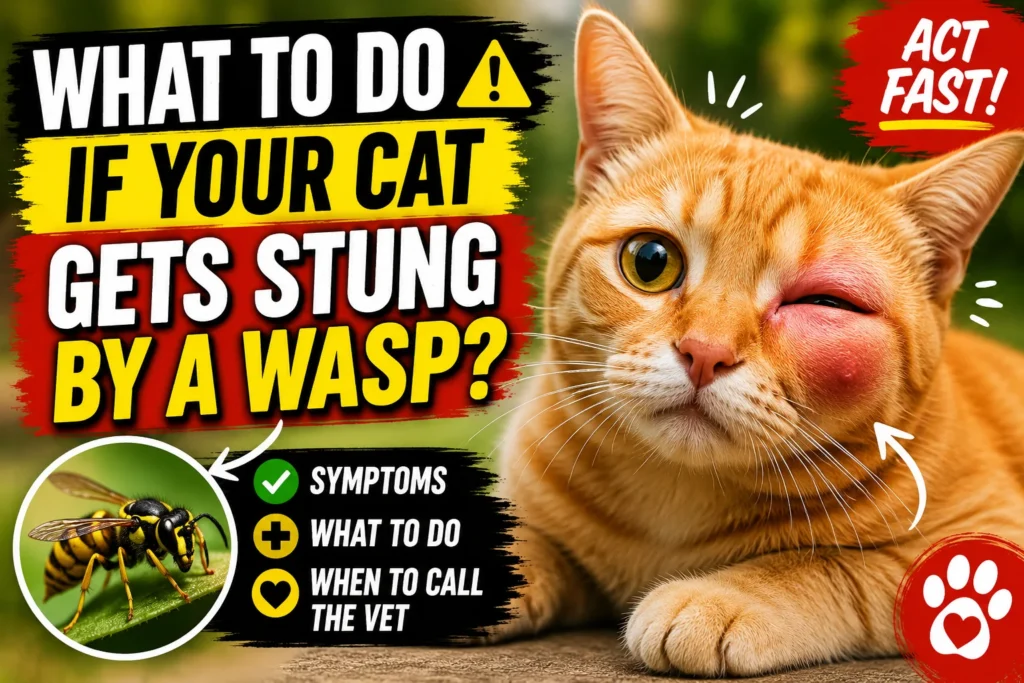
What to do if your cat gets stung by a wasp? Well, it is summer time now and it is high time for bugs to appear. But sometimes, if you have a curious cat which loves adventures, you might have an unpleasant experience in your hands. Wasp sting is no pleasure for a cat but knowing how to deal with this problem is important.
Reason is why cats love chasing bugs and playing with them is their innate curiosity. And since they investigate their environment using their paw and face, those are the places where wasps can sting your cat. In this guide, created from a veterinary perspective, you will find all the instructions about dealing with a wasp sting.
As someone who’s spent years treating these exact situations, I can tell you that wasp stings are incredibly common in cats. Our curious companions just can’t resist batting at anything that moves, and wasps? Well, they move. And they fight back.
How to Tell if Your Cat Has Been Stung
But cats can be so stoic animals. They have learned to act like nothing ever happened, despite how bad they feel. Yet even if you might never see their suffering yourself, your kitty’s behavior will say more than words can.
Common Signs of a Wasp Sting:
- Pawing at their mouth or face – This will give them away when they have been stung in the nose, lips, or cheeks.
- Putting up a paw – When they are limping or cannot bear any weight on the affected foot because they are trying to protect themselves against pain from being stung.
- Excessive grooming – Because they will always feel itchy from the sting and try to chew and lick the affected part.
- Swelling – Look for any swollen area of their body especially when you do not notice anything on their long hair.
- Unusual crying or meowing – When your normally quiet cat starts making unusual sounds, something is definitely wrong with him/her.
Also Check: How to treat a minor burn on a dogs paw?
Step by Step Action Plan For What to do if your cat gets stung by a wasp?
Step 1: Move Your Cat Inside
Just breathe remain calm and bring them inside. This does two things it gets them away from any other wasps lurking around, and it gives you a safe, quiet space to assess the situation.
Pro tip: Don’t become a victim yourself. Wasps get aggressive when threatened, so don’t go swatting at them while holding your cat.
Step 2: Figure Out What Stung Them – This Matters!
Here’s something most pet owners don’t realize wasps and bees require completely different first aid. And I mean completely different.
Both wasps and hornets have smooth stingers that move freely. There is nothing left inside the skin because of this. Also, they may sting more than once (so rude, huh).
Do not squeeze it. That will cause additional venom to go deeper into the wound. Instead, use something firm and flat a credit card, knife handle, or nail to brush across the skin horizontally to remove the stinger.
If it is a wasp sting, then there won’t be any stinger to extract at all. Go on to the next step.
Step 3: Neutralize the Venom
And here is where the chemistry aspect takes center stage and turns out to be quite basic.
Since wasps contain alkali venom, they can be destroyed with an acid. Apply some vinegar diluted in water on the site of the sting with a cotton ball.
Since bees’ venom is acidic in nature, it would take an alkali compound for their case. Make a solution of baking soda and water and apply it on the site of the sting.
Isn’t that just magic? Not at all solid science right there.
Step 4: Soothe the Swelling
Ice will be your best bet for this case. Take an ice pack or even a package of frozen peas and wrap them in a small towel and then press the wrapped ice to the sting, in intervals lasting a couple of minutes each. Be sure to not place the ice directly on the wound as this could worsen the situation.
It is extremely useful when applied to paws and body parts; however, for face stings, this method becomes rather complicated.
Step 5: Keep an Eye on Their Eating and Drinking
In case there is a sting around the mouth region, your cat may find it hard to feed. Instead of dry kibble, give your cat moistened food.
Step 6: Stop the Licking
The cats usually have a natural habit of lapping up the sore part as that is the way their body responds. But excessive licking may hamper the recovery process by bringing infection to the wounded area.
If your pet cat still goes on lapping up the wounded area despite all efforts, you can use an Elizabethan collar for the same purpose.
A Word About Antihistamines Please Read This
Of course, you have already been to Google to look up for an answer to Can I give my cat Benadryl haven’t you? The answer is yes, but never ever administer any form of human medicine without consulting your veterinarian.
The exact amount of Benadryl for your cat depends on his body weight, administering too much or too little can be harmful to him. In addition, not all formulas of the liquid medicine are safe because some may contain alcohol or other substances toxic to cats.
It only takes two minutes for you to contact either your veterinarian or an animal poison control center.
Red Flags When to Rush to the Vet
Here’s where things get serious. And anaphylaxis in cats is every vet’s nightmare.
Drop everything and get to an emergency vet immediately if you see any of these,
- Difficulty breathing, including wheezing, panting (cats don’t usually pant), or labored breathing. This is the 1 emergency sign.
- Severe swelling especially around the face, eyes, or throat. Swelling here can block their airway.
- Vomiting or diarrhea this indicates an internal problem
- Sting inside the mouth or throat even without other symptoms, this is an emergency because swelling can cut off their breathing.
- More than one sting due to being in a swarm, the high quantity of venom could actually be lethal, even for cats that aren’t allergic.
At the Vets Office What Happens ?
Your veterinarian will evaluate your kitty and may perform,
- Epinephrine to reverse anaphylactic shock
- Antihistamines and steroids to bring down swelling and stop the allergic response
- IV fluids to stabilize blood pressure
- Oxygen therapy in case breathing is affected.
Your cat may be required to stay in the hospital for one or two days. This may seem frightening, but the treatments will work like magic if they’re started in time.
Bottom Line
However, although stings may seem terrifying and shocking for both the owner and pet, in almost all cases they can be handled at home with a few pieces of ice and some vigilance.
Therefore, in a summary, what have we learnt? Learn to distinguish whether you have a slight case of irritation or an urgent case requiring the presence of your veterinarian at all times.
Your cat relies on you for advocacy, and in truth, you are doing an excellent job just by being here reading this information.
Frequently Asked Questions
If it was a wasp or a bee who stung my cat how do I know?
It was probably a wasp since honeybees leave their stinger embedded in the skin along with a venom sac.
Will it work if I use my tweezers to remove a bee stinger?
No, please do not try this as squeezing it will force more venom into your skin. Instead, use a flat hard item like a credit card to brush it out. Believe me; there is nothing that makes as much of a difference!
What should I apply on the bite of a wasp?
Vinegar should be used for a wasp sting due to the alkali properties of its venom. If it is a bee bite, then baking soda paste should be applied since bee venom is acidic.
The paw of my cat is swollen due to a sting. Should I consider this as a serious situation?
This situation is not necessarily critical. Rapid swelling on the paw is quite typical. However, in case the inflammation becomes more intense, or your cat is in obvious agony, consult your veterinarian.
Are allergic reactions possible in cats to wasps’ stings?
Of course, they can occur. Cats, just as humans, can get anaphylaxis as a result of being stung by wasps.
My cat has been stung in the mouth. What shall I do?
It is a matter of urgency. If there is any swelling of the mouth, it will soon obstruct the breathing passage of your cat. You need to get to the vet’s office fast, even if the cat appears okay now.
Can I give Benadryl to my cat for insect sting?
Yes, only if your vet recommends that. Any medication given to humans is not recommended for pets because improper administration might kill your pet.
What is the expected duration of the swelling after a wasp sting?
Mild swelling generally disappears in a day or two. It is crucial that you pay attention to any signs of infection particularly if you have noticed your cat licking where the sting was located.
What should I do if my cat looks fine right after the sting?
Delayed reactions may take several hours to show signs. Be on the lookout for problems such as difficulty breathing and changes in behavior.
What can I do to prevent my cat from being stung again?
They should be kept indoors during peak wasp activity. Check your garden for wasp nests which can only be safely removed by professionals. The last thing is to avoid feeding them outdoors since the same food attracts wasps.