How to treat a minor burn on a dogs paw?
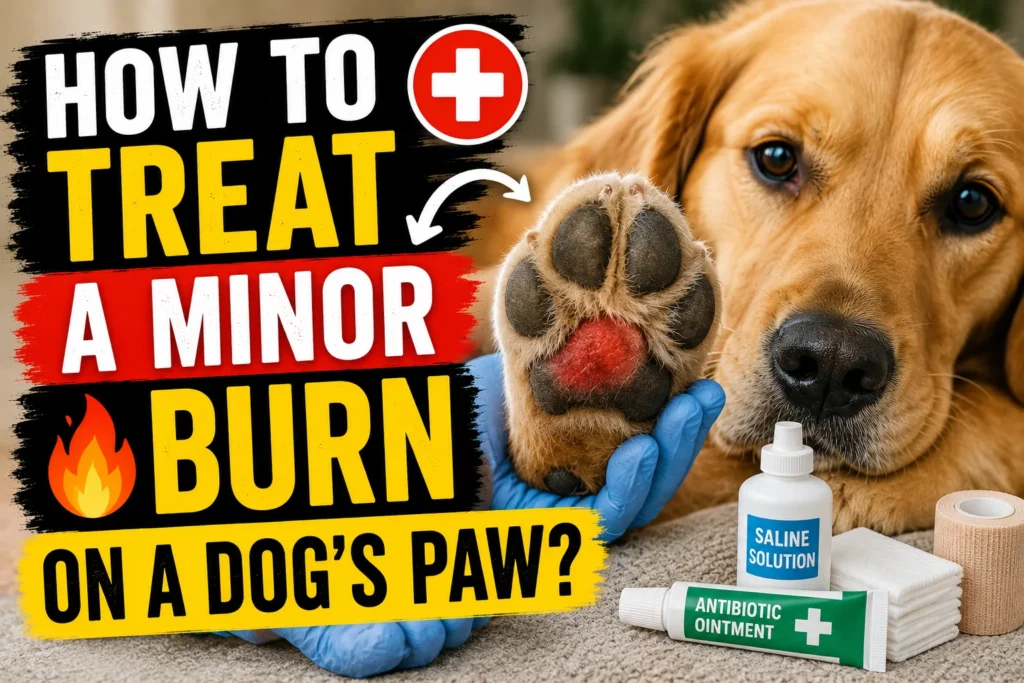
How to treat a minor burn on a dogs paw? As someone who has gone through such an ordeal personally I can understand how awful seeing your pet in pain makes you feel. The great thing is that in many cases, the burns are mild and perfectly manageable without visiting the vet’s office. All it takes is a bit of knowledge and patience on your part.
But enough with the talk already I will go into details and give you advice in a language understandable even to a dog.
How to treat a minor burn on a dogs paw?
What Are We Actually Dealing With?
All burns are not alike. Before doing anything else you must assess just how badly your dog is burnt. Burns that can be handled at home tend to exhibit, Slight reddening of the pad as if your dog has been exposed to the sun. A bit of drying or peeling of the skin.
- Some small blisters
- Limping while being able to bear some weight
- Healing time frame: one week if taken care of properly
However, there is one huge caveat if you notice any of these things, we’re going pro,
- Blackened, burnt, or leathery skin
- Big cracks and cuts that keep on bleeding
- Bones or muscles showing (eeek!)
- Big, big blistering and oozing
This is serious stuff. Time to make a doctor appointment call your vet
How to Spot a Burned Paw (Even When Your Dog Is Being Tough)
Hence, it becomes important for you to investigate. Some signs you should be aware of include:
Limping lifting that paw like it was made of glass. Licking or nibbling their paws excessively equivalent of rubbing the area better.
- Redness and swelling in a visible form
- Whining and whimpering when you touch that paw
- Lameness or signs of pain in using the paw to walk
- Now that you’ve noticed any of these, it’s time to inspect the paw carefully.
Also Check: How often should you deworm an indoor cat?
Your Step-by-Step First Aid Plan
Great! You’ve evaluated the situation, and now you know for sure it’s a small burn. Here’s exactly what to do in order.
Step 1: Cool It Down (But Not Too Much!)
Your immediate reaction might be to use an ice pack. However it is not advisable for you as well, since it will cause more damage than good to the skin because it will reduce blood flow to the burned area.
Add lukewarm water into a basin and let your dog’s injured paw soak into the water for around five to ten minutes. This will remove pain because it will slow the burning process and reduce swelling with soothe your dog. Nonetheless, if your dog refuses this solution then you can pour the water on its paw.
Step 2: Pat Dry Gently Clean
After this soaking period, the paw should be dried with a clean soft towel, and one should not rub it, but rather pat it as one would the delicate skin of a baby.
Any remaining dirt should be washed off using an animal friendly soap. Do not use any human body wash or harsh chemicals; especially avoid using hydrogen peroxide or alcohol to treat burns. This will cause further irritation and harm to your dog.
Step 3: Apply Something Soothing (Nature to the Rescue!)
And it’s time to make some use of Mother Nature’s magic tricks.
If there’s already a pet friendly paw balms with either coconut oil at hand use it, of course. Here’s one more cool trick that your veterinarian would recommend to try honey.
Yes, a typical honey available from stores with great antibacterial and anti inflammatory qualities. Honey provides moisture and helps in healing of any tissue damage. Apply it like a thin film and forget about other options.
Reminder: don’t ever apply burn creams, antibiotics, and zinc oxide creams to doggy paws. They will certainly lead to toxic effects upon licking.
Step 4: Cover It Up (But Not Too Tight)
Having cleaned and treated your dog’s burn the following should be done to prevent any infection from getting into the burn area. Put a non adhesive bandage over the wounded paw. If none is available, use an old clean sock.
What is important is not to wrap the bandage too tight around the wound. You should be able to insert your fingers under the bandage comfortably. By wrapping it tightly, you risk affecting the blood flow, which creates another problem altogether.
Step 5: Rest and Relaxation
The dog needs rest. This sounds easy but not so much with an excitable puppy. The paw pads come under pressure each time they walk, so rest is very important at this stage.
Make sure that they only walk on soft ground and, when they go out for toilet purposes, ensure that it is only on grass or soft ground like dirt. Long walks and running around must be completely avoided.
Step 6: Break Out the Cone of Shame
I know, they despise it. You despise it too. But did you think about the licking? By licking, they are putting bacteria into the wound directly from their mouths. And there goes a little burn turning into a serious infection.
Here comes the use of Elizabethan collars (cones) your greatest ally. In case you have no chance of making your pet wear it, inflatable collars and even baby onesies are there for help.
Also Read: How to Protect Dog Paws from Hot Pavement in Summer?
Throw in the Towel and Call the Vet
Even small burns can take an ugly turn. Here’s when you shouldn’t hesitate to call the vet
- The burn does not improve in 24-48 hours but gets even worse
- Pus, yellowish-green discharge, or an offensive smell indicates an infection is lurking
- Your pet refuses food or appears weak and in pain
Better safe than sorry is always the best policy. There are few things more unpleasant for your vet than having to deal with complications when he or she was asked about a possible problem.
How to Stop This Happening Again
It is either too hot for your hands or too hot for your dog’s paws.
- Walk at appropriate times: Always walk in the appropriate times, which include walking either in the morning or during dusk. Walking in midday is not recommended due to increased heat levels.
- Avoid hard surfaces: When walking, always endeavor to do so on soft surfaces such as dirt footpaths surrounded by grass. Avoid asphalt sidewalks since they get very hot.
- Hand test: Hold the palm of your hand against the sidewalk for five seconds to prior to walking your dog.
Frequently Asked Questions (FAQs)
When my dog’s burn injury requires medical attention then how do I know?
When the area has charred with blackened skin with cracked skin, or exposed bones or muscles in the pad then you need help. Likewise, if your dog suffers from extreme pain or will not eat, take him to the vet immediately.
Can I apply Neosporin to my dog’s paw?
Avoid using it. Many topical antibiotics used on humans have chemicals that may harm dogs once ingested. Instead, consult your vet on other alternatives like using honey.
Why does my dog lick his burnt paw so much?
This is an instinctual response to heal, but instead it infects him with bacteria, making it harder to heal. It is best to avoid licking, as it can infect a minor burn, by placing a cone or bandage over it.
When will my dog’s burn be fully healed?
A superficial burn will be completely healed in around 5 to 7 days while a little deeper burn will take up to two weeks.
Is it okay to take my dog out on a walk if his paw is bandaged?
Yes, but only for short trips outside when he needs to relieve himself. He shouldn’t go on long walks until he’s approved by the veterinarian.
What does a recovering paw burn look like?
The burning should have a redness that is slowly disappearing. There should be an improvement in the appearance of his paw, with his skin healing and looking healthy again.
Will my dog’s pad regenerate completely?
Yes, indeed! Since it is so elastic it has the capacity to regenerate if treated properly.
Is it safe to give my dog a soak in Epsom salts?
Soaking the affected area in Epsom salts (1 tsp. in 2 cups of cold water) may help reduce inflammation. However, you will need the permission of your vet before you proceed with the procedure.
What are some signs of infection on a burn injury?
Be careful for signs like reddening, swelling, heat coming out of the paw, foul odor, and all types of discharges that are green and/or yellow.
Is it okay to apply coconut oil to dog paws burned from a fire?
Yes, certainly! It will surely provide comfort, nourishment, and antibacterial action too. Just make sure that it is totally natural.
The Bottom Line
You can’t put your dog in bubble wrap .That is their job. You’ve got this. And your puppy is very lucky to have you. It’s always better to prevent than to cure. Besides, veterinarians will not criticize you; they prefer to hear from you a “I’m just making sure” phone call rather than seeing your dog with some severe problem at their surgery.