
How to Remove a Tick From a Cats Face?
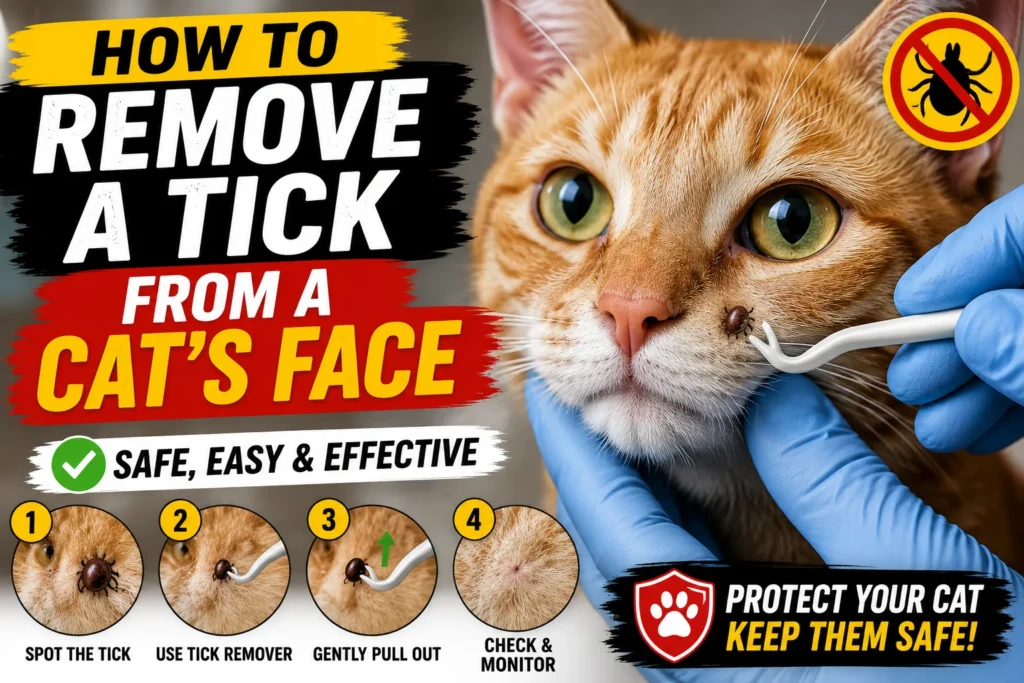
How to Remove a Tick From a Cats Face?. Finding a tick on your cat’s face is unsettling. Unlike ticks on the back or legs, facial ticks are near the eyes, ears, nose and mouth areas that are highly sensitive and difficult to manage. One wrong move can lead to infection, embedded mouthparts, or unnecessary stress for your feline friend.
Why the Face Is a High-Risk Area for Tick Removal
The face has the highest concentration of nerve endings, blood vessels, and delicate tissues. A tick here can attach along the:
- Eyelid margins
- Nasal folds
- Lips or chin
- Inner ear base
Aggressive removal can cause scarring, corneal ulcers or a local infection called a tick granuloma. Furthermore, squeezing the tick’s body may inject bacteria-laden saliva back into your cat, increasing the risk of diseases like Cytauxzoonosis or Mycoplasma.
Tools You Will Need (Do Not Use Your Fingers)
Before you touch the tick, gather these items. Do not use bare hands tick fluids can transmit pathogens to humans, too.
- Fine-tipped tweezers or a tick removal hook avoid blunt tweezers.
- Disposable gloves latex or nitrile
- Antiseptic solution diluted betadine or chlorhexidine no alcohol near the face
- Small container with rubbing alcohol to kill the tick post-removal
- Cotton balls or gauze pads
- A second person to gently restrain the cat wrapping in a towel “burrito style”
How to Remove a Tick From a Cats Face : Step by Step Guide
Step 1: Stay Calm and Secure Your Cat
Cats sense anxiety. Place your cat on a non-slip surface. Wrap them in a towel, leaving only the head exposed. If the tick is near an eye, have a helper gently hold the head from behind.
Step 2: Identify the Tick’s Mouthparts
Part the fur carefully. Locate where the tick’s capitulum enters the skin. You will see the tick’s body attached to a small neck-like structure. Your goal is to grasp that neck, not the swollen belly.
Step 3: Choose Your Tool Based on Tick Size
- For Large Ticks or Nymphs Use a Tick Hook: Slide the notch of the tool under the tick’s body, as close to the skin as possible. Turn it gently 2-3 times in a rotating motion and the tick will detach. For smaller ticks or nymphs, you can use a pair of fine-tipped tweezers.
- Grasp the tick’s head or mouthparts as close to the skin as you can; do not pinch the body.
Step 4: Pull Straight Up With Steady Pressure
Pull Straight Up with Even Pressure This step cannot be stressed enough. You will not be twisting or pulling, you will be pulling straight up. There may be slight resistance. You want to maintain that upward, consistent pressure until the tick releases.
It may take 10 to 20 seconds to achieve detachment.
Also Check: How to Tell If a Dog Is in Pain After Surgery?
Step 5: Examine the Bite Site
After removal, you should see a small crater or dark dot. That dot should not move. If you see a tiny black speck that moves under light, it is likely the tick’s mouthparts contact your vet.
Gently clean the area with diluted betadine on a cotton ball. Do not use hydrogen peroxide or rubbing alcohol on a cat’s face (stings and is toxic if licked).
Step 6: Kill the Tick Properly
Place the tick in the container of rubbing alcohol. Do not crush it with your fingers. Note the date and location of the bite. If your cat becomes ill, a veterinarian can identify the tick species.
What NOT to Do
| Myth | Why It’s Dangerous |
|---|---|
| Burn the tick with a match | Cat will jerk, burn fur/eye, and tick may vomit pathogens into the wound |
| Smear petroleum jelly or nail polish | Tick suffocates slowly and regurgitates saliva, increasing disease risk |
| Twist the tick rapidly | Mouthparts break off, causing chronic inflammation or abscess |
| Use your fingernails | You cannot grasp the head; you will squeeze infected fluids |
When to Call a Veterinarian Instead
Immediately consult your veterinarian if The tick is on or in your cat’s eyelid or on the eye. You successfully pull out the tick but the head remains in the skin after three tries. Face is swollen, red and/or is oozing within 24 hours of tick removal.
Tick removal on a soft tick-These ticks require special treatment techniques.
Your cat is having fever, off of food, or is sneezing blood. Your veterinarian will have ophthalmic tweezers and can prescribe prophylactic antibiotics if the tick is on or near the eye and test for tick borne illnesses.
Aftercare and Monitoring (Day 1–7)
After removal, monitor the site for 7 days. Signs of a normal healing process:
- Slight pinkness that fades within 12 hours
- A tiny scab that falls off by day 4
Concerning signs:
- Heat or swelling spreading to the jaw or ear
- Thick yellow/green discharge
- Excessive pawing at the face
- Loss of appetite or vomiting
Preventing Future Ticks on Your Cat’s Face
Prevention is safer than removal. Use vet-approved products only never use dog tick medicine on cats.
| Product Type | Examples | Face Safety |
|---|---|---|
| Spot-ons | Revolution Plus, Bravecto | Prevents ticks from attaching anywhere |
| Seresto collar | Flumethrin/imidacloprid | Safe, but check fit to avoid facial rubbing |
| Oral chews | Credelio (for cats) | Systemic ticks die before attaching to face |
Additionally, keep your cat indoors during peak tick season and mow tall grass near your home.
Frequently Asked Questions (FAQs)
Can I remove a tick from my cat’s face with my fingers?
No. Fingers cannot grasp the mouthparts and will crush the tick’s body, injecting bacteria deeper into the skin. Always use fine-tipped tweezers or a tick hook.
What happens if the tick’s head stays in my cat’s face?
The embedded mouthparts can cause a persistent foreign body reaction, leading to a painful lump, infection or abscess. A veterinarian may need to remove them surgically under sedation.
Will rubbing alcohol remove a tick from a cat’s face?
No. Rubbing alcohol irritates the skin and may cause the tick to regurgitate. It is useful only for killing ticks after removal, not for extraction.
How do I remove a tick near my cat’s eye without hurting her?
Use a tick hook rather than tweezers it requires less precision. Have a helper hold the head still. If the tick is on the eyelid margin, stop and go to a vet immediately to avoid corneal damage.
Can a tick on the face make my cat sick?
Yes. Facial ticks can transmit Cytauxzoon felis, Mycoplasma haemofelis and Bartonella. Symptoms include fever, pale gums, jaundice, or lethargy appearing 1–3 weeks later.
Is it normal for the face to be red after tick removal?
Don’t attempt to remove the tick at all if it is in a sensitive area or if your cat is irritable, especially under the circumstances described in “Should I take my cat to the vet for every facial tick?” above.
Should I take my cat to the vet for every facial tick?
Wrap your cat in a towel. Work in a room without a lot of noise. Don’t attempt to remove the tick at all if it is in a sensitive area or if your cat is irritable, especially under the circumstances described in
Should I take my cat to the vet for every facial tick?
You do not have to. Take it to the vet, however, for ticks in the nostril, in the eyelid, or far down the ear. Likewise, go for large ticks on a compromised, elderly or very young cat.
How do I know if the whole tick was removed?
The whole body and head of the tick should be visible. If you see a small black or brown dot left in the skin that does not move, that is likely the mouthparts. Moving dots are debris. When in doubt, see a vet.
Can indoor cats get ticks on their face?
Yes. Ticks are carried indoors on dogs, humans, or through open windows. Mice entering the home can also drop ticks. Always check indoor cats’ faces after a known rodent problem.
Final Takeaway
Understanding how to remove a tick from a cat face is critical, but accuracy takes precedence over swift action. Utilize proper tools, extract cleanly and slowly, and disinfect afterwards. If your feline’s tick is found near its eye or mouth, or you’re hesitant about doing it yourself, consult with your veterinarian. Consistent parasite protection through monthly preventative treatments is best.