Why is My Older Dog Panting and Restless at Night?
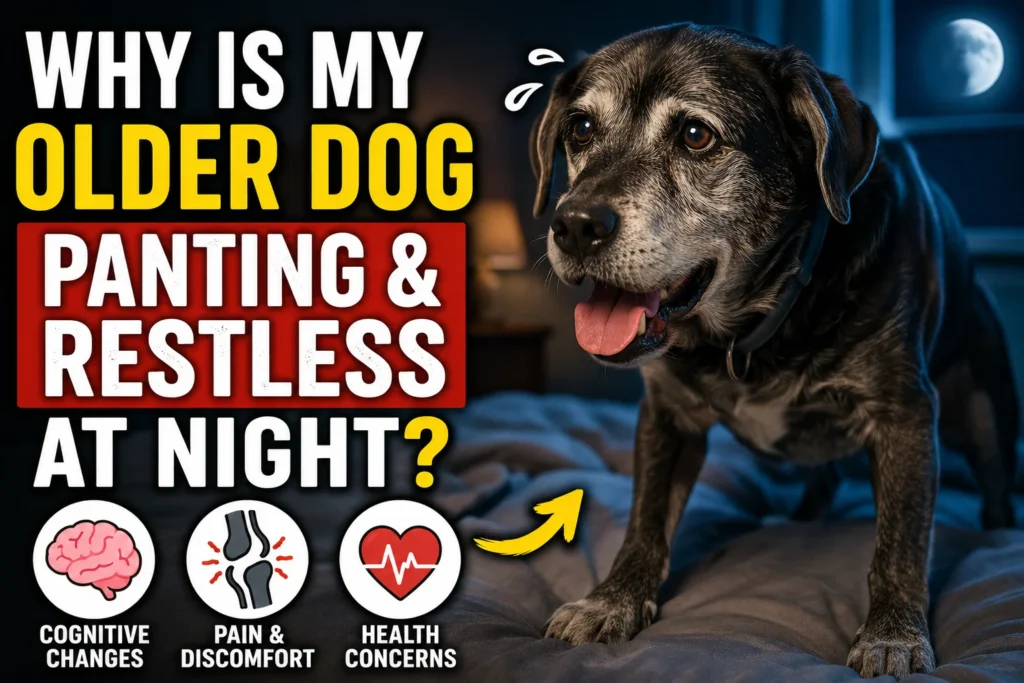
Why is My Older Dog Panting and Restless at Night?.You are an owner keeping an ear out while hearing your elderly canine roam around, pant and have difficulty relaxing, you might be sleepless and concerned. You have possibly wondered, “Why does my old dog pant and is restless at night?”
Although a dog becomes less active as it ages, frequent nighttime panting and restlessness are clinical signs of a health problem.
As a veterinarian and pet health writer, I will walk you through the 7 most common causes from canine cognitive dysfunction to hidden pain and give you actionable steps to help your old friend sleep soundly again.
When is Panting Normal vs a Red Flag?
First, we must distinguish between normal and abnormal panting.
- Normal: Normal panting after working out on warm days and panting when a dog is overly excited.
- Abnormal: Panting which sounds louder and deeper than normal; sudden nighttime panting for no specific reason and panting with other symptoms such as pacing and whining.
Also Check: How to Stop Dog Diarrhea Fast at Home?
7 Medical Reasons For Why is My Older Dog Panting and Restless at Night?
1. Canine Cognitive Dysfunction
The 1 cause of nighttime restlessness in older dogs is Canine Cognitive Dysfunction similar to Alzheimer’s in humans. Dogs with CCD experience a “sundowning” effect their symptoms worsen as daylight fades.
Signs to watch for:
- Staring at walls or into space
- Pacing in circles
- Forgetting house training
- Getting stuck in corners
Why it happens at night: Their internal body clock breaks down. They cannot distinguish night from day leading to confusion and anxiety-driven panting.
2. Chronic Pain
Pain is a silent epidemic in senior dogs. Arthritis is the most common culprit. During the day, distractions and activity keep endorphins flowing. At night when everything is quiet, the pain becomes unbearable.
Signs of pain panting:
- Reluctance to jump on the bed or climb stairs
- Stiffness after lying down
- Guarding a specific body part
- Whining when touched
Why it happens at night: Lying in one position for hours puts pressure on inflamed joints. The dog pants because pain raises cortisol and heart rate mimicking stress.
3. Heart Failure
An older dog panting excessively at night may have early congestive heart failure. A failing heart cannot pump blood efficiently causing fluid to back up into the lungs.
Key red flags:
- Panting that sounds wet or raspy
- Coughing
- Blueish or pale gums
- Fatigue on short walks
Why it happens at night: When the dog lies flat, gravity allows fluid to accumulate in the lungs faster making breathing difficult.They stand up, pant and lie down repeatedly.
4. Disease of Cushing
Cushing’s disease occurs when the adrenal glands produce too much cortisol. This hormonal imbalance causes persistent panting, regardless of temperature or activity level.
Common symptoms include:
- Pot-bellied appearance
- Increased thirst and urination
- Hair loss and thin skin
- Ravenous appetite
Why it happens at night: The excess cortisol keeps their body in a constant “fight or flight” state preventing restful sleep and causing panting even when cool.
5. Respiratory Issues
Large breed senior dogs are prone to laryngeal paralysis, where the voice box muscles weaken and flop into the airway. This is a true veterinary emergency if severe.
Signs to watch for:
- Noisy, harsh panting that sounds like snoring
- Gagging or choking when eating
- Change in bark
Why it happens at night:Lying down can worsen airway obstruction especially if the dog is obese.
6. Anemia or Low Oxygen Levels
Anemia means less oxygen is carried to tissues. The body pants to try to pull in more oxygen.
Look for pale gums: It should be bubblegum pink, not white or grey.
Causes in older dogs: Chronic kidney disease, internal bleeding from a tumor or tick-borne diseases.
7. Anxiety and Sensory Decline
As dogs age, they lose vision and hearing. A senior dog that cannot see well at night or hear you moving around may feel vulnerable. This sensory decline triggers anxiety, manifesting as panting and pacing.
Simple test: Turn on a night light. If the panting stops, your dog likely has vision loss.
Immediate Steps to Help Your Senior Dog TONIGHT
During your wait for your vet visit, consider these interventions that are safe:
- Cooling zone Lower the temperature settings. Position a fan directed at a cooling pad or a wet towel. Never direct the fan to the face.
- High bed Use an orthopedic bed that features bolsters for joints affected by arthritis. For large breeds, use a low flat platform bed.
- Provide ambient light A soft night light in the hallway or room.
- Give access to water Fresh water should always be available, but not just before bedtime, to minimize the need to urinate during the night.
- Evening massage Gentle strokes on the spine and hip area stimulates the release of oxytocin.
Emergency Veterinary Clinic Visit Required
Contact your veterinarian or an emergency care facility when panting is associated with:
- Blue, grey or white gums
- Collapse or inability to stand
- Open-mouthed breathing with the tongue turned blue
- Restlessness so severe the dog cannot lie down for more than 1 minute
These signs can indicate a hemangiosarcoma rupture, heart failure crisis or respiratory obstruction.
What a Vet Will Do
Your veterinarian will likely recommend:
- Physical exam & baseline vitals listening to heart and lungs
- Blood work rule out kidney disease, Cushing’s, anemia
- Chest X rays check for heart enlargement or lung tumors
- Blood pressure measurement hypertension is common in older dogs and can cause panting
- Referral for a cardiac ultrasound if heart disease is suspected
Treatment varies: Pain meds for arthritis, cognitive supplements, heart medications or surgery for laryngeal paralysis.
5 Home Adjustments for Long Term Relief
- Switch to a “circle” schedule Short walks and mental puzzles during the day to tire the brain, not just the body.
- Use calming pheromones Adaptil diffusers release a synthetic copy of nursing canine appeasing pheromone.
- Try nighttime CBD Some studies show CBD oil reduces pain and anxiety in geriatric dogs.
- Invest in a camera monitor So you can see if the dog is just repositioning or truly distressed.
- Routine is medicine Feed, walk and go to bed at the exact same times daily. Predictability reduces cognitive anxiety.
Frequently Asked Questions (FAQs)
Is it normal for a dog at 12 years old to pant at night?
It is not. Night panting without any influencing factors such as heat and exercise is an indication that you have to see your vet. It indicates some health problems.
Is it possible that dehydration is causing nighttime panting in senior dogs?
It is possible, but not the case usually.The dog can be suffering from kidney diseases or diabetes. Therefore, always give water to your pet and see your vet to determine what the real problem is.
Why does my old dog pace and pant at night but seem fine during the day?
This is classic for canine cognitive dysfunction or nighttime pain. Without daylight and activity, anxiety and discomfort become more noticeable. It does not mean the problem is minor.
Should I take my older dog to the emergency vet for panting?
Go to an emergency vet if the panting is accompanied by coughing, blue gums, collapse or if your dog cannot lie down for more than 1-2 minutes without gasping. Otherwise, schedule a regular vet appointment within 24 hours.
Can changing my dog’s food stop nighttime panting?
Not directly. However, switching to a senior diet with joint supplements and omega-3 fatty acids can reduce inflammation and pain which may improve symptoms over 4-6 weeks.
What natural remedies work for senior dog nighttime restlessness?
Melatonin, lavender aromatherapy and weighted blankets designed for dogs. Do not use human sleep aids.
Why is my old dog panting after drinking water at night?
This could indicate laryngeal paralysis or heart disease. It is not normal. Video the episode for your vet.
How can I distinguish between pain panting and anxious panting in my dog?
Pain panting is associated with hunching, shaking and lack of willingness to walk. As for anxious panting, it includes pacing, drooling and destructiveness.
Is it possible to use a cooling mat to prevent senior dogs from panting at night?
Only if panting is caused by overheating. If the panting stops immediately on a cool surface, it may be pain related as cold reduces inflammation. Still see a vet.
How much does it cost to diagnose the cause of nighttime panting?
Expect $200–$600 for an exam, blood work and chest X-rays. Advanced imaging or an echocardiogram may cost $500–$800. Pet insurance often covers 70–90% of diagnostics for seniors.
Final Verdict
Do not accept nighttime panting and restlessness as “your dog just getting old.” In 90% of cases, there is an identifiable, often treatable cause. Whether it’s a simple arthritis medication, a cardiac drug or a dementia management plan, your senior dog can regain peaceful nights and so can you.