Signs of Respiratory Infection in Pet Rats
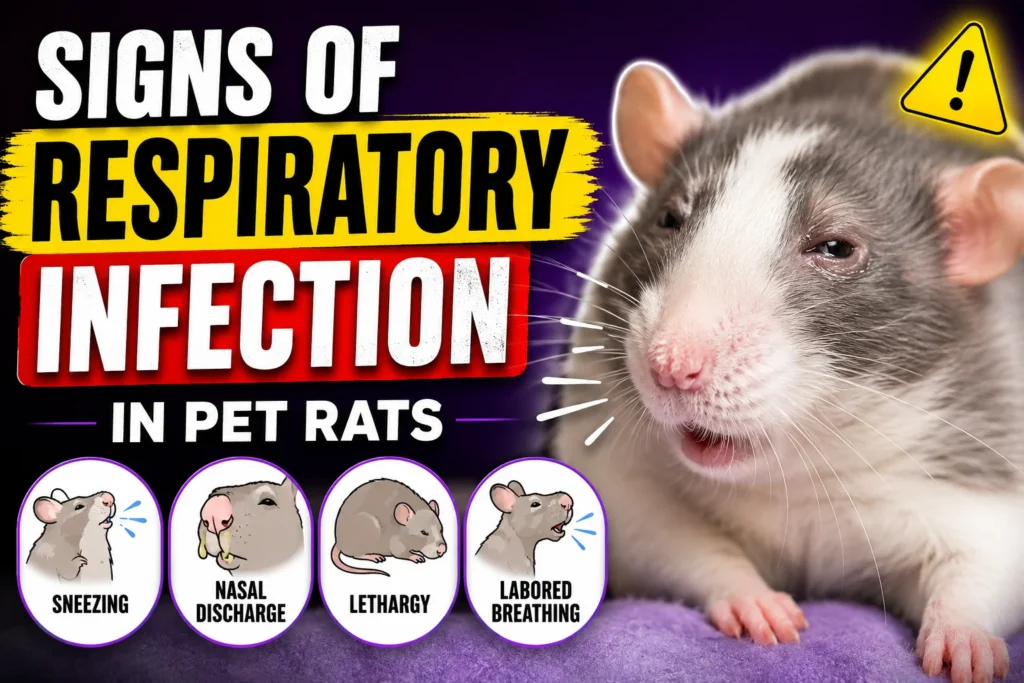
Signs of Respiratory Infection in Pet Rats. Pet rats are intelligent, affectionate and surprisingly resilient. However, they have one notorious Achilles’ heel: their respiratory system. As a small exotic veterinarian, I have a universal message for all rat owners: “When your rat is sneezing, do not ‘wait and see.'” Respiratory disease in rats is the no 1 cause of premature death, yet is highly treatable, provided it is recognized and treated promptly. Because rats are prey animals, they will instinctively attempt to mask signs of illness until it is too late.
Top 10 Signs of Respiratory Infection in Pet Rats
1. The “Duck Noises”
Healthy breathing in a rat is silent. If you hear any noises in your rat’s breathing that sound like a duck quacking, a squeaky toy or a wet coffee pot perking then your rat has fluid in their airways and they are making what is known as “wheeze.” Wheezes typically mean a flare up of Mycoplasma pulmonis, a bacterium and the most common culprit for rat respiratory disease.
2. Porfyrin Staining
Many owners notice the bright red discharge around a rat’s nose and eye and may mistakenly panic thinking the rat is bleeding.
The discharge is actually porphyrin and is secreted from a gland known as the Harderian gland, located near the eye. Small amounts can be seen after sleeping; however, excessive crusting can signify severe stress or an infection. It’s sort of like the human version of having a teary eye and running nose from an active cold or stress
3. Open-Mouth Breathing
Rats breathe exclusively out of their nose, it’s called obligate nasal breathing. When a rat is breathing with its mouth hanging open, gasping for air, or pants like a dog, this is an immediate, life threatening 5 out of 10 crisis.
It indicates a rat has a massive blockage of their nasal passages due to inflammation and pus and may stop breathing within a matter of hours if untreated.
4. Labored Breathing
Keep an eye on the sides of your rat while they are resting. You should be able to see your rat’s lungs working normally without effort. However, if you see “heaving” where the chest/rib cage lifts noticeably, or if the belly goes into the body sharply with every breath, this is an indicator of struggling for oxygen.
Tail bobbing where the tail rises up rhythmically with breathing will also occur in cases of labored breathing.
5. Sneezing Fits & Nasal Discharge
Some sneezing can be normal in rats that have been on dusty litter or who play energetically. But chronic sneezing, sneezing that is accompanied by other symptoms, and heavy white/yellow discharge is often indicative of a bacterial infection.
6. Lethargy & “Huddling”
Rats are social, inquisitive creatures. They should always be curious, active, and attentive when they see you approach.
A rat with an infection will lose interest in grooming, playing and interacting with their cagemates. They may become still and hunch over with their fur all fluffed up. This hunched-up position is a classic sign of pain and discomfort, often associated with internal problems like infections.
Also Check: How to Care For a Pregnant Cat at Home?
7. Weight Loss and Refusal to Eat
Breathing requires a lot of energy. When a rat can’t smell its food due to a stuffy nose, it stops eating. Sudden weight loss in a small animal is dangerous. You might also notice wet chin fur or drooling, as the rat may have painful mouth ulcers from secondary infections.
8. Clicking or Crackling Sounds
Place your ear against your rat’s ribcage or use a stethoscope if you have one. A healthy lung is silent. A clicking, crackling or “bubble wrap popping” sound indicates fluid and inflammation deep within the lungs.
9. Head Tilt
If your rat suddenly starts walking in circles or holding its head sideways, the infection has spread from the lungs to the inner ear via the Eustachian tube. While sometimes caused by ear mites, in rats it is usually secondary to severe respiratory infection.
10. Blue or Pale Ears and Feet
This is the final, end-stage sign. When the blood is not getting enough oxygen, the extremities will turn a bluish-gray color. The mucus membranes in the mouth will look pale or white instead of healthy pink. This requires immediate euthanasia or emergency oxygen therapy.
When to See a Vet Immediately
Don’t use “home remedies”, such as Vicks and essential oils. If you notice signs 3, or 10 then please go to an exotic emergency vet immediately. If you notice signs 1, 2, or 5, please make an appointment to come in within 24 hours.
Treatment often consists of a mixture of antibiotics, anti-inflammatories and nebulisation therapy.
How to Prevent Respiratory Infections
- Bedding: Never use cedar and pine shavings, instead use fleece, he mp, or aspen.
- Litter: Do not use paper clumping litter, paper pellets, or clay litter.
- Ammonia: The cage must be cleaned every 3-5 days, the fumes produced can burn lungs.
- Humidity: A 40%-50% humidity is necessary, to little and the dust can become irritating, to much and mould will grow.
Frequently Asked Questions (FAQs)
Could my rat get over a respiratory infection on their own, without antibiotics?
No. A bacterial respiratory infection in the absence of prescribed antibiotics is very often deadly for rats. It will generally progress into pneumonia and sepsis.
Is it cruel to treat a rat with a respiratory problem indefinitely?
No, with proper veterinary care a rat can have a 2 or 3 year life of good quality; euthanasia should only be considered if the rat is in severe respiratory distress even when given oxygen and they are not improving.
What type of bedding is best for rats with weakened lungs?
If possible use aspen, hemp, or fleece liners zero dust but change bedding every 2 days, it turns into a wet mess quickly. No recycled paper bedding it creates much of a respiratory challenge in and of itself and even though it’s dust-free after you pour it it doesn’t stay that way once a wet spot forms.
Why is my rat still sneezing after receiving antibiotics?
Possible reasons are; your rat has a viral infection, your veterinarian prescribed the wrong antibiotics, ( it should be a combo of doxycycline and enrofloxacin ) or they still are exposed to triggering factors ( perfume, ammonia, candles, smoking ).
Is a humidifier safe for my sneezy rat?
Yes. The cool-mist type placed near ( not inside!) the cage may help to loosen mucous in your rat’s respiratory tract. Do not use mentholated products like Vicks vapor rub. They will be deadly for your rat.
What sounds will my rat’s pneumonia make?
Crackling or wet clicking sounds as they breathe, often accompanied by open-mouth gasping and possibly bluish discoloration of the ear tips.
Could I catch a cold or the flu from my rat, or would they catch it from me?
No, Mycoplasma pulmonis is specific to rats, you would not be able to catch a cold from them and they can’t catch your flu.
Why is my rat still sneezing after antibiotics?
Either the infection is viral, the antibiotics were the wrong type need Doxycycline + Enrofloxacin combo or environmental triggers (ammonia, perfume, candles) are still present.
Do all sneezing rats need treatment?
Not all. A single sneeze or two after you dump in new bedding, for instance, isn’t necessarily concerning. Any chronic or frequent sneezing is cause for alarm, however.
Where would my indoor rat even pick up a respiratory infection?
95% of domestic rats have the Mycoplasma pulmonis bacteria in their throats as a normal passenger. Anything that causes stress, poor ventilation, high ammonia levels or drafts can cause an “opportunistic” infection.