Can Cats Eat Nutritional Yeast for Digestion?
Can Cats Eat Nutritional Yeast for Digestion 2026?
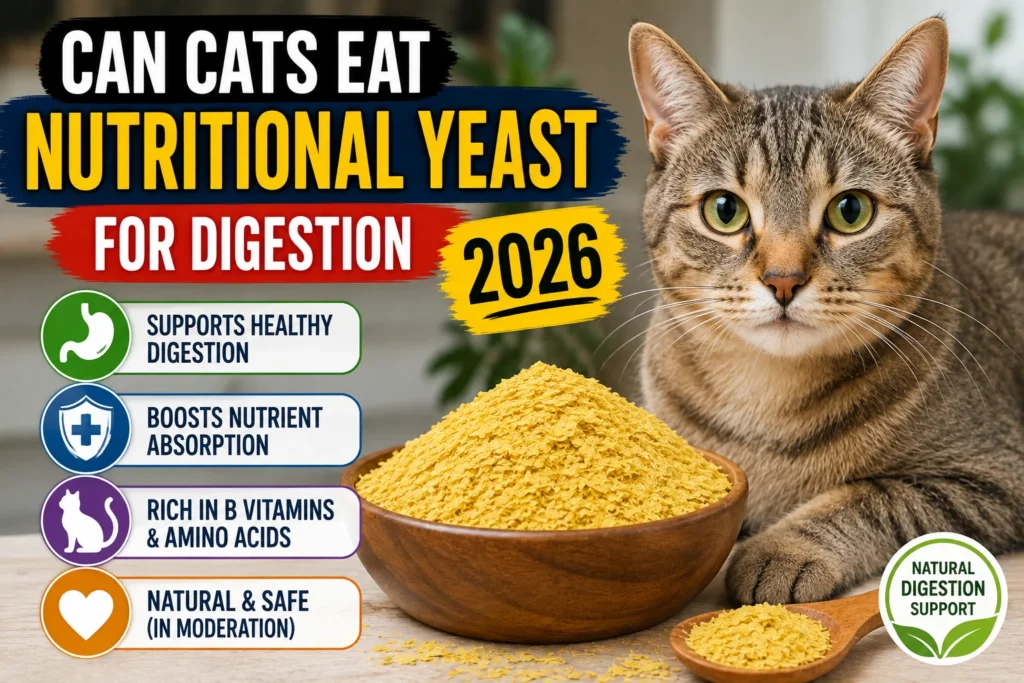
Being a veterinarian and a certified cat nutrition expert, one of the most frequently asked questions from concerned parents is whether certain human foods are beneficial for their cats. Nutritional yeast (the dietary supplement often referred to by fans as ‘nooch’) has become famous as a super food but can a cat be fed nutritional yeast for digestion? The quick answer is that cats can be given nutritional yeast in small amounts, it is safe and even healthy for many cats. However, if a cat eats nutritional yeast, it needs to be given properly with awareness of risks involved.
What Is Nutritional Yeast?
Nutritional yeast is a de-activated yeast usually derived from Saccharomyces cerevisiae strain. This yeast is grown on sugarcane or beet molasses, after which it is heated to “kill” the cells and make it inactive and suitable for human consumption.
This distinction, from its active counterpart baker’s yeast, is crucial. Active baker’s yeast should be completely avoided as it is toxic to cats, will ferment in the stomach producing gas, toxic levels of alcohol and possibly fatal stomach twists. Nutritional yeast simply cannot ferment and cannot rise, making it inherently safe and suitable for use with cats when given in the right way.
It can have a slightly “cheesy”, “nutty” or “savory” taste which most cats generally seem to enjoy. The yeast is yellow/golden in color and is used primarily in vegan dishes in the capacity of a cheese-substitute, but as a supplement provides a good source of B vitamins, protein and fiber.
Digestive Benefits of Nutritional Yeast for Cats
Supports a Healthy Gut
Nutritional yeast itself has nutrients that may have health benefits to digestive function. The B vitamins have important functions that can help maintain a healthy nervous system and promote metabolic activities that effect digestion. Nutritional yeast is also included in some over-the-counter digestive support products marketed towards cats as having “gut support”. It is theorized that some of the byproducts of the yeast production may help promote healthy digestion and absorption of nutrients.
High-Quality Protein Source
Nutritional yeast is made of roughly 50-60% protein . Although cats are obligate carnivores and need animal protein sources as their main protein sources, they can useritional yeast as a way to get extra protein and nutrients .
Appetite Enhancement
Improves palatability nutritional yeast may have a role to play for picky eater “The glutamic acid found in nooch imparts an umami flavor which I’ve noticed many cats go wild for”. Nutritional yeast adds umami-y yummy food taste to your cats’ diet. “This has been a real life-saver for cats not feeling their appetite, aged kitties or recovery stages… “Food with added yeast in one particular study consumed two times the amount of controls”.
Natural Digestive Support
Several brands of nutritional supplements for pets offer a formulation that contains both nutritional yeast and probiotics, along with digestive enzymes. While nutritional yeast itself is not a probiotic, it can enhance other dietary supplements intended for the digestive tract by providing essential components necessary for a healthy tract.
Also Check: Why Is My Senior Dog Pacing Back and Forth in Circles at Night 2026?
How to Safely Feed Nutritional Yeast to Cats
Recommended Dosage
For digestive support, moderation is key. Here are general guidelines:
- Starting dose: ¼ teaspoon per day
- Maximum recommended: ½ teaspoon per day for an average-sized adult cat
- Always start small: Begin with a tiny pinch and gradually increase to recommended amounts
Of course, these are very general and you will need to consult with your vet to provide advice on portion sizes appropriate for the body weight, health of the cat as well.
Choosing the Right Product
When it comes to picking up nutritional yeast:
- Choose unfortified. There are a lot of nutritional yeasts that you can buy in health food stores or even in the supermarket that are fortified with added vitamins and minerals designed to benefit humans. Stick with an unfortified product.
- Make sure the product does not contain garlic or onion.
- Many brewer’s yeast product (they work and taste and behave exactly the same as nutritional yeast to your cat but have a garlic/onion added to their formula for palatability) will contain garlic or onion which can be toxic to your cat. Avoid products with added salt.
How to Serve
Nutritional yeast is versatile and easy to incorporate into your cat’s diet:
- Food topper: Sprinkle the recommended amount over wet or dry food
- Mix in: Blend thoroughly into canned food
- Treat: Some cats will eat it directly from your hand as a treat
Important Safety Considerations
Phosphorus Content and Kidney Health
The main issue feeding cats nutritional yeast is its phosphorus content. Quarter to half teaspoon contributes around 20-40mg of phosphorus to your cats diet. This is usually fine for healthy cats; though too much can lead to;
- Depletion of calcium and weakening of bones
- Accumulation of phosphorus and progression of kidney disease in susceptible cats
- Cats with a disease in their kidneys should avoid nutritional yeast
Allergic Reactions
Some cats may be allergic or sensitive to yeast. Watch for signs of an allergic reaction:
- Excessive scratching or skin irritation
- Vomiting or diarrhea
- Sneezing or respiratory symptoms
- Lethargy
If you notice any of these signs, discontinue use and consult your veterinarian .
Medication Interactions
Before adding nutritional yeast to your cat’s diet, consult your veterinarian if your cat is:
- On medication for any chronic condition
- Pregnant or nursing
- Diagnosed with kidney disease or other organ dysfunction
- Under treatment for any health condition
Frequently Asked Questions
Can cats eat nutritional yeast on a daily basis?
Sure, it’s alright if a cat consumes a limited quantity of nutritional yeast on a regular basis. You shouldn’t offer more than a teaspoon of nutritional yeast each day for a grown-up cat of moderate dimension. It should only be used as a supplement for your cat, not as a substitute meal, as well as should not comprise greater than 10% of your cat’s day-to-day caloric consumption.
Will nutritional yeast benefit felines with intestinal distress?
Since nutritional yeast is abundant in B vitamins and also fiber, it can assist with intestinal tract wellness. Numerous pet cats feel that this supplement improves hunger and also can aid to aid their pets consume their whole dish. Still, if your cat suffers from recurring bowel problems, always seek advice from your vet before including this nutrient to their food.
Will dietary yeast cause cats diarrhea?
Nutritional yeast is generally non-toxic to pet cats. If you provide your pet excessive or they are susceptible to yeasty treats, you’ll quickly discover the impact when your kitty experiences bowel problems. It would be smart to start with a percentage to ensure you pet doesn’t obtain diarrhea with any new supplements you might try.
Is nutritional yeast the exact same as brewers yeast for your feline?
No, there is a difference between these two foods. The difference among brewers yeast and nutritional yeast includes the manufacturing of these healthy, cheesy items of B B supplements, which are manufactured by utilizing molasses as well as grow on it. That differs compared to brewery yeast, which uses malt, beer, and various other grains– some of which are deadly to felines!
Is yeast nutrition high in phosphorus?
In fact, dietary yeast does consist of phosphorus. Between one-quarter as well as one half teaspoon includes 20 to 40 mg phosphorus to your cat’s day-to-day diet plan. However this is normally safe for pet cats that don’t experience kidney failure, and are otherwise healthy to eat, it’s perhaps not recommended for pet cats that consume a special reduced phosphorus diet plan.
Can dietary yeast assist my feline’s coat as well as skin?
The nutrient benefits from B vitamins discovered in nutritional yeast assist support a great coat. If you offer your cat adequate, small amounts of dietary yeast, he or she might seem to gain a lustrous jacket, as well as good skin health generally, but it is generally far too couple of nutrients per serving for this to play any type of significant role whatsoever.
Can diabetic felines eat yeast nutrition?
You will certainly want to see and consult your veterinarian previously providing your pet diabetic cat with any dietary yeast since it won’t necessarily work the same way a brewers yeast item can aid with blood sugar levels. Its nutritional price has to be taken into account also if it doesn’t work to support with blood sugar regulation for a feline in this state.
Can kittens eat yeast nutrition?
I would recommend seeing your veterinarian before offering a young kitten any sort of new dietary item of that type of nutrient like these things if the kitten is less than 12 weeks old. Nutritional yeast is not a complete food item, and the kittens body is not a fully established or grow grown so the appropriate types of food types of food are going to be exceptionally significant and essential.
Does nutritional yeast make kitties gassy?
Similar to anyone else or pet, felines get gas from new foods and supplements they don’t always readily digest or accustomed to ingesting. Because this B-Vitamin food is a bit of a fibroids it can lead to gas and intestinal bloating and can certainly make a feline’s digestion have problem, too if their digestive systems are delicate to it.
How can I tell if my pet has an allergy to nutritional yeast?
It may create your feline cat to have hives or begin an outbreak of skin redness on his or her face. Signs would include constant scratching on his or her parts, the sneezes, Vomiting, a nasty nasal cavity, a loose stool, diarrhea as well as several more symptoms. Your cat ought to reveal These signs typically just within hrs to a few days after introducing The The supplement for him / her kitty cat.
The Bottom Line: Is Nutritional Yeast Right for Your Cat?
Overall, Nutritional yeast can be safely and effectively be given to most cats, if administered properly. It offers cats essential B Vitamins, protein, can aid the digestive system and make food more palatable to picky eaters. However it is not a cure for all things and can still cause problems if given to certain cats or in too large quantities due to the phosphorus levels and possibilities of developing an allergy.
The key takeaways:
- Use small amounts (¼ to ½ teaspoon daily)
- Choose unfortified varieties without additives
- Start slowly and monitor your cat’s response
- Consult your vet first, especially for cats with health conditions
- Never use baker’s yeast or active yeasts, which are dangerous