Why Your Cat is Peeing Right Outside the Litter Box on Soft Rugs 2026
Your cat owner, there are few more unwelcome finds than a warm, moist circle on the nice area rug. Doesn’t that just feel like a personal attack? As a veterinarian, let me assure you your cat is not being “spiteful.” He is communicating, and it is typically a very bad sign for his current situation.
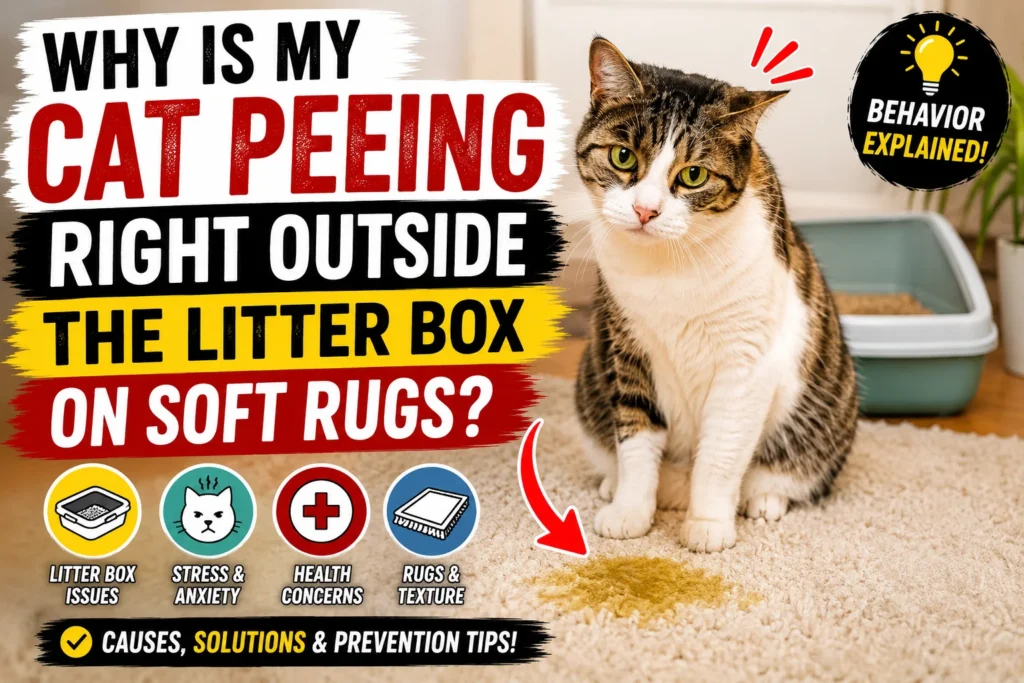
In the “perfect storm” of circumstances for when a cat chooses to go on the soft rug instead of her litter box, we focus on three things Medical Issue, Litter Box Aversion, and Anxiety. Figuring out which one is (or two are) occurring is the only way to end the cycle of the “perfect storm.”
The Hidden Medical Problem Pain and Discomfort
Before we can even begin to consider the type of litter or texture of the rug, we have to address the bladder. The single most common cause of unsuitable elimination in cats is medical. The very first thing that I advise my clients is that a physical examination of their cat is essential.
FIC and UTIs: If the cat’s bladder is inflamed, they may learn to associate the litter box with this pain. Or they may have a constant urgent need to urinate, but can’t make it to the litter box, or avoid it altogether because it’s painful to get to.
Bladder Stones: Stones in the bladder may lead to pain and difficulty urinating. Your cat may ” cry” for help by urinating outside the box.
Kidney Disease or Diabetes: Cats with these conditions will drink a lot of water and produce a lot of urine. They can simply be “caught off guard,” or by the time they try to reach the box, “have an accident.”
It’s essential to take your cat to the vet to rule out these very painful and possibly critical medical conditions before you consider any behavior modification.
The Environmental “No” Why the Litter Box Sucks
Since we’ve eliminated any physical health issues with the cat, we should think about the cat’s surroundings. The cat is a habitual animal with very specific needs as it now appears the rug is preferred over the litter box. The litter box must be the offending feature.
1. The Location is Wrong
Cats are carnivores. They like a private space to curl up and do their business and where they know they can feel safe. When it’s no curtains over a bathroom window, a hallway where small humans or other furry creatures could surprise them, a laundry room filled with noise and vibration anywhere they feel a bit on edge they will look for a new option, such as your warm, inviting living room rug.
2. The Cleanliness is Lacking
OK this seems self evident it seems more than self evident.. But actually it’s more than critical!!! Cats you’ll know clean themselves a lot.
Well let’s say that not only you won’t like your cat sticking it’s paws on it’s own feces your cat doesn’t either.
Cats can sense odor on a completely different degree to humans. They can not stand a very faint whiff of ammonia on there noses…
3. Texture Preference
Also most cats appear to have preference for texture of objects. For the vast majority of my clients that exhibit this problem they too appear to also enjoy burrowing on objects that are soft and fluffy, like carpets, clothes, bedding, anything that isn’t a slick surface of a cat litter box. This again can be related back to the texture the cat actually dislikes about the litter itself.
4. The Litter Itself
Cats have definite preference as to what sort of litter they will choose to eliminate in. Should you have just changed brands, or the chemical smell of the litter is high, then cats can ignore it for a spell.
5. It’s Not Accessible
Arthritic cats or senior cats may have difficulty jumping into a box with high walls. A rug takes out all the climbing.
The Emotional “No” Anxiety and Stress
Cats hate any sort of change: a baby, another pet, a schedule change that impacts their day, even shifting a few pieces of furniture. That extra anxiety can make a cat urinate on something like a favorite soft rug that’s soaked with your smell, which they “claim,” comforting them.
How to Break the Cycle A Step by Step Guide
Here’s a breakdown of what you need to do:
1. First, see a vet. (Like I said, non-negotiable)
2. Sanitize and degrease You’re not going to be able to truly remove the smell from your carpet until you use enzymatic cleaners for cat urine.
Standard carpet cleaning chemicals will just fool us, your cat will continue to smell and will continue to eliminate in the same area as long as it smells like pee in your feline sense of nose. Enzymatic cleaners eliminate odor molecules by breaking them down.
3. The “rug restaurant “trick: A really funny way to teach your cat to keep things off of things is this, a couple of days, “set up a restaurant” and feed him on it. While our pet may think we like to eat off of their favorite couch it isn’t so cats simply will not eliminate and eat in the same place (it goes against instinct).
4. Add more litter boxes.
You may need one to one cat plus one more, just have an additional box. You can then place these new litter boxes in the locations where they may be urinating.
5. Mix things up.
Test the same litter in a low rimmed litter box vs. A deep box. See what you get in another test: a medium sand vs. A soft fine grain in still another.
6. Consider Feliway.
This type of product can be put in the form of an automatic diffuser, in the form of an adapter to insert into the walls, as a gel to be poured into the litter box and as sprays.
For More Info :
Frequently Asked Questions (FAQs)
Is my cat peeing on my rug just to be mean or get revenge?
No. Cats do not operate in spite. Inappropriate urination is a sign of a physical or emotional problem. They are not trying to punish you; they are trying to tell you something is wrong .
What is the first thing I should do if my cat pees on the rug?
Take your cat to the vet for a full physical exam, including a urinalysis. This is to rule out painful medical issues like a UTI, bladder stones, or kidney disease, which are the most common causes .
Why do cats seem to prefer soft rugs over their litter box?
It’s often a combination of factors. Soft surfaces feel good under their paws. Additionally, a rug in a quiet living room may feel safer than a box in a noisy hallway. They may also be attracted to the scent of you on that rug .
How do I get the smell of cat pee out of my rug completely?
Use an enzymatic cleaner (like Nature’s Miracle). These use enzymes to break down and digest the proteins in cat urine, eliminating the odor at a molecular level, which is essential to prevent re marking .
Is there a way to prevent my cat from peeing in the same spot on the rug?
Yes. You can try the “rug restaurant” method feeding your cat their meals on the spot for a few days. Cats generally won’t eliminate where they eat .
Could my cat have urinary crystals or stones causing this?
Yes. Urinary crystals, stones, and sterile cystitis can all cause pain and inflammation, leading your cat to associate the litter box with discomfort and avoid it. This is why a vet visit is critical .
How do I clean a litter box to make it more appealing?
Wash the litter box with warm water and a mild dish soap or a pet-safe, non-ammonia-based cleaner at least once a week. Avoid bleach, as the smell of ammonia can actually attract your cat to urinate there again .
What is Feline Idiopathic Cystitis (FIC)?
FIC is a complex condition where a cat has bladder inflammation without a known cause (no bacteria or stones). It is often linked to stress and can cause significant pain and inappropriate urination. Treatment often involves reducing stress and dietary changes .
My cat is using the litter box but also peeing on the rug. Why?
This is a classic sign of a medical issue like a UTI. They are trying to use the box, but the urgency and discomfort cause them to have accidents in other places when they just can’t make it in time .
How many litter boxes should I have for one cat?
You should have two litter boxes for one cat, and place them in different quiet locations. This gives them a choice and prevents them from avoiding a single bad spot .
Dealing with this issue requires patience and detective work. By treating the medical problem, correcting the environmental issues, and managing your cat’s stress, you can help them get back to their routine and save your rugs. Remember, your cat is counting on you to listen to what they are trying to tell you.