Symptoms Of Parvo In Vaccinated Puppies
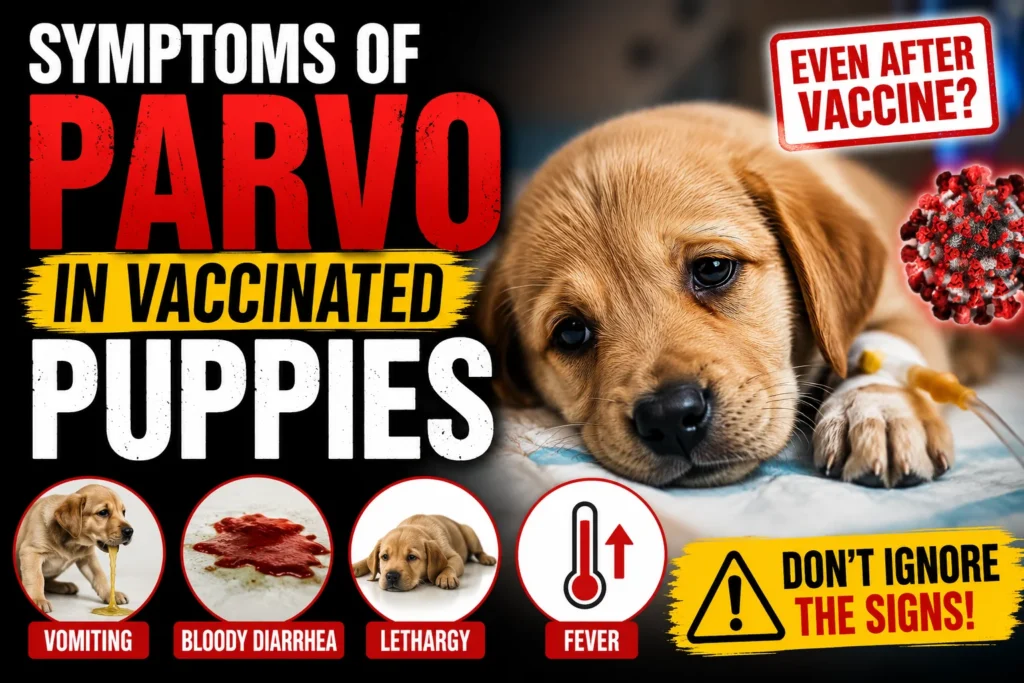
Understanding the symptoms of parvo in vaccinated puppies is critical because early intervention is the only thing that stands between life and death.While vaccines are miraculous life-savers so they are not 100% effective in every single animal.
Why Symptoms Of Parvo In Vaccinated Puppies?
Prior to discussing the symptoms, you should learn about “The Immunity Gap.” Parvovirus is an extremely severe and highly infectious virus which affects the digestive system and the bone marrow.
There are four main reasons why vaccinations may fail:
- Maternal Interference: The puppy received antibodies from its mother’s milk. While this protects them as newborns, it can actually neutralize the vaccine if given too early.
- Incomplete Series: One shot is not enough. Full immunity requires a series of boosters. Incomplete Vaccination Schedule: If you have just completed half of the schedule, your puppy will be susceptible to the disease.
- Immunosuppression: In other words when a puppy has a compromised immune system because of stress, parasites or poor diet.
- Mutation or Viral Load: It’s very uncommon but large exposure to the virus could cause the immune system of a young animal to malfunction.
Note: The vaccinated puppy which developed “breakthrough parvo” has a better chance of survival than an unvaccinated one.
The Critical Symptoms of Parvo in Vaccinated Puppies (The “Breakthrough” Signs)
In unvaccinated dogs, parvo is explosive vomiting, bloody diarrhea, and rapid collapse. In vaccinated puppies the symptoms can be more insidious. They mimic a simple upset tummy.
Watch for these 6 specific red flags:
1. The “Silent” Lethargy (Not just tired)
A normal puppy plays hard and naps hard. Parvo lethargy is different. Your puppy may still wag its tail when you call but it will stop mid play to lie down. They don’t want to chew toys or follow you to the kitchen. This is often the first sign.
2. Anorexia with a Twist
Vaccinated pups with parvo often show selective anorexia. They might refuse kibble but happily take a high-value treat. Within 12-24 hours, they refuse everything including water.
3. Soft Stool (Not necessarily bloody)
Classic parvo is “hemorrhagic gastroenteritis”. In vaccinated puppies, the virus is often partially blocked. Instead of red blood you might see:
- Yellow or tan soft-serve consistency stool.
- Mucus coating the poop.
- A sudden foul “sweet” or “rotting meat” odor without visible blood.
4. The “Bread Loaf” Position
When the puppy is having nausea but not throwing up, it usually sits hunched up in one place.This indicates abdominal pain. If a vaccinated puppy sits like this for more than an hour then call your vet.
5. Hypersalivation
Since the gut isn’t moving properly gas builds up. Even without the vomiting, the puppy may begin to drool lots of thick and rope-like saliva this is the sign of nausea.
Fever then Hypothermia
Within the first 24 hours after ingestion, the puppy might feel hot to the touch. But since vaccinated puppies put up more resistance, they usually crash abruptly. When the ears and paws are feeling cold to the touch then it means that the fever has progressed into hypothermia.
Also Check: Why Do Rabbits Thump Their Back Legs Loudly?
The “Golden Window” Difference
For an unvaccinated puppy, you have about 12-24 hours to get treatment before death.
For a vaccinated puppy, you have a longer window approximately 48-72 hours. The symptoms progress slower. Do not waste this time. Do not “wait to see if he feels better tomorrow.”
Immediate Action Plan: What to do RIGHT NOW
In case your vaccinated puppy exhibits even two symptoms from those mentioned above:
- Isolate: Consider that the puppy has parvo. Ensure that the puppy does not come into contact with the ground.
- Do not self medicate: Do not administer Pepto Bismol or anti nausea drugs to your puppy.
- Go to the ER Vet: Request a Parvo SNAP test. It takes 10 minutes.
- Bring vaccine records: The vet needs to know dates and brands of shots to adjust treatment.
Treatment Expectations for Vaccinated Puppies
Because your puppy has some immunity treatment is usually shorter. It still requires:
- IV fluids.
- Anti-emetics.
- Antibiotics.
- Plasma transfusions.
Survival Rate: 85-90% for vaccinated puppies who receive prompt care vs. 10-20% for unvaccinated without care.
Prevention: Closing the Immunity Gap
To ensure this never happens to your next puppy:
- Boost until 20 weeks: Do not stop vaccines at 16 weeks. High-risk breeds need a final booster at 18-20 weeks.
- The 2-Week Rule: Your puppy is not protected until 2 weeks after the final booster in the series.
- Socialization Safety: Carry your puppy in a sling or use a wagon at pet stores. Do not let feet touch the ground in high dog traffic areas.
Frequently Asked Questions (FAQs)
Can a puppy get parvo 3 days after vaccination?
Yes. It takes 5 to 7 days for a vaccine to stimulate immunity. If a puppy was exposed to the virus 5 days ago and vaccinated 3 days ago, the virus will win. The vaccine doesn’t work instantly.
My puppy had 2 shots. Is he safe from parvo?
Not fully. Two shots provide partial protection. He is safer than a puppy with zero shots, but he is not fully covered until 1-2 weeks after the 3rd or 4th booster.
What does parvo vomit look like in vaccinated puppies?
It usually starts as clear or yellow foam. As the condition worsens, it becomes brown or bloody. In vaccinated pups, it often stays yellow for longer which owners mistake for “empty stomach” vomit.
How long does parvo last in vaccinated puppies?
The severe illness usually lasts 3 to 5 days if hospitalized. Unvaccinated puppies suffer for 7-10 days. Vaccinated puppies bounce back faster because their immune system recognizes the invader.
Can a dog be a carrier of parvo without symptoms?
No. Adult dogs can have subclinical parvo and shed the virus but they clear it in 2 weeks. Puppies always show symptoms eventually though they are milder in vaccinated ones.
Can the parvo vaccine itself cause parvo?
No. The vaccine is a “modified live virus” or killed virus. It cannot replicate to cause the full disease. In extremely rare cases, it might cause mild lethargy or soft stool for 24 hours but not bloody diarrhea or death.
Is there a home test for parvo in vaccinated puppies?
No reliable home test exists. You must go to a vet for a SNAP test. Home pregnancy-style tests for parvo are inaccurate. Do not trust them with your puppy’s life.
Can stress trigger parvo in a vaccinated puppy?
Yes. Stress releases cortisol which suppresses the immune system. A vaccinated puppy with low antibody levels can have a “stress-induced” parvo break.
Should I booster my puppy right after recovery from parvo?
No. Do not vaccinate a recovering parvo puppy. The immune system is already fighting the virus. Vets typically wait 3-4 weeks post-recovery to give the next scheduled booster.
How do I disinfect my house if my vaccinated puppy got parvo?
Use bleach or veterinary-grade disinfectants. Parvo is resistant to alcohol, Lysol and most natural cleaners. Soak items for 10 minutes. Indoors steam cleaning is best.
Conclusion
Don’t let the “vaccinated” label give you a false sense of security.Parvo is a master of disguise. You are your puppy’s only voice. If your gut says something is wrong even if the puppy is “only a little tired” or “just has soft stool” trust it. Run, don’t wal to the veterinarian.