Why Is My Dogs Nose Dry and Crusty?
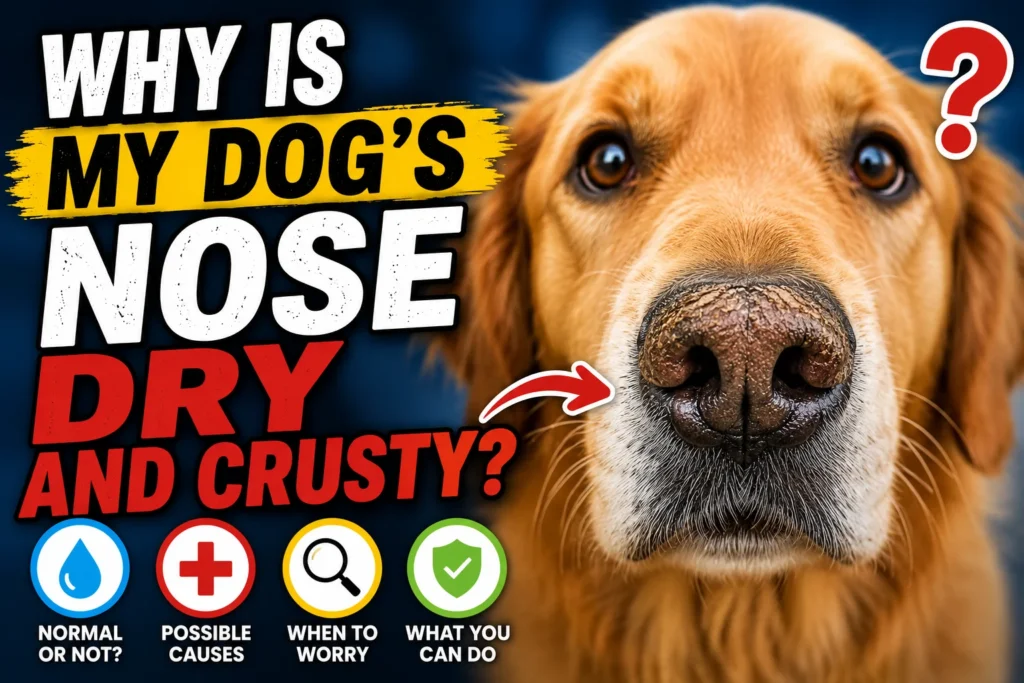
Why Is My Dogs Nose Dry and Crusty? As a pet parent, you likely check your dog’s nose daily. We have all heard the old myth: “A cold, wet nose means healthy a warm, dry nose means sick.”
While a dry or crusty nose can signal a problem, it is often a benign, temporary issue. However, knowing the difference between a simple dry nose and a veterinary emergency is crucial.
In this guide, I will walk you through the clinical reasons behind canine nasal dryness, home remedies that work, and exactly when you should rush to the emergency vet.
What Does a “Normal” Dog Nose Look Like?
First, let’s ditch the myth. A healthy dog’s nose fluctuates between wet and dry multiple times a day. Dogs secrete a thin layer of mucus to absorb scent chemicals. A wet nose is simply a better scent detector, not a health meter.
Normal variations include:
- Dryness after waking up (sleeping dogs don’t lick their noses).
- Dryness after exercise in the sun.
- Warm noses after being near a heater.
The real red flag is not temperature it is texture and other symptoms.
Why Is My Dogs Nose Dry and Crusty? 7 Medical Reasons
When dryness turns into crusting, cracking, or bleeding, there is usually an underlying cause.
1. Dehydration (The Most Common Cause)
If your dog isn’t drinking enough water, their body diverts moisture to vital organs, leaving the nose dry and cracked.
- Signs: Sunken eyes, lethargy, thick saliva, loss of skin elasticity.
- Fix: Provide fresh water immediately. Add low sodium broth to encourage drinking.
2. Hyperkeratosis (Excessive Nasal Tissue Growth)
Common in older dogs and certain breeds (Labradors, Bulldogs, Pugs), this is where the body produces too much keratin (the protein in nails/skin).
- Signs: Hard, dry, spiky, or “paintbrush-like” crusts on the top of the nose.
- Fix: This is chronic. You cannot cure it, but you can manage it with vet approved balms and gentle exfoliation.
3. Allergies (Environmental or Food)
Just like humans, dogs get seasonal allergies. Atopic dermatitis often manifests on the face and nose.
- Signs: Dry, crusty nose accompanied by itchy paws, red ears, or sneezing.
- Fix: Identify the allergen (pollen, dust mites, beef, dairy). Antihistamines only under vet guidance.
4. Sunburn (Solar Dermatitis)
Dogs with pink noses or thin white fur are highly susceptible to sunburn.
- Signs: Red, dry, peeling, or crusty nose after a sunny day.
- Fix: Dog-safe sunscreen (zinc oxide is toxic to dogs avoid human brands). Limit sun exposure between 10 AM and 4 PM.
5. Autoimmune Disorders (Serious)
Conditions like Pemphigus foliaceus cause the immune system to attack the skin.
- Signs: Severe crusting, oozing sores, loss of nose pigment (turning from black to pink/brown), and deep painful fissures.
- Fix: Requires prescription steroids or immunosuppressants from a vet immediately.
6. Nasal Hyperkeratosis Secondary to Illness
Distemper (a deadly virus) or Leishmaniasis can cause severe nasal crusting.
- Signs: Thick yellow/green discharge from eyes and nose, coughing, fever, and a “hard” crusty nose.
- Fix: Emergency vet visit. Unvaccinated puppies are at highest risk.
7. Trauma or Foreign Body
If your dog has been digging in dirt, rubbing their face on carpet, or got stung by a bee, the nose will dry out as it heals.
- Signs: Swelling, scabs, or a single crusty spot rather than the whole nose.
- Fix: Clean gently with saline. If swelling is severe, see a vet.
Also Check: How to Cut Overgrown Dog Nails at Home Safely?
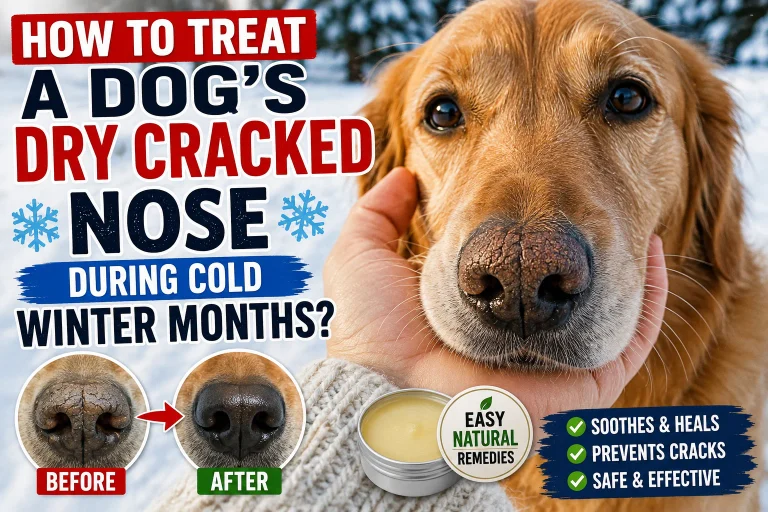
How to Treat a Dry, Crusty Dog Nose at Home
Vet Tip Never use human lotion. Ingredients like camphor, menthol, or fragrances burn dogs’ noses and are toxic if licked.
Step 1: Hydration Check
Perform the “skin tent test.” Gently pull up the skin between your dog’s shoulder blades. If it doesn’t snap back immediately, your dog is dehydrated.
Step 2: Gentle Cleaning
Use a warm, damp washcloth to gently wipe away crusts. Do not pick or peel the crust this exposes raw, bleeding tissue.
Step 3: Apply a Safe Balm
Use only pet safe balms containing
- Shea butter
- Jojoba oil
- Vitamin E
- Beeswax
Apply 2-3 times daily until the nose softens.
Step 4: Humidify the Air
Run a cool mist humidifier in the room where your dog sleeps. Dry winter air is a major cause of crusty noses.
When to Worry (The Red Flags)
A dry nose alone is rarely an emergency. However, if you see these signs, book a vet visit today.
- Bleeding or deep cracks (fissures)
- Pus or yellow/green discharge
- Loss of nose color (turning pink or white)
- Lethargy, vomiting, or refusing food/water
- Swelling of the muzzle or eyes
Final Verdict
Most crusty noses are benign caused by dehydration, low humidity, or sleeping habits. However, if the crusting persists for more than 48 hours despite home treatment, or if the nose changes shape/color, seek professional care. Your dog’s nose is a window into their immune system; don’t ignore chronic changes.
Frequently Asked Questions (FAQs)
Is a dry nose a sign of fever in dogs?
No. A dog’s nose temperature does not correlate with internal body temperature. You must use a thermometer (rectal or ear) to check for fever. A dog with a fever will have warm ears, red gums, and lethargy not just a dry nose.
Can I put coconut oil on my dog’s dry nose?
Yes, with caution. Virgin coconut oil is non toxic and moisturizing. However, it is low in antibacterial properties compared to commercial balms. It can also cause loose stools if your dog licks too much off their nose. Use sparingly.
Why is my dog’s nose crusty but acting normal?
This is likely idiopathic nasal hyperkeratosis (genetic overgrowth of nose leather) or a result of dry indoor air. It is cosmetic, not painful, as long as the crusts don’t crack deeply. Simply apply balm daily.
Can dog food cause a dry crusty nose?
Yes. Food allergies (specifically to chicken, beef, corn, or wheat) often present as facial itching, red skin, and a dry, inflamed nose. Try a limited-ingredient diet for 8 weeks to see improvement.
Why does my dog wake up with a dry nose?
Dogs do not lick their noses while sleeping. Saliva evaporation stops, and the nose dries out naturally. This should resolve within 30 minutes of waking up and licking.
Is Vaseline safe for a dog’s nose?
Technically non toxic, but not recommended. Vaseline (petroleum jelly) creates a barrier that traps bacteria and dirt against the nose. It also offers zero nutritional or healing benefit. Use a pet balm instead.
My dog’s nose is dry and also sneezing. What does that mean?
Likely allergies or a foreign body (grass seed, foxtail). The sneezing irritates the nasal passages, reducing moisture. Check the nostrils for debris. If sneezing continues for 24 hours, see a vet to rule out nasal mites or tumors.
Why is my old dog’s nose turning from black to pink and crusty?
This is “snow nose” (depigmentation) combined with age related hyperkeratosis. While color change alone is harmless, pink skin is more vulnerable to sunburn and dryness. Apply sunscreen balm daily.
Will a humidifier fix my dog’s crusty nose?
Often, yes. Dry forced air heating in winter sucks moisture from the nose. Running a humidifier 24/7 in your dog’s sleeping area resolves 70% of simple dry nose cases within 3 days.
How do vets treat severe nasal hyperkeratosis?
Treatment includes: 1) Debriding (trimming) excess crust with sterile scissors, 2) Prescription vitamin A or retinoid creams, 3) Oral Omega-3 fatty acids. In severe cases, oral retinoids (drugs) are used to slow keratin production.