Signs of Heartworms in Dogs Even on Prevention
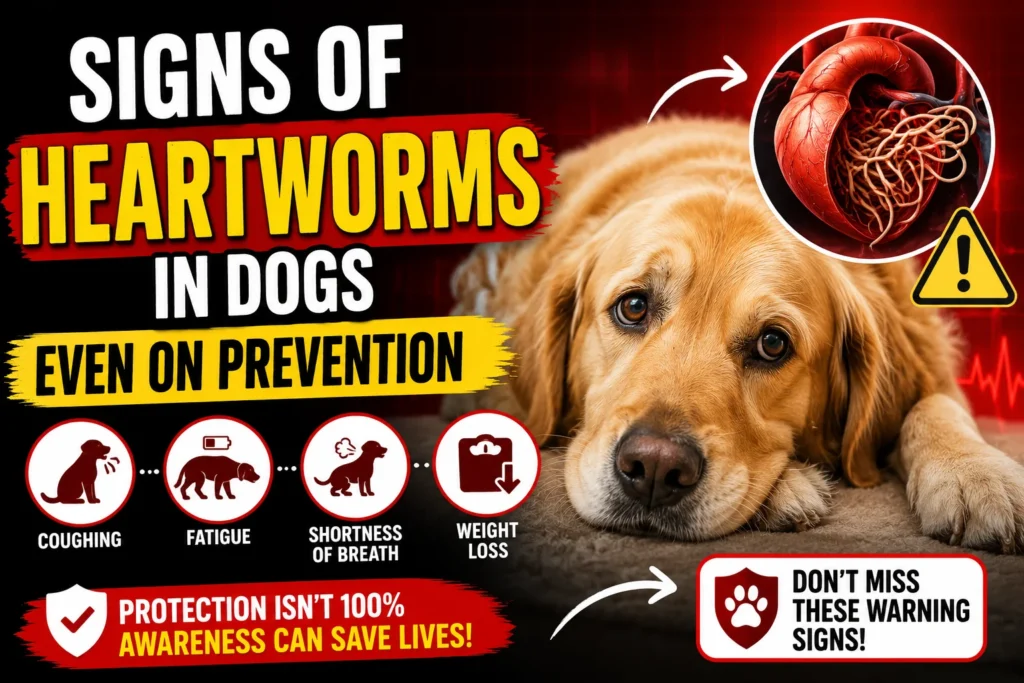
Signs of Heartworms in Dogs Even on Prevention, As a veterinarian, one of the most heartbreaking conversations I have with pet owners begins with the phrase: “But doctor, I never missed a dose.”
You spend a small fortune on monthly chews, topical liquids, or annual injections to protect your furry family member. You mark your calendar. You are a responsible pet parent. So, when your dog starts coughing or getting tired on walks, your mind goes to arthritis, a cold, or simply “getting old.”
It rarely goes to heartworms. But here is the clinical truth that many pet owners don’t know: No prevention is 100% effective.
While modern preventatives are miraculous (over 99% effective), the 1% does happen. Understanding the signs of heartworms in dogs even on prevention is not about scaring you it is about saving your dog’s life. Early detection is the only thing that separates a routine treatment from a fatal outcome.
Signs of Heartworms in Dogs Even on Prevention
Why Does Prevention Sometimes Fail?
Before we look at the symptoms, we must understand the “why.” If your dog is on prevention but still infected, one of these three things usually occurred:
- The “Missed Mosquito” (Human Error): A dose given two weeks late, a dog that vomits the pill without you knowing, or incorrect weight dosing creates a window of vulnerability.
- Macrocyclic Lactone Resistance: Emerging studies suggest that some strains of Dirofilaria immitis (heartworms) are genetically resistant to the drugs found in common preventatives like Ivermectin.
- The “Puppy Loophole”: If your dog was infected 45 days before you gave the first dose (the “silent” larval stage), the prevention kills the babies but not the mature adults already growing.
The Golden Rule of Vet Med: Prevention stops future infection. It does not kill adult worms living in the heart today.
Also Check: How to Stop a Puppy From Biting Your Hands When Playing
The 5 Critical Signs Your Preventative Has Failed
You are looking for Heartworm Associated Respiratory Disease (HARD) . Even with prevention, if a resistant larva slips through, it causes specific physiological changes. Do not ignore these red flags.
1. A New, Dry “Goose-Honk” Cough
A normal dog coughs occasionally. A heartworm cough is dry, persistent, and often worse after exercise or excitement. Because the worms live in the pulmonary arteries (lungs), the body tries to cough them out. If your dog is on prevention but sounds like a honking goose, request an antigen test immediately.
2. Exercise Intolerance (The “Lazy” Dog)
Is your Labrador who used to hike 5 miles now lying down after 1? This is the most misdiagnosed sign. Owners assume joint pain or age. In reality, the worms are physically blocking blood flow. The heart has to work twice as hard to pump blood through worm clogged vessels. The dog isn’t lazy; they are suffocating in slow motion.
3. Syncope (Fainting or Collapsing)
This is a medical emergency. If your dog is playing, suddenly collapses, gets up, and shakes it off like nothing happened, don’t just “wait and see.” This fainting (syncope) occurs because a mass of worms temporarily obstructs blood flow to the brain. Even on prevention, this indicates a high worm burden.
4. Labored Breathing (Dyspnea)
Look for belly breathing (where the stomach moves heavily in and out) or flared nostrils while resting. Because the lungs are inflamed (Pulmonary Thromboembolism), the dog cannot get enough oxygen. If your dog is on a preventive but breathing like they just ran a marathon while lying on the couch, head to the ER.
5. Weight Loss Despite a Good Appetite
Heartworms are parasites. They steal nutrition. A dog that eats well but is losing muscle mass over the ribs and spine is a classic sign of chronic parasitic disease. Owners often praise the weight loss (“Oh, he looks trim!”), but in a dog on prevention, this is a diagnostic clue for a failed protocol.
The “Silent” Infection Caval Syndrome
I am including this because you need to know the worst-case scenario. Rarely, a dog on prevention develops Caval Syndrome. This happens when so many worms migrate into the vena cava (the main vein returning blood to the heart) that they cause sudden cardiovascular collapse.
Signs: Dark, “root beer” colored urine, pale white gums, and loud heart murmurs. This is fatal without emergency surgical removal (vena caval extraction).
The Gold Standard What To Do Next
If you see any of the signs above, do not just increase the dose of your prevention (this can cause a fatal anaphylactic reaction if microfilariae are present).
Step 1: Request a Combo Test.
Most vets use a 4DX SNAP test. It checks for heartworm antigen (adult females) and antibodies (exposure). Even if you bought your meds online or from a big box store, get the test.
Step 2: Understand the “Occult” Infection.
Sometimes, male-only infections or very young infections don’t show on standard tests. If symptoms persist but the test is negative, ask for an echocardiogram (heart ultrasound).
Step 3: The Treatment Protocol.
If your dog is positive despite prevention, the vet will use Melarsomine (Immiticide) injections. Be aware: Exercise restriction for 8 weeks is non-negotiable. A single sprint can cause dead worms to break loose and cause a fatal clot.
Prevention is Still the Answer
Do not stop giving prevention because you are scared of failure. A 99% success rate is still the best bet. However, the standard of care for “high-risk” dogs (hiking, swimming, living in the South) is now annual testing + year round prevention.
The Bottom Line
Your dog cannot tell you they feel a parasite swimming in their heart. They rely on you to notice the subtle shifts. If your dog is on prevention but has a cough, gets tired easily, or collapses stop blaming the weather or old age. Test, don’t guess.
Frequently Asked Questions (FAQs)
Can a dog on monthly heartworm prevention still get heartworms?
Yes. While rare (less than 1% with perfect compliance), no preventative is 100%. Causes include missed doses, vomiting the pill, or drug resistant heartworm strains.
How soon will symptoms appear if prevention fails?
Symptoms take 6 to 7 months to appear after an infected mosquito bite. This is called the “pre-patent period.” A dog may have adult worms in July from a bite the previous January.
Can a dog on Simparica Trio get heartworms?
Simparica Trio is highly effective (sarolaner/moxidectin/pyrantel), but moxidectin resistance has been documented in the Mississippi Delta region. Dogs on Simparica Trio can still get heartworms if infected with a resistant strain.
What does a heartworm cough sound like?
It is a dry, non-productive, hacking cough, often compared to a goose honking. It worsens immediately after exercise or excitement.
Why does my dog act fine but has a positive test?
Many dogs are “asymptomatic” early on. The heart can compensate for a small worm burden. However, permanent lung damage begins before the coughing starts. You treat based on the test, not the look.
Is fainting a common sign of heartworms?
No, it is a severe sign. Fainting (syncope) usually indicates Caval Syndrome or a massive worm burden blocking blood flow. Seek emergency veterinary care immediately.
How accurate are heartworm tests for dogs on prevention?
Standard antigen tests are 99% accurate for detecting adult females. However, they will miss single-sex male infections or immature females. An ultrasound is needed if symptoms persist with negative tests.
Can a dog be cured if they get heartworms while on prevention?
Yes, usually. The standard adulticide (Melarsomine) treatment works regardless of how the dog got infected. However, the treatment is expensive ($500-$1,500) and requires strict crate rest.
Should I stop using my current prevention brand if my dog got heartworms?
No. Continue your prevention immediately under a vet’s guidance. Stopping allows new larvae to infect the dog. The infection likely came from a specific resistant strain, not the entire brand’s failure.
If my dog has signs, can I just double the preventive dose?
Absolutely not. Doubling the dose of a macrocyclic lactone (Ivermectin/Moxidectin) in a dog with circulating microfilariae (babies) can cause anaphylactic shock and death. Always treat with adulticides first.