How to Safely Apply Flea Medicine on Cats?
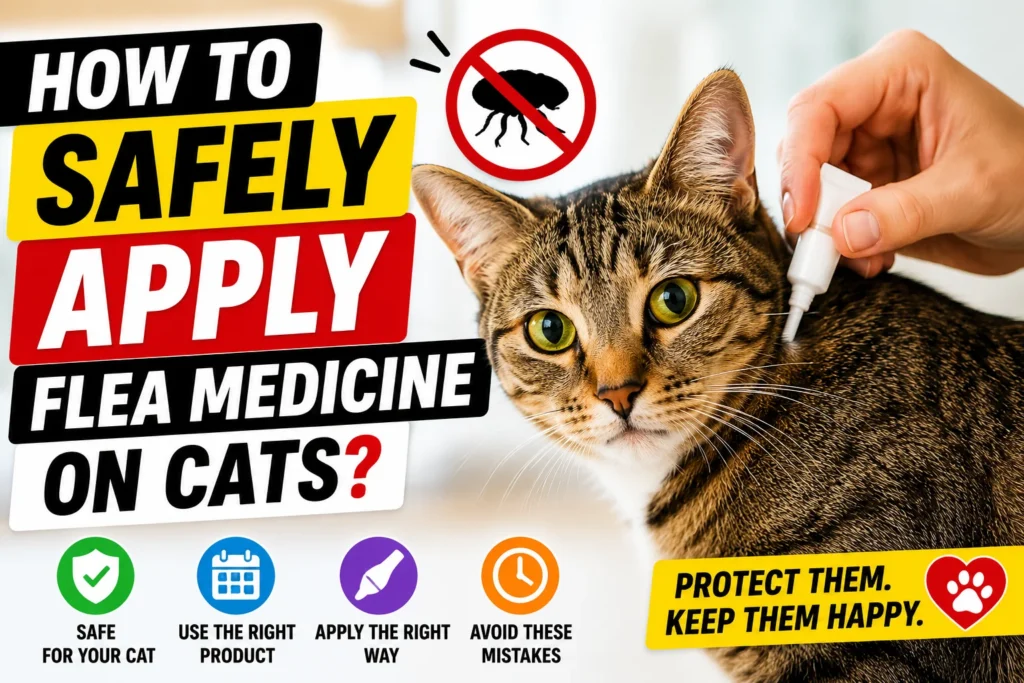
How to Safely Apply Flea Medicine on Cats?. Fleas are not merely annoying creatures because they can lead to tapeworms, anemia and extreme skin allergies in cats. Nevertheless, a wrong application of the flea product can pose the same risks as the fleas themselves.
As a veterinarian, I’ve treated countless cats for skin burns, drooling and seizures caused by improper application of flea products.
Why Safe Application Matters
Cats are not small dogs. Their liver cannot metabolize certain chemicals found in many dog flea treatments. Even “natural” oils can be harmful to cats. Ensuring proper application involves the following:
- Effectiveness: The medication is delivered to the sebaceous glands.
- Safety: No consumption, skin burning or nervous system side effects.
- Assurance: Flea-free house and no need to rush to the veterinarian.
Pre-Application Checklist
Before you open the tube, verify the following:
- Is it labeled FOR CATS ONLY?: Never use dog products. Read the label twice.
- Correct weight range: Most products are dosed by weight. The risk of overdose may lead to adverse side effects.
- Health condition of the animal: Should the animal be sick, old or pregnant, check with your vet first. The application should never be done on cats less than 8 weeks of age unless indicated by the manufacturer.
- Flea medicine selection: Spot-ons as recommended by veterinarians. Avoid cheap collars or powders with outdated chemicals.
Also Check: Why Does My Dog Lick His Paws Constantly Till They Are Red?
Step by Step Guide That How to Safely Apply Flea Medicine on Cats
Follow these 7 vet-approved steps exactly. Have treats ready positive reinforcement works wonders.
Step 1: Choose the Right Time and Place
- When: When your cat is calm.
- Where: A well-lit room with a non-slip surface. Avoid bathrooms.
Step 2: Read the Entire Insert
Product formulations change. Note:
- Active ingredients.
- Reapplication interval.
- Water resistance claims.
Step 3: Part the Fur, Don’t Just Squirt
Using your fingers, part the fur at the base of the skull. You must see white skin not just fur.
Why here? Cats cannot lick this spot, preventing ingestion of the medicine.
Step 4: Apply Directly to Skin
Hold the tube vertically. Place the tip on the exposed skin. Squeeze slowly in 2-3 spots along the part line not all in one puddle. Aim for a thin line not a drip.
Step 5: Isolate the Cat from Other Pets for Several Days
Make sure that you isolate the cat from other animals since they would groom each other. Give them a puzzle feeders or any catnip toys to distract them.
Step 6: Don’t Touch the Site of the Flea Product for 24 Hours
The medicine needs time to disperse via skin oils. If you touch the area, wear gloves then wash hands. Touching then petting your cat can transfer chemicals to your own skin.
Step 7: Monitor for 2 Hours
Watch for:
- Normal: Little irritation and scratch.
- Red Flag: Salivation, vomiting, trembling, lack of activity or redness on the site. In case of warning sign, give a bath to the cat using gentle dish soap then consult your vet immediately.
Common Reasons Why Cats End Up at the Emergency Room
| Mistake | Why It’s Dangerous | Safe Fix |
|---|---|---|
| Applying to wet/damp fur | Product runs to lickable areas | Apply 48h after bath |
| Using “double dose” | Chemical overdose | Stick to one product |
| Splitting one large dog tube between cats | Uneven dosing, dog toxins | Buy cat-specific sizes |
| Applying right after a bath | Skin oils stripped medicine won’t spread | Wait 48h pre or post bath |
What If My Cat Hates It?
- Towel wrap burrito: Wrap cat in a towel, exposing only the head and shoulder area.
- Two-person method: One holds cat, other applies.
- Apply during a nap: Gently part fur while cat sleeps on a high perch.
- Never scruff and hold: Scruffing increases fear and aggression.
After Application: When Will It Work?
- Fleas start dying: Within 4 to 12 hours.
- Total destruction: 24-48 hours for the majority of spot ons.
- External fleas: Vacuum once per day for two weeks. Wash bedding in hot water. Apply an IGR spray to the carpet.
Do not apply the medication again despite seeing a few fleas. These fleas are newborn and will die once they touch the treated cat.
FAQs: Frequently Asked Questions
Can I apply dog flea medicine to my cat?
No. Just one drop of high-concentration permethrin will cause convulsions and kill your kitty.
Where can I find information on what to do if my cat consumes flea medicine?
Mild drooling may occur due to the unpleasant taste of the medication. In case it continues for more than an hour or if your cat vomits – wash the area and consult a vet.
How soon after applying can I pet my cat?
Wait 24 hours to pet the application site. You can pet the head, chest and back legs safely after the product dries.
Can I bathe my cat before applying flea treatment?
Yes, but wait 48 hours after a bath to apply spot-ons. Bathing strips natural oils that spread the medicine.
Is natural flea medicine safer for cats?
No. Cats are sensitive to essential oils. Use only EPA or FDA approved medications for cats.
How do I apply flea medicine to an outdoor or aggressive cat?
Apply the medicine using long-handle applicator or a pill gun without a needle. Never risk injury ask your vet for a topical or oral alternative like Credelio.
What should I do if my cat has a bald spot after application?
Minor temporary hair clumping is normal. If redness, scabbing or hair loss persists >48 hours and switch brands.
Can I apply flea medicine to a nursing mother cat?
Only products labeled safe for breeding/lactating cats. Most OTC brands are unsafe. Consult your vet first.
How often should I rotate flea products?
Do not rotate unless fleas are resistant. Use one effective product monthly. Switching monthly increases risk of dosing errors.
My indoor-only cat got fleas why?
You brought them in. Fleas hitchhike. Apply flea medicine to indoor cats all-year-round in endemic regions.