
Why is My Cat’s Stool Covered in a Clear Slimy Casing?
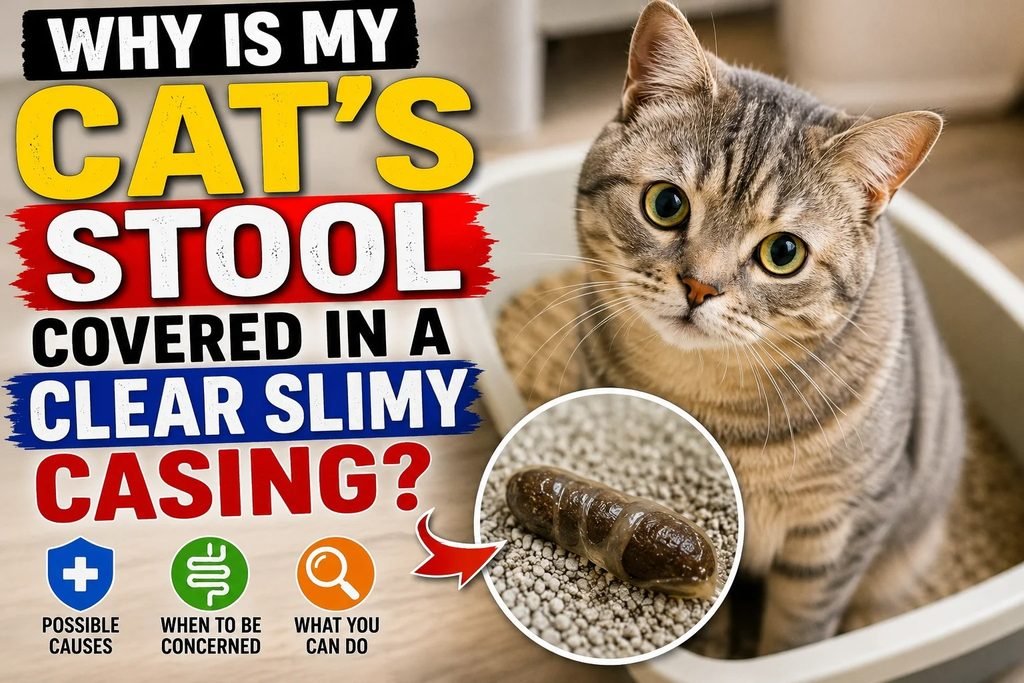
Why is My Cat’s Stool Covered in a Clear Slimy Casing?.
Upon cleaning your cat’s perfectly ordinary feces, the sight of a clear, gelatinous slime surrounding the bowel movement can be a frightening event. I, a veterinarian and pet health guru, can appreciate that the sight will indeed incite some alarm.
Ultimately, the short version is as follows: a clear mucous sheath around the cat’s feces is a mucin layer produced by the colon. A small, microscopic amount of mucin naturally coats the feline’s bowel movement to provide lubrication, however, a visible coating is characteristic of colitis.
Understanding Mucus in Cat Stool
Our bodies produce some mucus in our digestive tract, which helps our stool to slide out. This normally isn’t apparent in a healthy cat. The obvious presence of mucus usually shows us that the intestines are somehow inflamed or annoyed and attempting to protect themselves by making more mucus.
When to Be Concerned
How do I know if I have a problem?
While an isolated event of finding mucus in the stool may not warrant immediate concern, keep an eye on your cat. If there is a clear gelatinous sac around your cat’s poop, particularly if there are any other symptoms as well, it’s best to seek veterinary advice.
When do you need to call your vet immediately?
Anytime there’s blood in the stool (ranging from bright red streaks to black and tarry stools). Your cat is straining to poop. This is especially a concern if he only produces mucus or blood. Diarrhea lasting more than one day.
Vomiting, depression, loss of appetite or changes in behaviour accompany the mucus in the stool.
If your cat is otherwise acting perfectly normally he is eating, drinking and interacting with you as usual – and his stool is only a bit more on the softer side (but still has some form), you could wait to monitor it for 24 hours. However, if the gelatinous sac continues to be present, a vet visit is encouraged.nded to rule out underlying issues.
Top 6 Causes Why is My Cat’s Stool Covered in a Clear Slimy Casing?
Visible mucus is usually due to one of the following underlying issues:
1. Colitis (Inflammation of the Colon)
This is very the leading cause of visible mucus. Colitis is essentially the inflammation of the large intestine. When the colon becomes irritated, it produces a lot more slime than is typical. Several items can bring on colitis, which can trigger gentle or diarrhea that is watery topped with a jelly-like slime and/or a tiny quantity of fresh blood.
2. Dietary Issues
Change in diet, food allergies or intolerances can cause intestinal inflammation. A food adverse reaction can result in colitis with mucus in the feces, and a food trial with a new protein or a hydrolyzed diet.
3. Parasites
If GI upset is a problem of intral parasites. Giardia and T. Foetus are often offenders, especially if you have large-intestinal diarrea with lots of mucos. Those, are not tested for on typical fecals and you’ll want your veterinarian to preform a specialized (PCR) fecal.
4. Constipation
Strangely, a very hard, dry stool can also have mucus on the outside. The cat’s colon actually over-produces mucus in an attempt to get the very hard impacted mass to pass out. It is often a sign that the cat is not getting enough water.
5. Stress
Yes, cats can experience stress-induced colitis. Similar to people stress, new pet, moved house and changing routine-can upset a cats stomach and trigger the colon to become inflamed and have mucus. Usually, the colitis sorts itself out when the stress is gone.
6. Systemic Diseases
In other cases, mucus in your stool could be a warning sign for something more serious. If you suffer from chronic kidney disease (CKD), hyperthyroidism, or gastrointestinal lymphoma, the high levels of inflammation that come with these ailments may affect your intestines and create mucus.
Also Check: Can Chamomile Tea Calm an Anxious Dog During Thunder 2026?
What to Do Next
- Get a stool sample: It is ideal to have a recent stool sample your vet can send for analysis for parasites, placed in a clean, sealed container.
- Assess your cat: Look at your cat and decide if she seems a bit off. Are other changes going on with vomiting, energy, or eating, besides the scooting?
- Contact your vet: Let him or her know what you have observed and if you see any additional signs. The vet can recommend a change of diet, a stool test, or a full veterinary exam.
Frequently Asked Questions (FAQs)
Is a little bit of mucus in my cat’s poop normal?
Yes, a small, invisible amount is normal for lubrication. However, if you can clearly see a slimy, jelly-like casing, it indicates the intestines are producing more mucus than usual, which is a sign of inflammation .
Should I take my cat to the vet for mucus in stool?
Yes, if it persists, is accompanied by blood, diarrhea, straining, or changes in your cat’s behavior (lethargy, loss of appetite). It’s best to contact your vet for advice .
What does stress colitis look like in cats?
It typically looks like soft stool, diarrhea, or normal-formed stool that is covered in mucus or contains fresh red blood. This often occurs after a stressful event like moving, a new pet, or a change in the household .
Can a change in diet cause mucus in cat stool?
Absolutely. A sudden change in food or a food allergy/intolerance is a very common cause of colitis and mucus. Any diet change should be done gradually over 7-10 days .
What parasites cause mucus in cat poop?
Tritrichomonas foetus and Giardia are two common parasites specifically known for causing large-intestinal diarrhea with excess mucus. Other worms or coccidia can also cause inflammation .
My cat’s stool is very hard and covered in mucus. What does that mean?
This is often a sign of constipation. The colon produces extra mucus to try and lubricate the hard, dry stool to help it pass .
Can you treat mucus in cat poop at home?
If your cat is otherwise healthy and acting normal, you can try a bland, easily digestible diet (such as plain cooked chicken with a small amount of white rice) for a day or two. However, cats need a balanced diet, so this should only be a short-term measure. If symptoms persist, seek veterinary care .
How does a vet diagnose the cause of mucus in stool?
Diagnosis may include a fecal exam (often a specific PCR test for parasites), blood work to check for systemic diseases, a dietary trial for allergies, and in some cases, X rays or ultrasound to examine the bowel .
My cat has had mucus in stool for a few days but seems fine. Should I still worry?
While it’s good that your cat is acting fine, chronic (ongoing) mucus production is a sign of chronic inflammation. This can lead to more serious issues like IBD over time. It’s still a good idea to have your vet check them .
Is a clear slimy casing ever an emergency?
Yes, it is an emergency if your cat is straining to defecate but only producing mucus or blood, or if the mucus is accompanied by vomiting, lethargy, and a lack of appetite. This can be a sign of an intestinal blockage or a severe infection and requires immediate veterinary attention .


2 Comments