
How to Treat a Dog’s Dry Cracked Nose During Cold Winter Months?
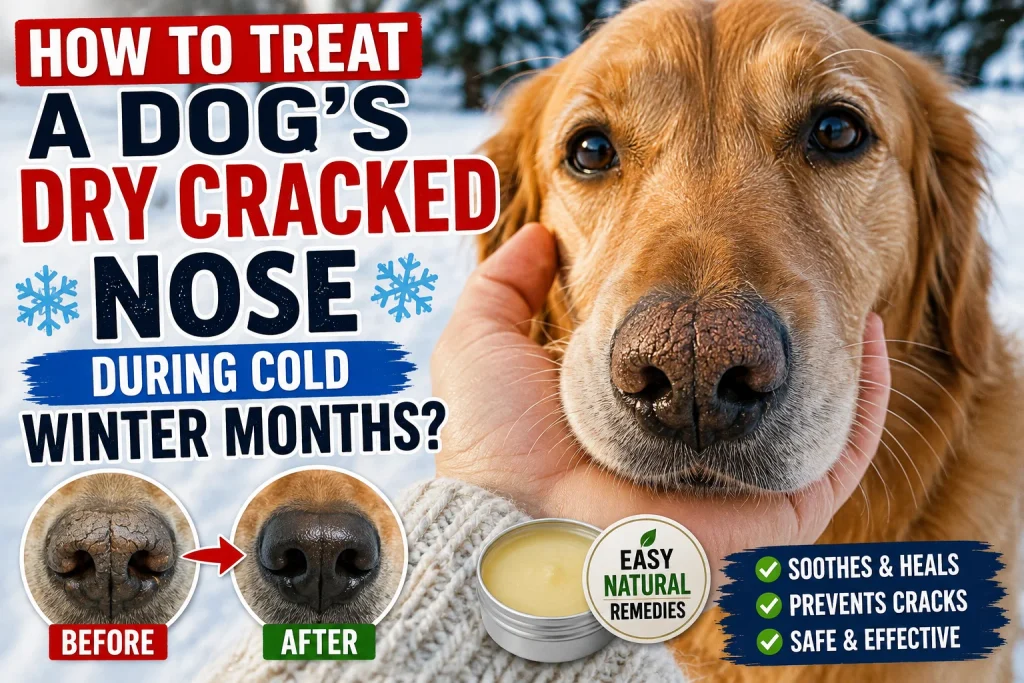
How to Treat a Dog’s Dry Cracked Nose During Cold Winter Months?
As a veterinarian, one of the most frequently asked questions in my clinic during winter is: “Why is my dog’s nose dry and cracked?” You aren’t alone, your worried pet parents and the question certainly warrants concern. While a dry nose is typically benign in dogs, it’s the cold winter weather that can contribute to an itchy, painful, or cracked nose problem which does warrant veterinary advice.
Most occurrences of a dry or cracked nose in canines are treatable at home and here’s a complete rundown of why this problem occurs in winter, how to treat it safely at home, and what symptoms to watch for that should prompt you to visit your veterinarian.
Why Winter Causes Dry, Cracked Noses in Dogs
It’s a fact that your dog’s nose, naturally has a wet and dry cycle. This cycle means that a dog often wakes up with a dry nose when he/she’s been snoozing. Winter however tends to exaggerate this dryness.
It’s down to several factors when the cold weather arrives:
Indoor heating dehydrates at this time of year reducing humidity; just like our skin feels tight and dry in a heated house your dog’s nose will feel it too.
- Cold windy conditions can quickly chap and dry skin this is easily noticeable after a long walk in winter your dog’s nose can seem dry and cracked,
- Risks of dehydration can arise during winter your dog may well drink less in cold weather as he/she doesn’t pant and pant like he/she does in hot weather;
- Older dogs will find their dry nasal condition far more exaggerated in winter. These dogs develop what is known as nasal hyperkeratosis – this causes thick, hardened, or even cracked skin on the nose. Age factors and the dry winter air are responsible.
- Some breeds of dog find it harder to cope with a winter nose; brachycephalic dogs (short-snouted breeds) such as pugs, bulldogs and Shih Tzus lack the facial structure to accurately lick themselves which will further exasperate dryness and are prone to drier noses in winter.
Step-by-Step: How to Treat a Dog’s Dry Cracked Nose During Cold Winter Months
1. Gently Clean the Nose First
Treat Your Dog’s “Cold” It’s Not About Temperature Always begin by gently cleaning the nose of your dog. Wipe it down using a cloth or cotton ball moistened with lukewarm plain water or sterile saline solution. Saline is ideal because it can effectively dissolve dirt and can be combined with an anti-bacterial wash if you choose but will not sting your dog’s nose.
2. Apply a Safe, Vet-Approved Nose Balm
This is the bread and butter of treating your dog’s dry, cracked nose. However, the key is selecting the correct product! Look for the following ingredients to get the best possible treatment for your dog’s nose:
Beeswax:This forms a moisturizing shield to prevent moisture loss and irritation Shea butter-this provides deep conditioning and soothing coconut oil-The plant-derived substance nourishes your dog’s nose for skin repair vitamin E-a powerful healing antioxidant soybean oil-softens and conditions dry skin Vet-recommended options Some brands you’ll often find at veterinary offices include American. Dog Co’s snout soother, dermoscent BIO BALM and musher’s secret.
Some dogs treated with dermoscent BIO BALM see relief right after their first treatment: “One owner wrote: “ My boy’s nose became smooth and repaired only after a few days!”
(5 Ways To Improve Your Dog’s Nose and why.)
How to apply a nose balm If you want the quickest possible results, be sure to apply the nose balm correctly: Gently rub a bit between your fingers to warm it up Apply a thin, uniform layer to your dog’s nose Administer once or twice daily-more frequently as needed. For instance, apply once after each of his walks outside. Make sure you reward him by doing abelly rub or giving a treat after each application so that he begins to associate it with a positive experience.
3. Never Use Human Products
This warning should be a big flashing sign to keep this away from your dog. It is essential you NEVER use any lotions, creams, or ointments on your dog, especially those that are:
• Zinc (dangerous if swallowed)
- Scented or contain any essential oils that are toxic or irritating
- Medicated, unless they are prescribed to be applied by your veterinarian
- Your dog WILL lick its nose when it feels uncomfortable and you have to be sure that whatever you use, is safe to be swallowed ngestion in small amounts . Always choose products specifically labeled for dogs.
4. Increase Indoor Humidity
One of the best things you can do as prevention is running a humidifier around your home. You can set up the humidifier right next to your dogs’ favorite sleeping place, particularly throughout the night when it is hottest inside and driest at home. This will avoid moisture evaporation while the dog is sleeping.
5. Support Hydration
During the winter months, watch how much water your dog is drinking and make sure that clean, fresh water is available throughout the day. If you notice your dog is not drinking much, then you could try warming up your dog’s food to ensure it receives extra water this way . Sometimes a dry nose means your dog is dehydrated.
When to Call Your Vet
While most cases of dry, cracked noses can be treated at home, some symptoms require the dog to be taken to the vet straight away. Treating a dog’s cracked, dry nose is only appropriate if the dog is Otherwise Healthy and BehavingNormally.
You should call your veterinarian immediately if your dog’s nose is Leaking blood from cracks or sores. Developing large, painful cracks or a sensitive spot. Producing PUS, coloured or foul-smelling fluid. Growing scabs and/or thickens into serious sores rapidly
Losing skinpigment
Making your dog irritable, such as pawing at her nose, rubbing her face on the floor or carpet, and being sensitive to a touch on the nose
If your dog also appears unwell such as suffering from a Fever, Vomiting, lethargic or other systemic symptoms ur dog shows lethargy, fever, loss of appetite, coughing, sneezing, or changes in behavior alongside a dry nose, contact your veterinarian promptly .
Understanding Hyperkeratosis and Chronic Conditions
There are several issues beyond the winter chill, that can result in a dry, flaky nose for dogs. A common one in old dogs is ‘nasal hyperkeratosis’ where excess keratin (a structural protein that helps to keep cells together) develops to such an extent that the surface of the nose is hard, crusted and raised. It isn’t serious or painful but it is inclined to crack when the weather gets colder.
The good thing with hyperkeratosis is that it is treatable with sustained regular moistursing: some vet dermatalogists prefer their pet to remain on it long term and might recommend Der moscent BIO BALM to help keep it supple and cracking less.
In addition to hyperkeratosis, a dry/cracked nose can indicate: Autotuned diseases such as discoid lupus erythematosus or pemphigus; infections like pyoderma of the nose, and even tumors like squamous cell carcinoma of the nose, which requires diagnosis by veterinary investigation atment. If your dog’s nose changes progressively worsen despite home care, seek veterinary evaluation .
Prevention Tips for Winter Months
It’s much better to prevent issues than to have to treat them. Use these tips for the cold and winter season to keep your dog’s nose safe:
Before walks: Apply nose balm to your dogs nose before heading out for walks, it helps protect the skin from wind and cold elements.
Minimize time outside: Ensure not to leave your dog out in windy and very cold weather for extended periods.
Indoors: Turn on a humidifier, avoid positioning your dogs bed near a heat vent or radiator.
Diet: Feed a balanced meal appropriate for your dogs age and size with good essential fatty acids added. Essential fatty acid Omega 3 and 6 supplements will strengthen the skin but be sure to consult your vet before giving your dog any additions.
The Key Takeaway
Having a dry, cracked nose on your dog in the winter doesn’t generally require any special, long-term treatment, but here’s what you can do for quick or milder dryness. Wipe gently, use a veterinarian approved balm or treatment on his nose, add some moisture to the air, and keep him hydrated from the inside out.
While these tips usually solve the issue over a short period, keeping an eye on your dog in general is key; as long as he’s eating, drinking and acting like he normally does with a dry nose it should be a home management situation, but if there is evidence of Bleeding or discharge, or changes to his personality, then you need to see a Vet urgently.
For More: Why is My Cat’s Stool Covered in a Clear Slimy Casing?
Frequently Asked Questions
Are certain dog breeds more prone to dry, cracked noses?
Yes. Brachycephalic breeds like Pugs, Bulldogs, and Shih Tzus have difficulty licking their noses due to facial structure, making them more susceptible to dryness. Older dogs are also prone to nasal hyperkeratosis.
Is a dry nose always a sign of illness in dogs?
No. A dry nose alone is often harmless many healthy dogs have dry noses after sleeping, in warm environments, or during winter. The key is assessing your dog’s overall health and behaviour.
When should I stop home treatment and see a vet?
Stop home care and seek veterinary help if you see deep cracks, bleeding, pus, foul odor, rapid worsening, loss of pigmentation, or if your dog shows lethargy, fever, loss of appetite, or other whole-body symptoms.
Why does my dog’s nose get worse at night?
Indoor air is typically driest at night when heating systems run. Dogs also stop licking their noses during sleep, allowing the surface to dry . Running a humidifier in your bedroom can help.
How often should I apply balm to my dog’s cracked nose?
Start by applying balm 2-3 times daily . As your dog’s nose improves, you can reduce frequency to once daily or after outdoor exposure. During winter, regular application before walks helps prevent cracking .
Can I use coconut oil directly on my dog’s dry nose?
Coconut oil is generally safe and can temporarily soothe a dry nose, but it’s less effective than specifically formulated dog nose balms because it doesn’t create a long-lasting protective barrier and may encourage excessive licking . A vet-formulated product with beeswax or shea butter provides better, longer-lasting results.
Can I use petroleum jelly on my dog’s nose?
While Vaseline (petroleum jelly) is generally safe if ingested, it’s not ideal because it provides moisture-sealing benefits but lacks nourishing ingredients that help heal skin . Vet-formulated balms are more effective.
What’s the difference between a dry nose and nasal hyperkeratosis?
A dry nose is temporary moisture loss, often caused by environment. Hyperkeratosis is a condition where excess keratin builds up, creating thick, crusty, hardened tissue that can crack and become painful. It’s more common in senior dogs.
Can my dog’s diet affect their dry nose?
Yes. A balanced diet with essential fatty acids supports healthy skin, including the nose. Winter dryness may improve with omega-3 and omega-6 supplementation, but consult your veterinarian first.
Does a cracked dog nose heal naturally?
A mildly cracked nose may heal as winter conditions improve, but active treatment speeds healing and prevents infection. Moisturizing balms create a protective barrier while skin repairs itself. Deep, bleeding cracks require veterinary attention.

2 Comments