
The Ultimate Guide to Your Sleeping Cat’s Breathing?
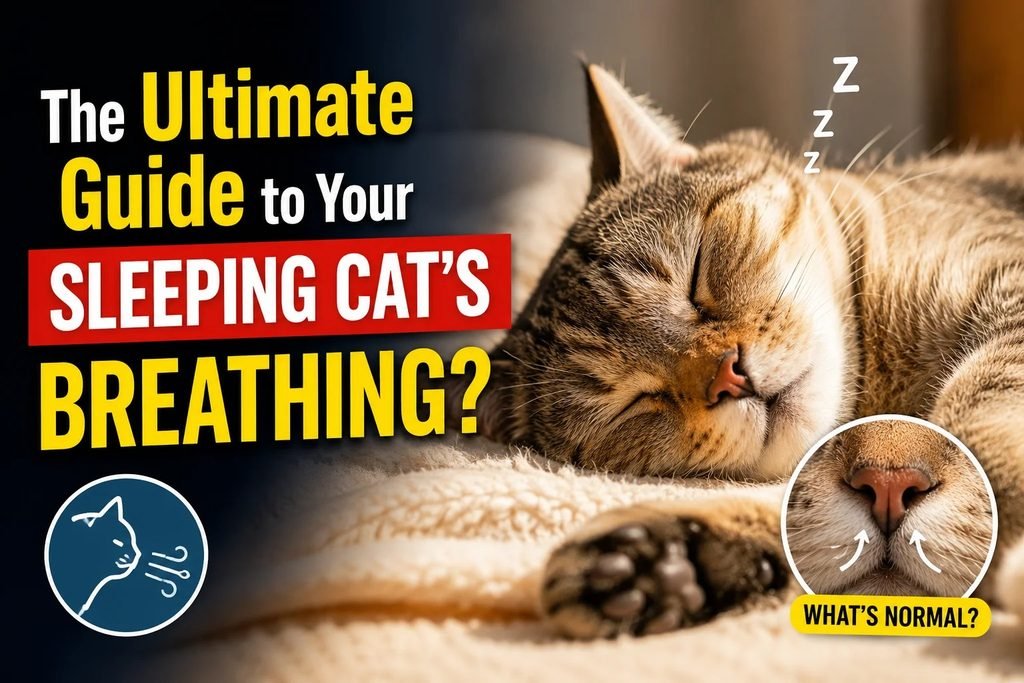
For most pet parents of felines, one of the most calming things we experience is watching our cat take a nice, long nap. But one common question that comes to mind is, “what is a normal resting or sleeping breathing rate in my cat?” Monitoring the normal breathing rate can be an incredibly useful measure of your cat’s general well being and can shed insight on their health status.
As your veterinarian and author of this blog post, I am here to help define a “normal” breathing rate and show you exactly how to measure it.
We’ll also touch on what may indicate that you may need to call us.
The Normal Range: What the Numbers Mean
Generally the consensus is that a normal cats sleeping respiratory rate (SRR) is below 30 bpm, this is not the same as a cats ‘awake’ respiratory rate (ARR) which averages between 15-60 bpm! Research and veterinary information indicates that cats generally sleep their respiratory rates somewhere below 30 breaths per minute, often below 25, with a median sleeping rate generally around 20 bpm. In studies where the sleeping respiratory rate of the cat at home has been measured, those cats have rarely been measured at more than 30 breaths/min.
Summary Reference Information
Normal Sleeping Rate: 15 to 30 breathing/min
Median/Mean Rate: ~20 breathing/min
Abnormal: Regularly above 30 breathing/min
You might also see below 15 bpm and this would normally be fine with a happy cat
Why Measuring at Home Matters (The “White Coat” Effect)
As always, cats are excellent imposters when they’re in pain, stressed, or suffering from an illness. Perhaps one of the more amazing veterinary research discovered so far is just how elevated a cat’s respiration can be when they are in the veterinary clinic, thanks to stress and anxiety – the “white coat effect”. Researchers have found the ‘normal’ range for respiratory rate in the vet’s consulting room for a ‘normal’ cat to be somewhere in the neighborhood of 28 to 176 breaths per minute with a median value of 64.
If your veterinarian was to evaluate this against your cat’s ‘normal’ values and they were to use the rate of 15 – 30 for you, in a consultation room they would be diagnosing you with ‘tachypnea'(rapid breathing).
That’s why so many vets ask you to take a cat’s ‘resting, sleeping respirations’ at home.
Step-by-Step: The Ultimate Guide to Your Sleeping Cat’s Breathing?
For accuracy, follow these steps carefully:
Watch the Timer: When the moment is right, i.e. Cat asleep soundlessly, watch the time starting from one second of a minute. Don’t include the times during which the cat is purring, as the pattern is disturbed by purring.
Watch the Belly/ Chest: Watch for the belly or chest rise and fall. A full breath involves 1 rise + 1 fall. Count both.
Count for 30 seconds: Count for exactly 30 seconds.
Multiply the result by 2: The count of the breaths in 30 seconds should be multiplied by 2. This gives you the breaths in per minute for example: If the cat took 10 breaths within 30 seconds then its breathing count is 20 breaths per minute (10 × 2) = 20), which is perfectly normal.
Signs of Distress and Emergency Situations
If the rate of your cat’s breathing while they’re sleeping never falls below 30 breaths a minute then you should call your veterinarian. A fast resting rate while sleeping (tachypnea) is an early symptom for either heart problems or lung problems.
For More: How to Treat a Dog’s Dry Cracked Nose During Cold Winter Months?
Frequently Asked Questions (FAQs)
What is a normal resting breathing rate for a sleeping cat?
A normal sleeping respiratory rate for a cat is generally between 15 and 30 breaths per minute. Research shows that the median rate is often around 20 breaths per minute.
Is it normal for my cat to breathe fast while sleeping?
No, it is not normal for a sleeping cat to breathe fast. A consistently elevated rate of more than 30 breaths per minute while resting or sleeping is considered abnormal and warrants veterinary attention.
My cat breathes 40 times a minute while sleeping. Should I be worried?
Yes, a respiratory rate of 40 breaths per minute while sleeping is a cause for concern. This is a sign of tachypnea and could indicate an underlying health problem. You should contact your veterinarian as soon as possible.
Should I count my cat’s breathing while they are purring?
No. You should not count your cat’s breathing rate while they are purring, as this can disrupt their normal breathing rhythm and give you an inaccurate reading.
Why is my cat’s breathing rate at the vet so much higher than at home?
This is likely due to stress and anxiety. The “white coat effect” can cause a healthy cat’s respiratory rate to skyrocket in a clinical setting, sometimes to over 100 breaths per minute, even before being handled. This is why at-home readings are considered more accurate and valuable.
What is the difference between tachypnea and dyspnea?
Tachypnea refers to an abnormally rapid breathing rate (>30 breaths/min at rest). Dyspnea refers to difficulty breathing, where the cat may struggle to get air, often with open-mouth breathing, panting, or labored chest movements. Dyspnea is a medical emergency.
What should I do if my cat’s sleeping breathing rate is over 30 breaths per minute?
First, re-count the rate a couple of times over a few hours to ensure it’s a consistent finding. If it remains persistently elevated, you should contact your veterinarian to schedule an examination.
Conclusion
All in all, what looks like normal, quiet breathing, will be between 15 and 30 breaths per minute in a sleeping cat. Observing your cat’s breathing regularly will be an easy (and very non-intrusive) way to check how healthy they are. It may actually offer a more representative indicator than what the veterinary surgeon can estimate and can be invaluable as an early warning sign for life threatening diseases such as heart failure. Remember to remember your cat when it is warm and comfortable and will allow it.






3 Comments