
Why Does My Dog Get the Zoomies After Eating Dinner 2026?
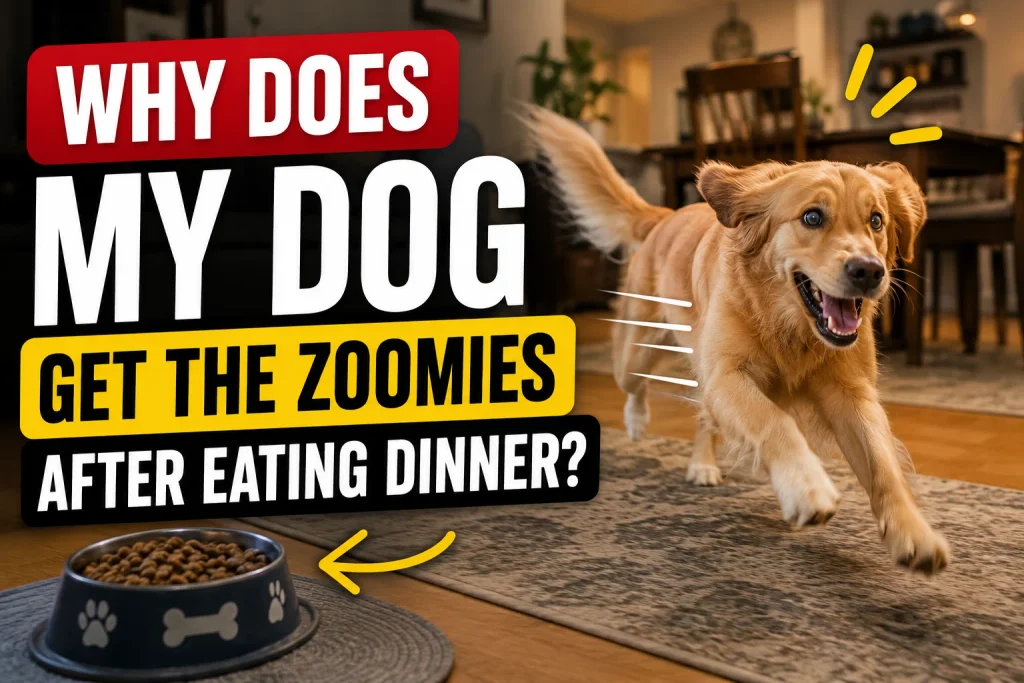
Why Does My Dog Get the Zoomies After Eating Dinner?
We’ve all witnessed it. A dog just a moment ago was methodically lapping the last remnants of food from their dinner bowl, and now they are a furry dervish, ricocheting through your living room, ricocheting off the furniture and skidding across the kitchen tiles. This sudden eruption of manic energy has a name: the zoomies.
So why are your pooches choosing your post-dinner moments to go wild, and should you be concerned?
As a veterinarian I get to hear about many of these post-meal behaviors that seem confusing to owners. For the first question, there are several, easy to explain behavioral, and even physiological reasons your dog has developed a post-prandial desire to fly around your home.
Why Does My Dog Get the Zoomies After Eating Dinner?
What are “Zoomies”?
In professional circles, these bursts of inexplicable running are called Frenetic Random Activity Period, or Frap, and it’s totally normal to see a dog get suddenly so hyper it just has to run. They typically only last a few seconds to a few minutes, before your pup collapses in a heap of contented exhaustion.
Why Do They Happen After Eating?
Several factors can trigger a FRAP session following dinner:
- Energy From Meals: Like people, dogs get energy from meals. Their diets contain carbohydrates which are converted to glucose, that can raise blood sugar and stimulate a short burst of energy. A highly food-motivated dog combined with the heightened excitement of mealtime and a sugar high is the perfect recipe for zoomies!
- Release of Excitement: For many dogs, dinner is the highlight of their day. The zoomies can simply be a physical manifestation of happiness and satisfaction. After a delicious meal, your dog is content, feels safe, and needs an outlet to express that joy .
- Energy Release and Digestion: The act of eating can stimulate the digestive system and change the body’s state of relaxation. Some experts theorize that a brief burst of movement might be the body’s way of transitioning after the focused act of eating .
- Crepuscular Nature: Dogs are crepuscular, meaning they are naturally most active during dawn and dusk. If your dog’s dinner is in the evening, the zoomies may be a combination of this natural energy peak and their post-meal excitement .
The Important Health Warning
Although post-dinner zoomies can be perfectly fine and even hilarious, they can also be a death trap. You should never let your dog undergo strenuous activity immediately after he or she has eaten, especially not from a vet.
The most serious consequence of doing so is the risk of Gastric Dilatation-Volvulus (GDV), or what most of us know it as, bloat. Bloat is a serious, and life-threatening situation where the stomach inflates with gas and twists around on itself, cutting off the blood supply to important organs. It should always be treated by a veterinarian immediately, as time is of the essence for this condition.
Deep-chested and large breed dogs, such as Great Danes, German Shepherds, and Standard Poodles, are at a higher risk.
To be safe, keep your dog calm for at least 15 to 20 minutes, and ideally an hour, after a meal to allow digestion to begin safely.
How to Manage the Zoomies
If your dog has a nasty habit of getting the post-dinner “zoomies,” this doesn’t mean you have to just go with it – or stay inside. This advice can help handle it:
- Establish a Calm After Dinner Procedure: Encourage your dog to relax with a chew toy, or in their dog bed, immediately after dinner. Use your calm voice and reassuring touch to transition.
- Provide Mental Stimulation: Instead of physical exercise, offer a puzzle toy or a snuffle mat. This allows them to burn mental energy without the physical exertion that can lead to bloat .
- Redirect the Energy: If they start zooming, don’t chase them, which can make it worse. Try to gently redirect them with a calm command or by tossing a soft toy a short distance, but keep their movement low-key .
- Consider Their Diet: If your dog’s zoomies seem excessive, discuss their diet with your vet. A food that is high in carbohydrates might be contributing to the sugar highs they experience after eating .
The Bottom Line
Zoomies in dogs are a telltale sign your pup is happy and has energy to burn . That post- dinner surge of energy the post, dinner zoomies as we like to call it is totally normal and perfectly fine. But as a concerned pet owner, we need to control zoomies for our dog and their safety. Let Zoomies Happen Light exercise and ensure zoomies have somewhere safe to explode can be a solution, also when in doubt discuss behaviours with your veterinarian.
Also Check: Recognizing Signs of Obsessive Compulsive Grooming Behavior in Domestic Cats 2026
Frequently Asked Questions (FAQs)
Is it normal for my dog to get the zoomies every day after dinner?
Yes, it’s very common for dogs to develop a routine around their zoomies, especially after a highly anticipated event like dinner. If their behaviour is joyful and not excessive, it’s usually nothing to worry about.
Should I play with my dog right after they eat to prevent the zoomies?
No. It’s best to avoid strenuous play like fetch, tug-of-war, or long walks immediately after eating. This can increase the risk of bloat, a potentially fatal condition, particularly in large or deep-chested breeds.
What are the signs of bloat I should look out for?
Signs of bloat include a swollen, hard abdomen, unproductive retching (trying to vomit but nothing comes up), restlessness, pacing, excessive drooling, and signs of pain or distress. If you see these, contact your vet immediately.
Can the type of food I give my dog cause the zoomies?
Potentially. Some lower-quality foods with high carbohydrate and sugar content can cause a rapid spike in blood sugar, leading to a burst of energy . A diet higher in protein may provide a more sustained energy release.
Do certain breeds get post-meal zoomies more often?
While any dog can get the zoomies, it is particularly common in puppies, young dogs, and high-energy breeds like Border Collies and Jack Russell Terriers.
What’s the difference between happy zoomies and stressed zoomies?
Happy zoomies are usually accompanied by loose, wiggly body language and a “play bow.” Stressed zoomies may involve a tucked tail, stiff or tense body, and wide eyes . A happy dog looks relaxed and playful, while a stressed dog looks frantic and anxious.
How long do dog zoomies usually last?
Zoomies are usually short-lived. An episode typically lasts for just a few minutes at most, after which the dog will often stop and rest or lie down.
How can I stop my dog from getting the zoomies?
Trying to stop a dog mid-zoom can be difficult and might make the behaviour worse. It’s often better to manage the situation. Try to prevent them by encouraging a calm, quiet period after meals, or redirect their energy with a low-key puzzle toy.
Is it okay for my dog to get the zoomies after eating if they are a small breed?
While the risk of bloat is lower in small breeds, the risk isn’t zero. It’s still a good habit to encourage rest for at least 15-20 minutes after a meal to promote healthy digestion and prevent any potential discomfort.
My dog gets zoomies after pooping too, is that related?
While separate behaviours, both can be triggered by a release. For post-poop zoomies, the act of defecation stimulates the vagus nerve, which can create a sudden feeling of relief and a brief burst of energy. This is usually completely normal.


One Comment