
Why is My Cat Drinking Water from the Sink Instead of Their Fountain 2026?
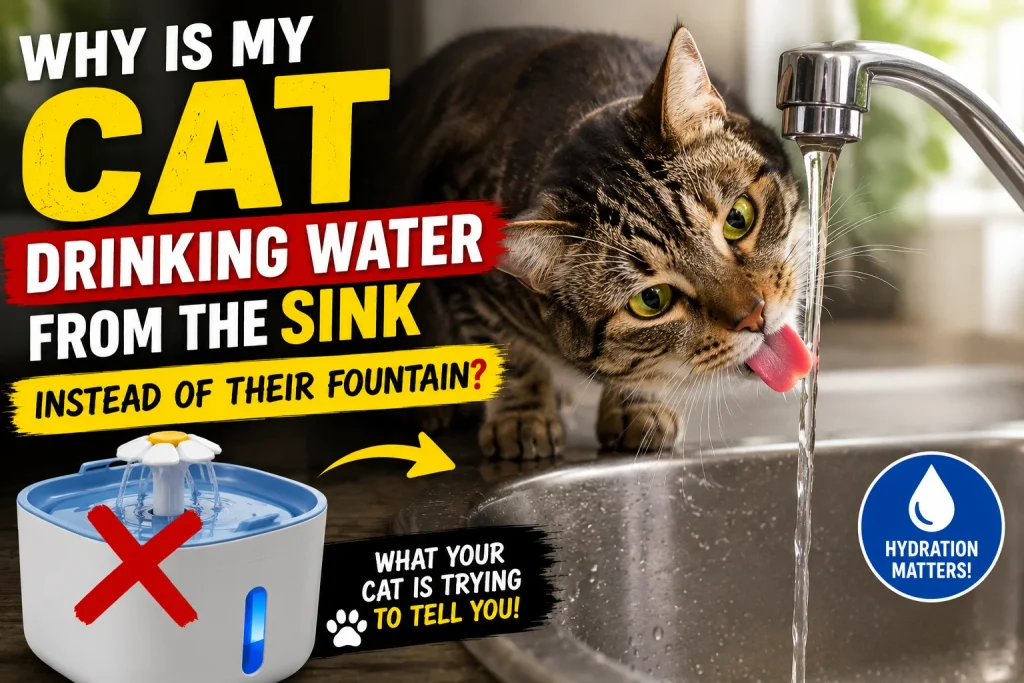
Why is My Cat Drinking Water from the Sink Instead of Their Fountain?
You splurge on a premium, fancy circulating water fountain because, hey, your furry overlord deserves the very best in hydration. Still, you catch them sitting on your counter and slurping down water from your sink faucet or even rubbing against your legs, meowing for you to turn on the tap and let a drip fall for them. This classic feline paradox is something many owners of a spoiled puss experience.
The 7 Reasons Why is My Cat Drinking Water from the Sink Instead of Their Fountain?
1. The Evolutionary Instinct for Running Water
Domestic cat ancestors, in their days as wild cats, understood that standing water in nature usually carries bacteria and other contaminants, but the fresh flowing water in a stream or a spring was safer. As our pampered domestic felines carry on some of this evolutionary baggage, a flowing tap is a good indicator for their primal instincts to indicate the “safest” water source in the room, even though the water in the pet’s bowl is impeccably clean.
2. Superior Freshness and Taste
Cats have incredibly superior senses of smell that pick up on odors and chemicals in water that we are completely unaware of. Water that is left to stagnate in a bowl (and even a dirty fountain) can get “stale,” pick up smells in the room/other substances and not taste good anymore. Tap water can taste bad to cats due to things like chlorine added to it. Cold, fresh tap water typically tastes much better to cats than the water that runs throughout a plastic fountain.
3. Visual Attraction and Curiosity
Cats aren’t at their best with very close up vision. For this reason we don’t find that our cats notice stagnant water for instance – it doesn’t provide depth or have a visible pattern. Moving water however, we observe them to find very noticeable. The visual reaction of light reflecting on running stream obviously is a source of fascination for our cats and makes it very obvious where exactly to get the water!
4. Bowl and Fountain Dislikes (Whisker Fatigue, Material, Cleanliness)
Sometimes, the aversion isn’t about the sink, but about the alternative. Cats are notoriously picky about their eating and drinking setups .
- Whisker Fatigue: If the bowl or fountain reservoir has a narrow opening or deep sides, your cat’s sensitive whiskers may rub against the edges, causing discomfort or “whisker stress”.
- Material Issues: Plastic bowls and fountains can hold onto odors and bacteria, and they may even cause feline acne. Cats often prefer stainless steel or ceramic, which are more hygienic and neutral in taste.
- Cleanliness: A dirty fountain with a slimy biofilm or a clogged filter will quickly turn a cat off. They may prefer the sink simply because the water is perceived as cleaner.
5. The Location and Safety Factor
The Sink Provides a Safe Elevated Resting spot Cats are more likely to feel safe and relaxed when they have an elevated, birds-eye view. Alternatively, a cat drinking water right beside the food or the litter box in a highly trafficked, loud location, can leave him or her feeling insecure. Drinking a water in the wild at an area near a kill (or next to food, in their case), could lead to their water supply becoming contaminated, being out in the open like that in an open environment leaves them open to being prey. The sink offers peace and quiet at a higher vantage point, while ensuring their water stays clean and that they feel secure.
6. The “Play” and Sensory Appeal
Some cats just find the sink a lot more entertaining than their fountain or bowl! The dripping of water is a fascinated noise for them, and batting at the water stream can make drinking like a fun game! This is mostly true of younger, friskier cats who prefer active engagement from the faucet to “sit and drink” from an inactive fountain.
7. Potential Medical Causes
Although it is usually behavioural, an abrupt increase in your cats thirst (polydipsia) can indicate an underlying health problem. Kidney disease, diabetes and hyperthyroidism can all cause a cat to obsess over drinking water and attempt to get into any available water including the sink faucet! If your cat recently has taken up sink drinking along with increased urinaton, weight loss and lethargy seek veterinary advice immediately.
How to Make Your Cat’s Fountain Better Than the Sink
So here’s how you win this battle and get your cat to prefer the water fountain over the running faucet:
- Upgrade the Location: Place the fountain in a quiet, low-traffic area, well away from their food and litter box. An elevated spot, like on a sturdy table or counter, can also make them feel more secure.
- Audit the Material: If your fountain is plastic, consider switching to a stainless steel or ceramic model. These materials are non-porous, easier to clean thoroughly, and don’t harbor odors.
- Clean It Religiously: A fountain must be disassembled and cleaned weekly. This includes scrubbing the pump, impeller, and all parts with hot water and dish soap, followed by a thorough rinse. Change the filter according to the manufacturer’s instructions (usually every 2-4 weeks).
- Ensure Constant, Fresh Flow: Keep the fountain filled to the brim. This prevents the pump from running dry and ensures a strong, visible water flow that will attract your cat.
- Provide Choices: Don’t take the sink away suddenly. Allow your cat access to both options for a while, and make the fountain the most attractive by following the tips above. Patience is key.
Also Check: How to Treat a Dog’s Dry Cracked Nose During Cold Winter Months?
Frequently Asked Questions (FAQs)
Is it safe for my cat to drink from the sink?
Generally, yes, but it depends on the quality of your tap water. If your water is safe for you to drink, it’s likely safe for your cat. However, faucets can harbor bacteria, and some cats may ingest harmful chemicals if they drink from a sink with standing water in the drain. It’s always better to provide a clean, filtered fountain.
Could my cat’s obsession with the sink mean they are sick?
Possibly. If this is a new behaviour, especially if accompanied by increased urination, weight loss, or a change in appetite, it warrants a veterinary check-up to rule out conditions like diabetes or kidney disease.
Why won’t my cat drink from the fountain I just bought?
Cats are naturally neophobic (wary of new things). It might take them several days or even weeks to accept a new fountain. Try leaving it unplugged for a day or two so they can investigate it, then plug it in and leave their old bowl out as a backup.
Where should I place my cat’s water fountain?
Place it in a quiet, safe location away from their food, litter box, and high-traffic areas. Cats often prefer to drink in a separate area from where they eat, as this mimics their wild instinct to avoid contaminated water.
What type of water bowl is best for cats?
Stainless steel or ceramic bowls are generally best. They are durable, easy to clean, and do not hold onto bacteria or odors like plastic can. They also don’t cause feline acne, a common issue with plastic dishes.
What is “whisker fatigue” and does it affect drinking?
“Whisker fatigue” is the stress cats feel when their highly sensitive whiskers are constantly brushed against the sides of a deep or narrow bowl. Using a wide, shallow bowl or fountain reservoir can prevent this.
Is it okay to give my cat ice cubes in their water?
Yes! Some cats love playing with and drinking the cold water as ice cubes melt. It can be a fun way to encourage hydration, especially in warmer weather.
Why do cats prefer running water over still water?
It’s an evolutionary instinct. In the wild, stagnant water is often contaminated, while running water is perceived as fresher, cleaner, and more oxygenated. Also, the sound and movement of running water make it easier for cats to see and locate.
My cat drinks from the sink but not their water fountain. Should I just give up on the fountain?
Not necessarily. First, ensure the fountain is of a preferred material (stainless steel or ceramic) and is meticulously clean. Experiment with its location. You can also try placing a small treat near the fountain to build a positive association. Eventually, with patience, many cats do switch.
How much water should a cat drink daily?
On average, a healthy cat needs about one cup of water per day for every 10 pounds of body weight. This total comes from all sources, including their food (wet food is ~80% water) and what they drink.